Replace Couch Cushions: Worth It or Buy New?

Sofa Refurbishment Cost-Benefit Calculator
Enter your details below to determine if you should replace your cushions or buy a new sofa. This tool uses the "30% Rule" heuristic mentioned in the article.
1. Assess Your Current Sofa
Recommendation
Calculating...
Enter values to see recommendation.
You’re sinking into your favorite spot on the sofa, and something feels off. The seat has that distinct "hammock" shape, or maybe the backrest looks like a deflated balloon. Your first instinct might be to start scrolling through furniture stores, mentally calculating how much a new three-seater will hit your bank account. But wait. Before you drop $1,500 on a replacement, there’s a middle ground that most people overlook: replacing the couch cushions is often the secret to making an old sofa feel brand new for a fraction of the price.
But is it actually worth the hassle? Can you really save money, or are you just putting a band-aid on a broken bone? I’ve helped plenty of friends in Auckland navigate this exact dilemma, from vintage finds at Op Shops to high-end designer pieces. The answer isn’t a simple yes or no-it depends entirely on the state of your frame, the type of foam you choose, and your budget. Let’s break down exactly when you should reach for the screwdriver and when you should call the movers.
The Frame Test: When Repair Makes Sense
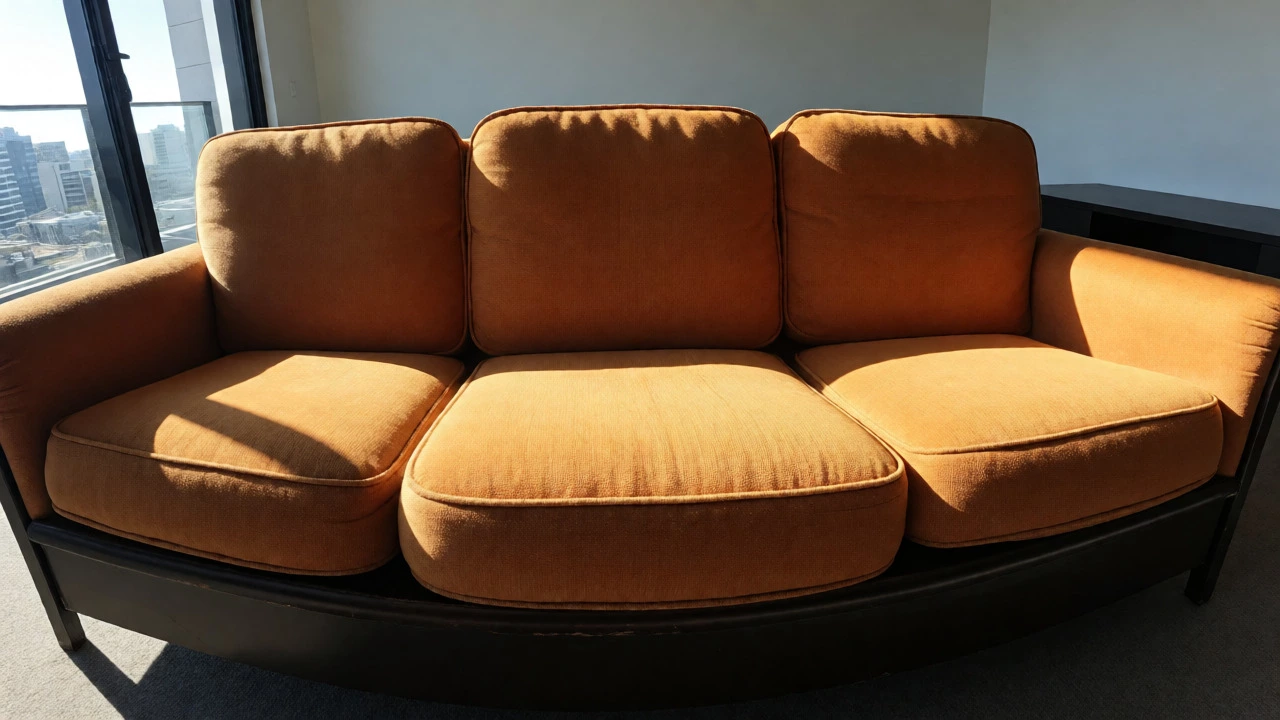
Here is the golden rule of sofa renovation: if the frame is solid, replace the cushions. If the frame is broken, buy a new sofa. This sounds obvious, but many people ignore structural integrity because they love the fabric or the color of their current piece.
To check your frame, get underneath the sofa. Grab the corners and give them a firm shake. Does it wobble? Do you hear creaking wood or cracking joints? If the wooden structure (usually hardwoods like oak or maple) feels sturdy and tight, you have a great candidate for refurbishment. However, if you see visible cracks in the wood, loose screws that won’t tighten, or if the plywood base has warped significantly, replacing cushions won’t fix the underlying instability. In those cases, the investment in new foam is wasted because the support system itself is failing.
Also, consider the age of the sofa. High-quality sofas built with kiln-dried hardwood frames can last decades. Cheap particle-board frames often degrade within 3-5 years. If you bought a budget-friendly flat-pack sofa five years ago, and the frame is now sagging along with the cushions, you’re likely hitting the end of its life cycle. But if you own a well-made piece where only the soft parts have given up, you are sitting on a goldmine of savings.
DIY vs. Professional Reupholstery: Cost Breakdown
Let’s talk numbers, because "is it worth it" is ultimately a financial question. You have two main paths here: DIY replacement or hiring a pro. Both have different cost structures and outcomes.
| Method | Estimated Cost (NZD) | Time Investment | Skill Level Required | Best For |
|---|---|---|---|---|
| DIY Foam Insert | $80 - $150 per set | 1-2 hours | Low (Zipper removal) | Standard box cushions; users comfortable with measuring. |
| Professional Refill | $150 - $300 per set | 1 week (turnaround) | N/A | Complex shapes; premium fabrics; zero-effort preference. |
| New Sofa | $800 - $2,500+ | Immediate (or delivery wait) | N/A | Damaged frames; outdated styles; desire for warranty. |
As you can see, DIY is incredibly cheap. You’re essentially paying for the raw materials. Companies like Foam Factory or local NZ suppliers sell high-density foam blocks or pre-cut inserts. If your cushion covers have zippers, you can literally swap the old foam for new foam in under ten minutes per cushion. The catch? Getting the size right is tricky. Too big, and the zipper won’t close. Too small, and the cover looks wrinkled and sad.
Professional services charge for labor, precision cutting, and sometimes minor sewing repairs. They ensure the fit is perfect and often use higher-grade foams that resist compression better than off-the-shelf options. If you have a beloved antique or a designer piece with non-standard dimensions, paying the extra $100-$150 for a pro is usually worth the peace of mind.
Choosing the Right Foam: Density Matters
This is where most people fail. They go to a generic hardware store, grab the cheapest white foam block, stuff it in, and find themselves sinking again six months later. Not all foam is created equal. To make your replacement last, you need to understand foam density, which refers to the weight of the foam per cubic foot, not how hard it feels.
For seat cushions, you want high-resilience (HR) foam with a density of at least 1.8 lbs per cubic foot. Anything lower (like 1.2 or 1.4) is considered low-density and will compress permanently within a year of daily use. Back cushions can handle slightly softer foam, around 1.6 density, because they don’t bear your full body weight.
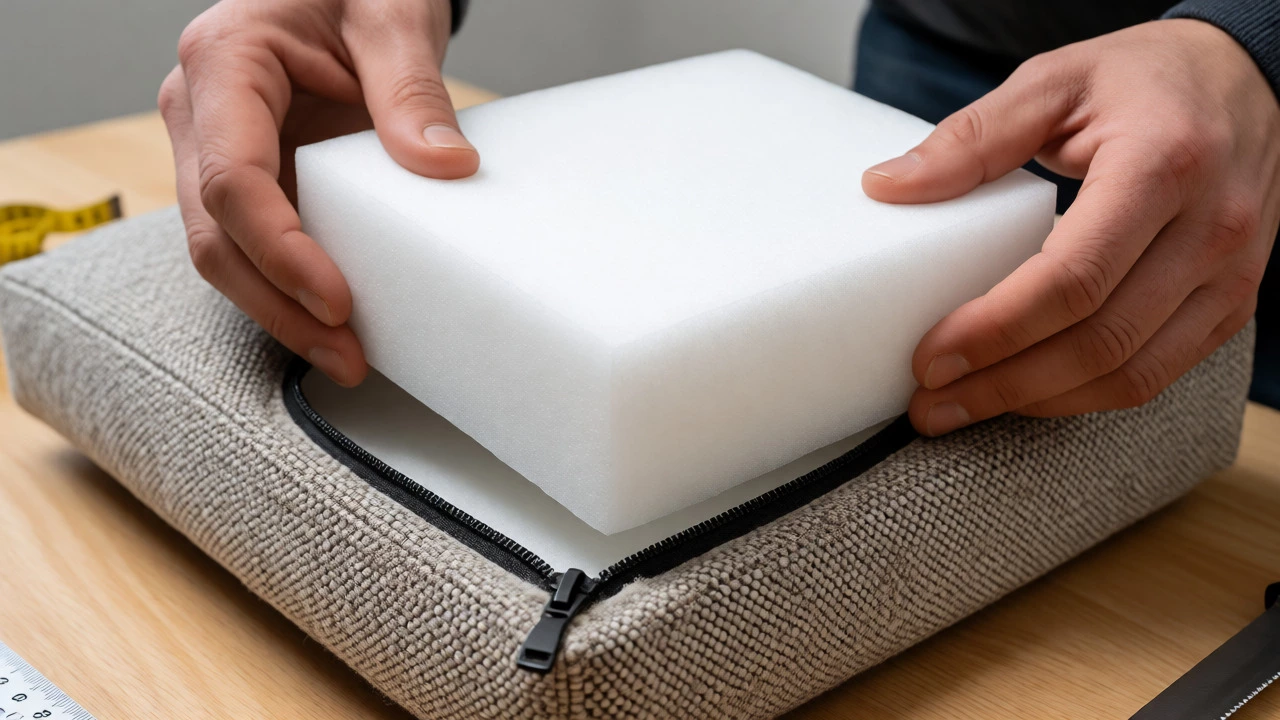
There is also the option of wrapped foam. This is standard foam encased in a thin layer of Dacron polyester fiberfill. Why bother? Because it makes the cushion look plump and rounded rather than boxy and sharp-edged. It also adds a layer of softness to the surface without sacrificing the support underneath. If you want that "luxury hotel" feel, ask specifically for Dacron-wrapped HR foam. It costs about 20% more than plain foam but dramatically improves aesthetics and comfort.
The Feather Down Hybrid Option
If you hate the feeling of pure foam, consider a hybrid approach. Many high-end sofas use a core of dense foam surrounded by a layer of feather and down. This combination offers the best of both worlds: the structural support of foam prevents bottoming out, while the feathers provide that cloud-like, moldable comfort on top.
Replacing just the foam core and adding a new down envelope is a pro move. It’s more expensive than plain foam-expect to pay closer to the professional refill rates-but the difference in comfort is night and day. Just be aware: feathers require fluffing. If you leave a feather-blend cushion alone for a week, it will look flat. Foam stays consistent. Decide what kind of maintenance you’re willing to do before you commit to feathers.
When Buying New Is Actually Cheaper
We’ve established when to keep your sofa. Now, let’s look at when you should cut your losses. There are specific scenarios where replacing cushions is a bad financial decision.
- The Fabric is Tired: If your cushion covers are stained, faded, or torn, replacing the foam won’t hide the damage. Unless you plan to reupholster the entire sofa (which costs $500+), a new sofa with fresh fabric might offer better value.
- Springs Are Broken: Listen to your sofa. If you hear metallic squeaks or feel sharp points poking through the fabric, your sinuous springs or webbing are broken. Replacing springs requires opening the frame, which is a major job. At that point, buying new is often easier.
- Style Mismatch: Sometimes, we hold onto furniture because it was expensive, not because it fits our current life. If you’re moving to a smaller apartment, or your taste has shifted from traditional rolled arms to modern minimalist lines, a new sofa serves a functional purpose beyond just seating.
A quick heuristic: If the cost of replacing cushions plus any minor repairs exceeds 30% of the price of a comparable new sofa, buy new. Furniture depreciates, but quality construction lasts. Don’t throw good money after bad.
How to Measure Your Old Cushions Correctly
If you’ve decided to go the DIY route, measurement is everything. Do not just measure the length and width. You need three dimensions: Length, Width, and Thickness.
- Remove the Cover: Unzip the cushion cover carefully. Keep the zipper pull intact.
- Measure the Foam Core: Place the old foam on a flat surface. Measure the longest side (Length), the shorter side (Width), and the height (Thickness). Round these numbers down slightly if the foam is compressed. For example, if the foam measures 22 inches but looks squashed, it might originally have been 23 or 24 inches thick.
- Add Allowance: When ordering new foam, add 0.5 inches to the length and width for a snug fit inside the cover. For thickness, match the original dimension unless you want a firmer seat, in which case, add 1 inch.
- Cut the Foam: Use an electric bread knife or a specialized foam cutter. A serrated kitchen knife works in a pinch but requires patience. Cut slowly and evenly to avoid jagged edges.
- Wrap It (Optional): If using Dacron, wrap the foam tightly before inserting it into the cover. This helps it slide in smoothly and keeps the shape round.
Pro Tip: Take photos of your current setup before you disassemble anything. It helps if you forget which cushion goes where!
Environmental Impact: The Green Choice
In Auckland, we’re increasingly conscious of waste. Landfills are filling up, and furniture is one of the biggest contributors to bulky waste. By choosing to replace cushions instead of tossing a whole sofa, you’re keeping potentially 50-100kg of timber, metal, and fabric out of the dump. That’s a significant environmental win.
Moreover, extending the life of existing furniture reduces the carbon footprint associated with manufacturing new goods. Shipping a new sofa involves heavy logistics, packaging, and production energy. Swapping a few pounds of foam is negligible by comparison. If sustainability matters to you, refurbishing is almost always the ethical choice, provided the frame is sound.
Final Verdict: Is It Worth It?
So, back to the original question. Yes, replacing couch cushions is absolutely worth it if your sofa frame is healthy. It transforms a sagging, uncomfortable relic into a supportive, inviting centerpiece for less than the cost of a nice dinner out. It’s a weekend project that pays dividends in comfort for years.
However, treat it as a surgical procedure, not a magic wand. Assess the bones of your sofa first. Choose high-density materials. Measure twice. If you do those things, you’ll wonder why you ever considered throwing away a perfectly good piece of furniture just because the padding wore out.
Can I wash my cushion covers after replacing the foam?
Yes, but check the care label first. Most synthetic blends are machine washable, but natural fibers like linen or wool may require dry cleaning. Always remove the new foam insert before washing the cover to prevent waterlogging and mildew.
How long does new foam last compared to old foam?
High-density polyurethane foam typically lasts 7-10 years with regular use. Low-density foam may only last 2-3 years. Feather/down wraps last indefinitely if maintained but require regular fluffing to maintain loft.
Is memory foam good for couch cushions?
Generally, no. Memory foam retains heat and can feel too slow-response for seating, causing you to sink in and struggle to stand up. High-resilience polyurethane foam is preferred for sofas because it bounces back quickly and supports posture better.
What if my cushion covers don't have zippers?
If there are no zippers, you will need to sew one in. This requires basic sewing skills or a visit to a tailor. Alternatively, some professionals offer a service where they open the seam, replace the foam, and stitch it back up invisibly.
Does replacing cushions increase resale value?
It can help. A sofa with fresh, clean, firm cushions looks significantly better in photos and person. While it won't double the value, it removes the primary objection buyers have (comfort/sagging), making it sell faster and potentially for a higher price.