
How to Tell if a Mirror Is Vintage: 7 Clear Signs to Look For
Vintage Mirror Identification Tool
How to Use This Tool
Check the boxes below that describe your mirror. After completing all items, click "Check Results" to see if your mirror is likely vintage. This tool uses the 7 key signs described in our article.
Assessment Checklist
Select the characteristics that apply to your mirror
1. Back of the Mirror
2. Glass Quality
3. Frame Material
4. Hanging Hardware
5. Smell Test
6. Maker's Marks
7. Reflectivity
Assessment Results
Your mirror likely:
Explanation:
Finding an old mirror at a thrift store or attic doesn’t automatically mean it’s vintage. Many modern mirrors are made to look old, with distressed frames and yellowed glass. But true vintage mirrors - those made between the 1920s and 1970s - have unique traits that set them apart. If you’re looking to spot one, here are the seven most reliable signs to check.
1. Look at the Back of the Mirror
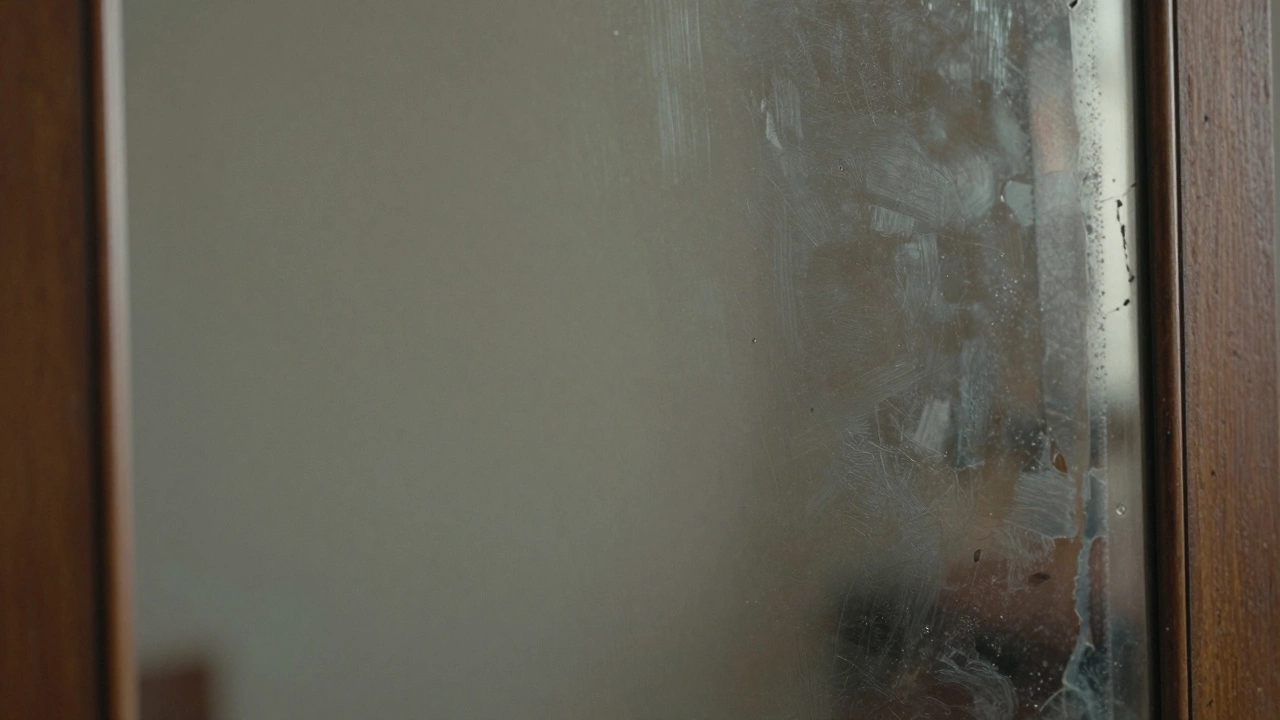
Modern mirrors use a thin, even silver coating applied with automated processes. Vintage mirrors, especially those made before the 1950s, often have a thicker, uneven silver layer. If you flip the mirror over and look closely at the backing, you might see patches of darker gray or brown where the silver has worn off. This isn’t damage - it’s oxidation. That’s called silvering deterioration, and it’s a classic sign of age. You’ll also notice the backing isn’t perfectly smooth. Older mirrors were coated by hand, leaving brush marks or slight ripples in the reflective layer.
2. Check the Glass Itself
Vintage glass isn’t perfectly flat like today’s float glass. Look for imperfections: wavy lines, bubbles, or slight distortions when you stare straight into the mirror. These aren’t flaws - they’re fingerprints of old manufacturing. Before the 1920s, glass was hand-blown or cast, then polished. Even in the 1940s and 50s, glass was rolled and cooled slowly, which created subtle curves. Modern mirrors are made using the float process, where molten glass floats on liquid tin. The result? A perfectly smooth, distortion-free surface. If your mirror makes your reflection look slightly stretched or wobbly, especially near the edges, it’s likely old.
3. Examine the Frame Material and Craftsmanship
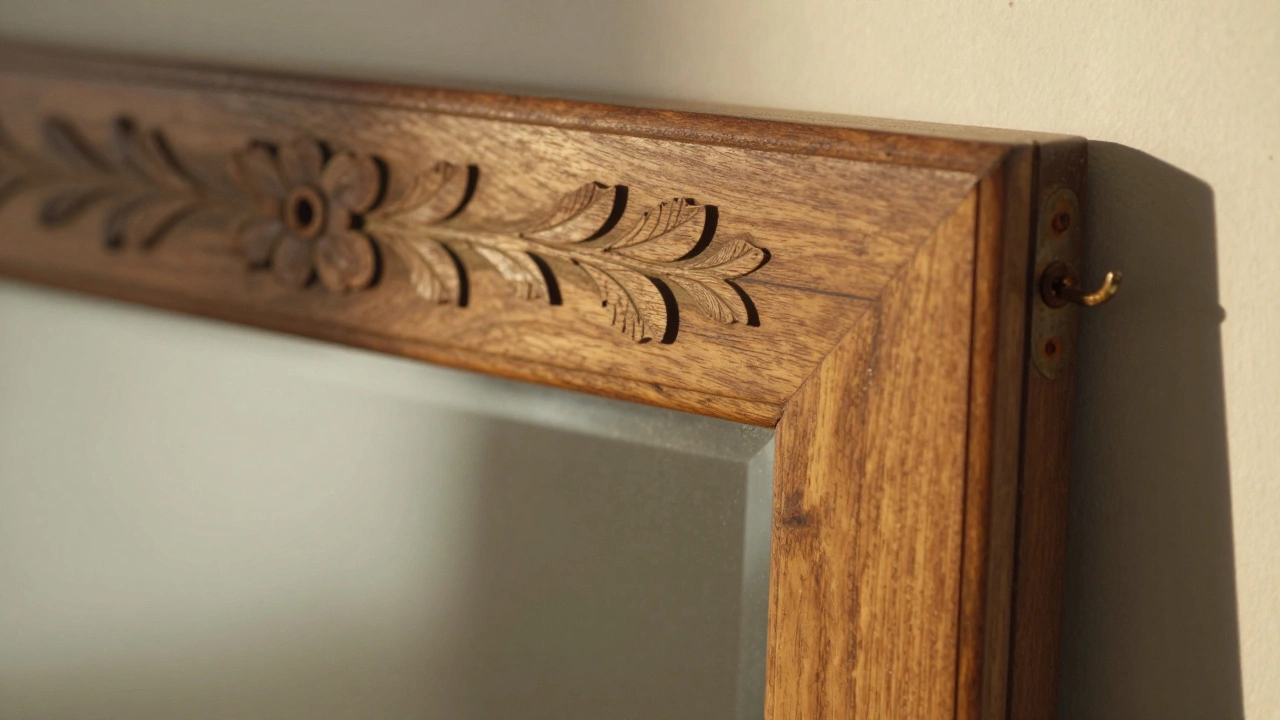
The frame tells you a lot. Vintage mirrors often have wood frames made from oak, walnut, or mahogany. Look for hand-carved details, not machine-made patterns. If the carvings look too uniform, with identical leaves or scrolls on every corner, it’s probably modern. Real vintage frames have slight variations - one leaf is deeper than the next, or the corner joinery doesn’t line up perfectly. Metal frames from the 1930s to 1960s were often made of brass, bronze, or wrought iron. Chrome-plated frames became common after the 1950s. If the metal looks shiny and new but the glass is cloudy, the frame might have been refinished. Original patina on metal is dull, with green or brown oxidation spots.
4. Inspect the Hanging Hardware
How a mirror hung on the wall matters. Vintage mirrors rarely used D-rings or sawtooth hangers. Instead, look for J-hooks, wire loops, or metal brackets screwed directly into the frame. Many mirrors from the 1920s to 1950s had two metal hooks on the back, spaced apart, designed to rest on nails in the wall. You might also find a wooden cleat attached to the back - a strip of wood nailed across the frame with screws on each end. Modern mirrors use plastic anchors or adhesive strips. If the hanging system looks handmade, with iron nails or rusted screws, it’s a strong indicator of age.
5. Smell the Mirror
This sounds odd, but it works. Older mirrors, especially those with wood frames and oil-based finishes, often carry a faint, earthy odor. It’s not mold - it’s the scent of aged varnish, linseed oil, or shellac. Run your fingers along the frame and bring them to your nose. If you catch a faint, woody, slightly sweet smell - like old books or a dusty attic - it’s a clue. Modern finishes are synthetic and odorless. A mirror that smells like plastic or paint is likely new.
6. Look for Maker’s Marks or Stamps
Many reputable manufacturers stamped their name or logo on the back of the mirror, usually near the frame or on the glass backing. Look for faint engravings, embossed letters, or printed labels. Brands like Stilnovo an Italian lighting and mirror manufacturer active from the 1930s to 1970s, Wade a U.S. company known for ornate bathroom mirrors in the 1950s, or Veritas a British manufacturer of high-quality mirrors in the 1940s are common on vintage pieces. These marks are often hard to see. Shine a flashlight at an angle across the back of the mirror - letters may catch the light. Don’t expect a brand name on every mirror, but if you find one, it’s a major clue.
7. Test the Reflectivity
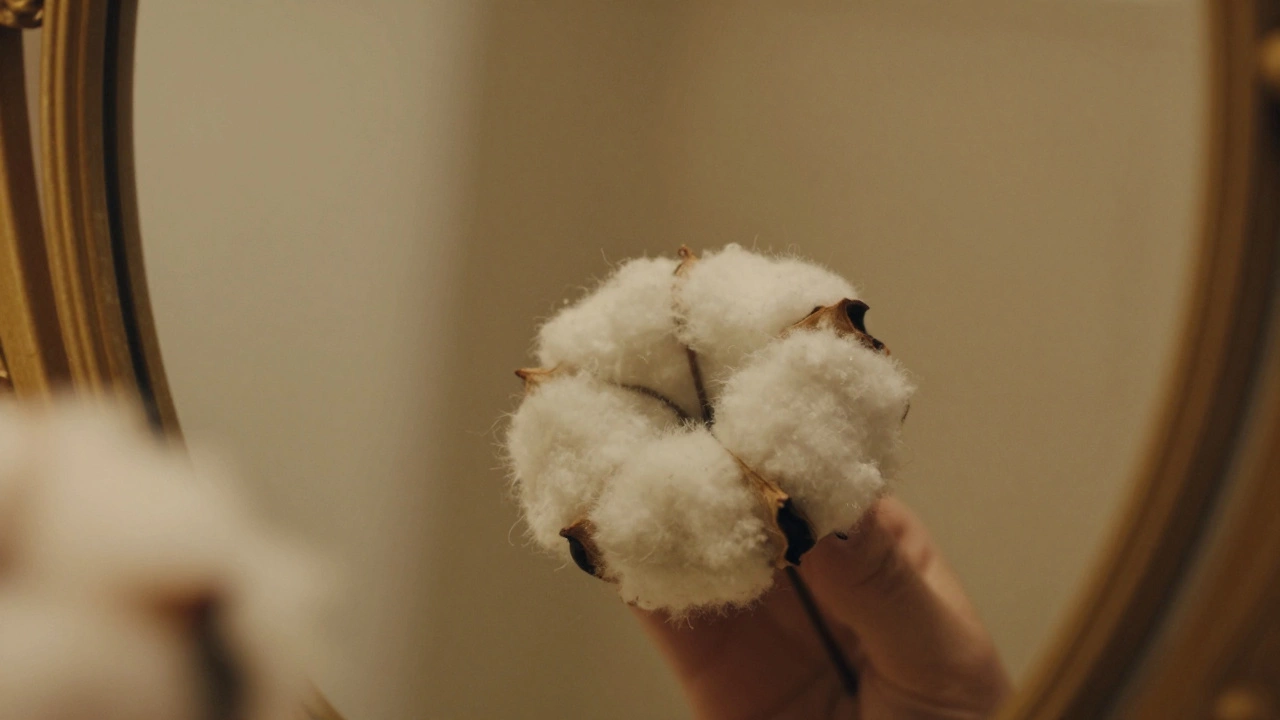
Hold a small white object - like a piece of paper or a cotton ball - a few inches in front of the mirror. In a modern mirror, the reflection is sharp and bright. In a vintage mirror, the image appears slightly dimmer, with a warm, yellowish tint. This isn’t dirt - it’s the chemical composition of the glass and silver layer. Older silvering compounds reflect light differently than modern aluminum coatings. You’ll also notice less contrast. Modern mirrors make whites look stark and blacks look deep. Vintage mirrors soften the contrast, giving everything a gentle glow. It’s why portraits from the 1930s look so flattering in old mirrors - they’re kinder to skin tones.
What to Avoid
Not every old mirror is valuable. Some were mass-produced in the 1970s and are just dated, not vintage. Avoid mirrors with:
- Plastic frames (common after 1980)
- Perfectly clear, distortion-free glass
- Modern adhesive backing or double-sided tape
- Labels that say "Made in China" or "Contemporary Design"
Also, be careful with mirrors that have been repainted, reglazed, or had new backing applied. These restorations erase the original aging signs. A mirror that looks too clean or too perfect might be a fake.
Final Tip: Compare with Known Examples
Visit a museum, antique shop, or browse verified vintage listings online. Look at photos of mirrors from the 1920s, 1940s, and 1960s. Notice how the glass looks, how the frames are shaped, where the hardware sits. Once you’ve seen a few real examples, your eye will adjust. You’ll start noticing the subtle tells - the slight curve in the glass, the uneven silvering, the hand-sanded wood grain. That’s when you’ll know you’ve found something real.
Can a mirror be vintage if it has no markings?
Yes. Many vintage mirrors, especially those made in the 1930s to 1950s, were produced by small workshops or regional manufacturers that didn’t stamp their names. The absence of a maker’s mark doesn’t mean it’s not vintage. Rely on the physical signs - glass texture, silvering wear, frame craftsmanship, and hanging hardware - instead.
Is a yellowed mirror always old?
Not always. Some modern mirrors use tinted glass to mimic an antique look. The key difference is in the cause. Vintage yellowing comes from silvering oxidation, which starts from the edges inward and looks uneven. Fake yellowing is uniform, often painted or coated, and doesn’t change under different lighting. Test it: shine a flashlight across the surface. Real aging creates depth; fake coloring looks flat.
How can I tell if the mirror’s glass was replaced?
Check the seal between the glass and frame. Vintage mirrors had the glass set into the frame with putty or small nails. If the glass sits flush with the frame and there’s no visible gap or sealant, it might be newer. Also, compare the glass texture to the frame’s age. If the frame looks 1940s but the glass is perfectly clear and flat, it was likely replaced in the 1990s or later.
Are all mirrors with ornate frames antique?
No. Ornate frames were popular in the 1980s and 1990s too, especially in mass-produced home goods. The difference is in the material and carving. Antique frames are carved from solid wood with irregular depth and tool marks. Modern ornate frames are often cast resin or pressed plastic with identical, repetitive patterns. Look for weight - real wood is heavier, and the grain runs naturally through the carving.
What’s the best way to clean a vintage mirror without damaging it?
Use a soft, lint-free cloth and distilled water. Never use ammonia, vinegar, or glass cleaners - they eat away at old silvering. For the frame, gently wipe with a dry brush to remove dust. If the wood is dry, use a tiny amount of beeswax polish - never oil-based. Avoid spraying anything directly on the mirror. Always spray the cloth first.
What to Do Next
If you’ve found a mirror that passes all these tests, you’ve got something special. Vintage mirrors aren’t just decorative - they’re pieces of design history. They reflect the craftsmanship and aesthetics of their time. Whether you’re hanging one in your bathroom, hallway, or bedroom, you’re not just adding light - you’re adding character. Keep it clean, avoid harsh chemicals, and let its quiet imperfections tell the story.