
What Is Street Slang for $1000? Decoding 'Band', 'Stack', and More

Street Slang Translator
Enter a dollar amount or click a slang term to see the equivalent value and usage context.
Standard Amount
Slang Terms
Band
Southern US / Hip-Hop
Grand
General American
Stack
NY / Northeast
K
Global / Numeric
G
Internet / Texting
C-Note
Old School
Select a term or enter an amount to decode the slang.
You’re at a club in Atlanta or scrolling through TikTok, and someone casually mentions they dropped a "band" on a new pair of sneakers. If you don’t know what that means, you’re out of the loop. In modern urban vernacular, street slang is the shorthand language used within specific communities to describe transactions, status, and value quickly. When it comes to money, specifically the thousand-dollar mark, there isn’t just one word. There’s a whole ecosystem of terms like "band," "stack," and "grand." Knowing these isn’t just about sounding cool; it’s about understanding cultural context, avoiding awkward misunderstandings, and decoding lyrics or conversations without pulling up a dictionary.
Why does this matter? Because money talk is universal, but the vocabulary changes fast. A term that was dominant in New York in the 90s might be considered outdated in Los Angeles today. Misusing slang can make you sound like an outsider trying too hard. This guide breaks down the most common ways people refer to $1,000, where those terms came from, and how to use them correctly so you never get caught off guard again.
The Dominant Term: Why Everyone Says "Band"
If you hear one word for $1,000 more than any other, it’s band. This term has completely taken over hip-hop culture and mainstream social media since the mid-2010s. The origin is straightforward but visual. A standard bank strap used by tellers to bundle $1,000 worth of bills (ten $100 notes) often features a colored paper band. While banks have moved toward digital records, the physical image of that paper band wrapping around a neat stack of cash stuck.
In cities like Atlanta, which heavily influenced recent rap trends, saying "I got bands" means you have multiple thousands. It’s pluralized easily: two bands is $2,000. Ten bands is $10,000. It’s efficient. You don’t need to say "one thousand dollars." You just say "a band." It implies liquidity and ready cash. If someone asks if you have a band, they aren’t asking if you have a musical group; they’re checking your wallet.
| Term | Origin/Region | Current Status | Context |
|---|---|---|---|
| Band | Southern US / Hip-Hop | Dominant | Casual, youth culture, social media |
| Grand | General American English | Still Common | Neutral, older generations, formal-ish |
| Stack | New York / Northeast | Fading but recognized | Refers to a bundle of cash |
| G | Internet / Texting | Niche | Abbreviation for Grand |
| K | Global / Numeric | Universal | Data entry, gaming, quick text |
Classic Alternatives: "Grand" and "Stack"
Before "band" took the throne, grand was the undisputed king of thousand-dollar slang in the United States. Derived from the Latin "grandis" meaning large, it became American shorthand in the early 20th century. It’s still widely used, especially among people over 35 or in professional settings where you want to be clear but not overly stiff. If a contractor says a project will cost "five grand," everyone understands exactly what they mean. It lacks the street cred of "band," but it carries less risk of being misunderstood by older audiences.
Then there’s stack. This term peaked in popularity during the late 90s and early 2000s, particularly in East Coast hip-hop scenes like Brooklyn and Queens. Like "band," it refers to the physical bundling of cash. Banks stack ten hundred-dollar bills together. For years, rappers would boast about having "stacks" to show their wealth. Today, "stack" feels a bit dated. Using it now might signal that your reference points are from the era of Jay-Z’s *The Blueprint* rather than Drake’s latest album. However, it’s not dead. Some regions still prefer it, and it’s often used interchangeably with "band" by those who grew up with both terms.

Regional Variations and Niche Slang
Geography plays a huge role in how you talk about money. In London, for instance, you might hear "a thou" or "a ton" (though a ton technically means £1,000, the logic applies). In Australia, "a kilo" is sometimes used, borrowing from the metric system’s prefix for thousand. But in the US, regional pride keeps certain terms alive.
In parts of Chicago and the Midwest, you might still hear "G" as a standalone noun. "He owes me a G." It’s short, sharp, and efficient. Meanwhile, in online gaming communities, the letter K reigns supreme. If a player says they spent 10K on loot boxes, they mean $10,000. This numeric shorthand has bled into general texting. If you text a friend, "Cost me 2k," they’ll know you mean $2,000. It’s the most neutral form of slang because it’s based on mathematics, not culture.
There are also older, almost extinct terms. "C-note" referred to a single $100 bill, so ten C-notes made a grand. You’ll rarely hear anyone under 40 use "C-note" unless they’re being ironic. Similarly, "yard" was popular in the UK in the 90s, derived from "yardie" culture, but it has largely vanished from mainstream usage.
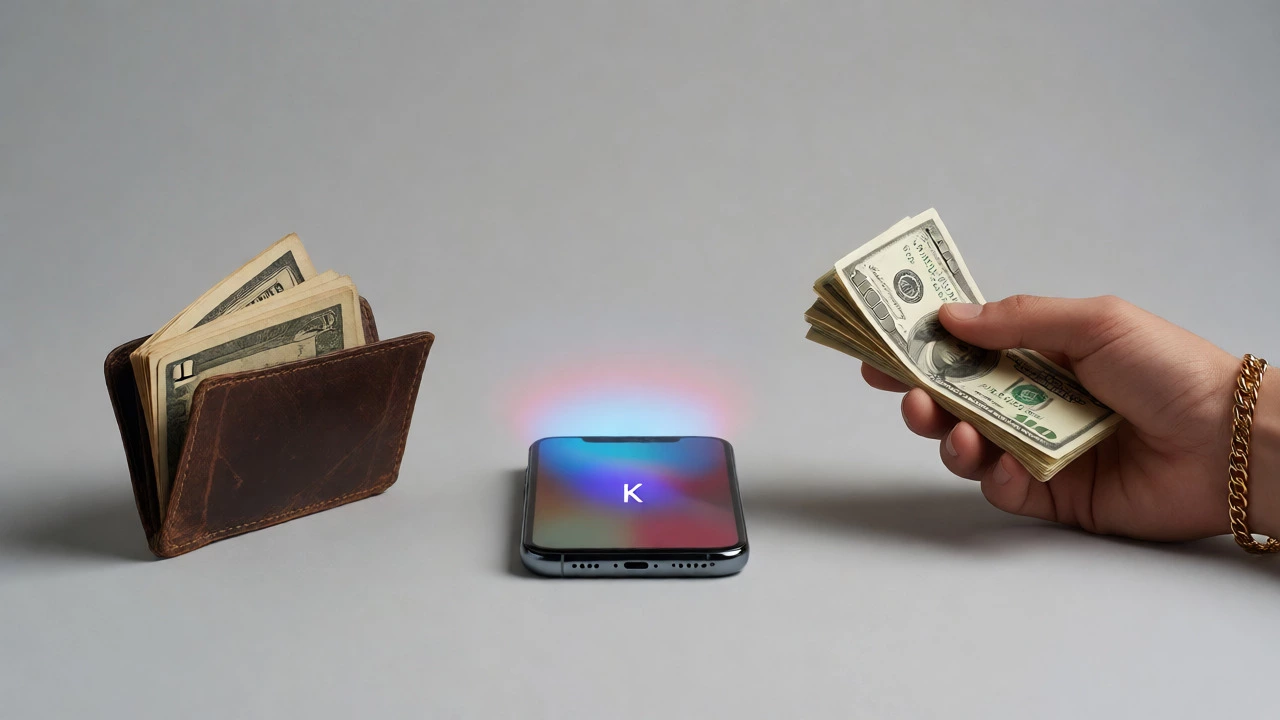
How to Use These Terms Without Cringe
Here is the golden rule: match the audience. If you’re talking to your college roommate who loves trap music, "band" is perfect. "I need a band for rent." If you’re negotiating a car price with a dealer in his 60s, stick to "grand" or just say the number. Saying "I’ve got three bands" to a banker might confuse him, whereas "three thousand" is crystal clear.
Also, pay attention to plurality. "A band" is $1,000. "Bands" is vague-it could mean $2,000, $5,000, or more. It’s a flex word. If you say "I’m making bands," you’re implying you’re making significant money, likely more than one thousand. Don’t use it for exact accounting. You wouldn’t file your taxes using "bands." You’d use numbers.
- Use "Band" for casual conversation with peers, social media captions, or when referencing hip-hop culture.
- Use "Grand" for mixed-age groups, professional-but-relaxed settings, or when clarity is priority.
- Use "Stack" only if you’re intentionally invoking nostalgia or speaking to someone from the NY/NJ area who uses it.
- Use "K" for texting, gaming, or data-heavy discussions.
Why Slang Changes So Fast
Money slang evolves because it’s tied to identity. Every generation wants to distinguish itself from the previous one. When Boomers said "grand," Gen X wanted something tougher, so they leaned into "stacks" and "bills." Millennials and Gen Z, influenced by Southern rap and internet speed, adopted "bands" because it sounded smoother and fit better in short-form content like tweets and TikToks.
Furthermore, economic shifts change how we view cash. As credit cards and digital payments rise, physical cash becomes less common. Paradoxically, this makes slang for physical cash bundles (like "band" and "stack") more potent. They evoke a tangible reality that Venmo doesn’t. When you say you paid in "bands," you’re painting a picture of handing over real paper money, which carries a different weight than clicking "pay."