What Are Flat Mirrors Called? The Simple Truth About Plane Mirrors

Mirror Selection Tool
Step 1: What's your primary use?
Step 2: Key considerations
Recommended Mirror Type
Based on your selections:
Your mirror type will appear here
Description will appear here
Select your options to see recommendations
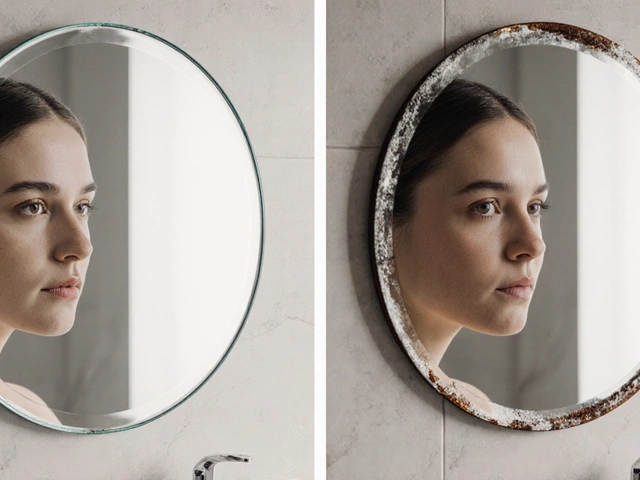
Ever looked into a bathroom mirror and wondered why it doesn’t warp your face like a funhouse mirror? That’s because it’s not just any mirror-it’s a flat mirror. But what do professionals call it? The answer is simple: plane mirrors. That’s the real name. Not ‘flat mirror,’ not ‘regular mirror’-plane mirror. And if you’ve ever been confused by the terms, you’re not alone.
Plane Mirrors Are Everywhere
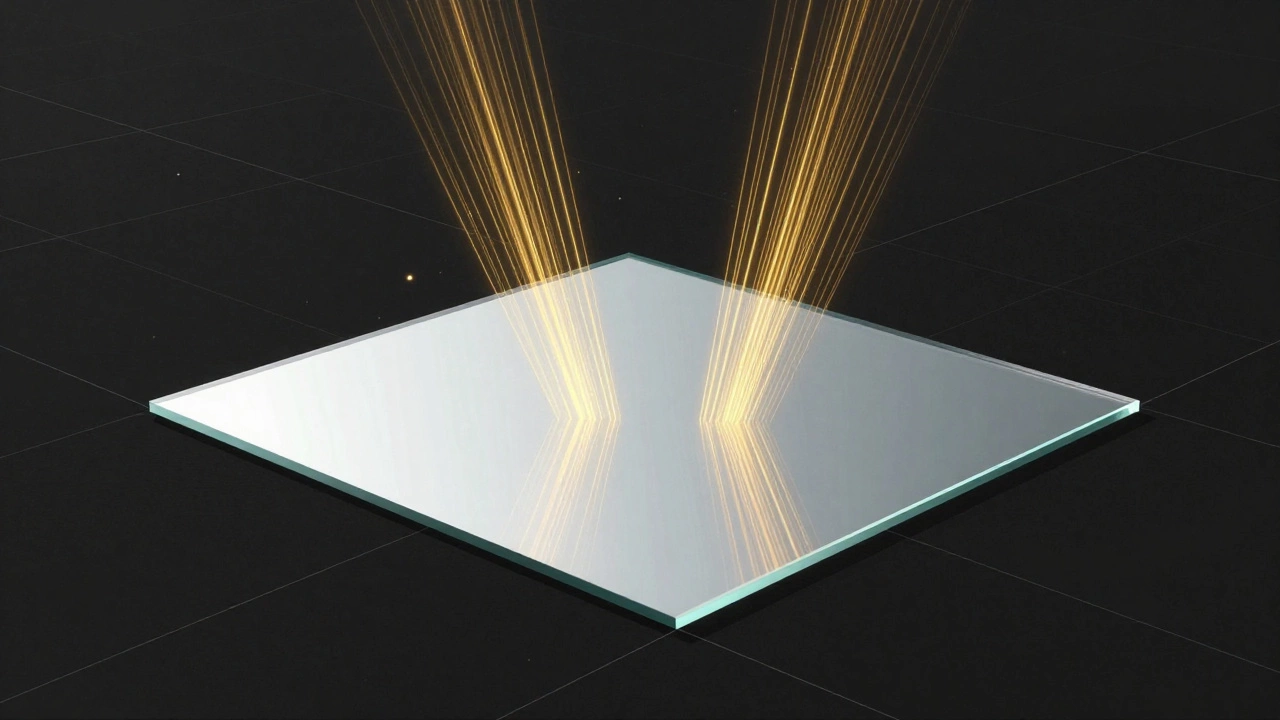
You see them every morning when you brush your teeth. They’re in dressing rooms, hallways, cars, and even some smartphones’ selfie cameras. A plane mirror is a mirror with a perfectly flat reflective surface. No curves. No bumps. No distortion. It reflects light straight back at the same angle it hits, which is why your reflection looks exactly like you-just reversed left to right.
This isn’t magic. It’s physics. Light travels in straight lines. When it hits a smooth, flat surface like glass coated with silver or aluminum, it bounces off cleanly. That’s called specular reflection. Compare that to a curved mirror-like the ones in car side mirrors or makeup mirrors-and you get a different result. Those bend the light. Plane mirrors don’t.
Why Do People Say ‘Flat Mirror’ Instead of ‘Plane Mirror’?
It’s mostly about language. In everyday speech, people say ‘flat mirror’ because it’s easier to picture. ‘Plane’ sounds like a math term, and most of us haven’t thought about geometry since high school. But in optics, engineering, and physics, ‘plane’ is the technical term. It refers to a two-dimensional flat surface-like a plane on a graph. So a plane mirror is literally a mirror that sits on a plane.
Manufacturers and retailers often use ‘flat mirror’ on packaging or websites because it’s more intuitive for shoppers. But if you’re reading a science textbook, a mirror specification sheet, or talking to an optician, you’ll see ‘plane mirror’ every time.
How Plane Mirrors Work
Here’s the basic rule: the angle at which light hits the mirror equals the angle at which it bounces off. That’s called the law of reflection. If a ray of light hits the mirror at a 30-degree angle, it reflects at 30 degrees on the other side. This keeps the image true to size and shape.
That’s why your reflection looks normal. Your nose is still in the middle. Your eyes are still level. Your height hasn’t changed. That’s not true with convex or concave mirrors. Convex mirrors (like those on street corners) make things look smaller and farther away. Concave mirrors (like shaving mirrors) magnify. Plane mirrors? They just show you as you are.
Plane Mirrors vs. Other Mirror Types
Not all mirrors are created equal. Here’s how plane mirrors stack up against the others:
| Mirror Type | Surface Shape | Image Size | Image Distortion | Common Uses |
|---|---|---|---|---|
| Plane Mirror | Flat | Same as object | None | Bathrooms, bedrooms, dressing rooms |
| Convex Mirror | Curved outward | Smaller | Yes-objects appear farther away | Car side mirrors, security mirrors in stores |
| Concave Mirror | Curved inward | Larger (when close) | Yes-can magnify or blur | Makeup mirrors, telescope reflectors, dental mirrors |
Plane mirrors are the only type that gives you a 1:1 scale image without stretching, shrinking, or warping. That’s why they’re the default for personal grooming and home decor. If you want to see exactly how you look in your outfit, you need a plane mirror.
Historical Use of Plane Mirrors
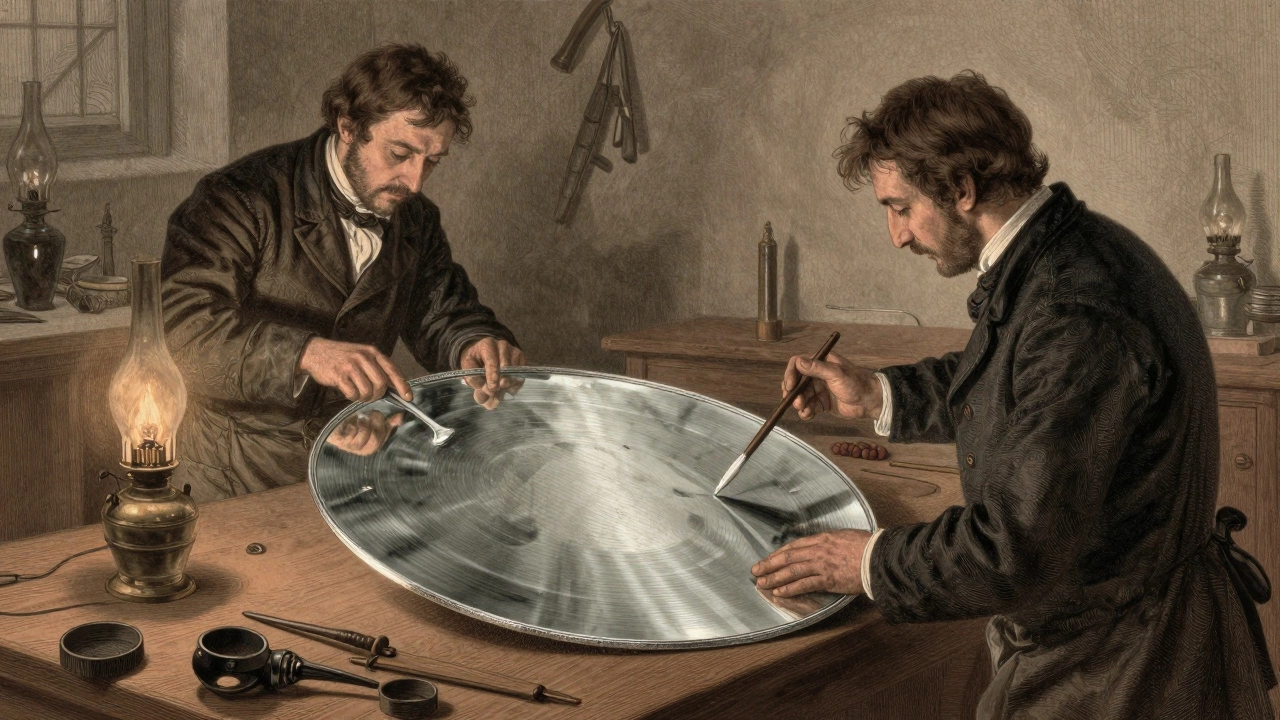
People have been making flat mirrors for thousands of years. Ancient Egyptians polished bronze to create reflective surfaces. By the 1st century AD, Roman glassmakers were coating glass with lead or tin to make clearer mirrors. But true modern plane mirrors-glass with a thin metal backing-didn’t become common until the 1800s, when silvering techniques improved.
Before that, mirrors were expensive, heavy, and hard to make perfectly flat. Today, mass production makes them cheap and accurate. Industrial processes use laser-guided rollers to ensure the glass stays perfectly flat before the reflective coating is applied. That’s why even a $20 mirror from a discount store still gives you a true reflection.
Why This Matters for Home Decor
If you’re decorating a room, choosing the right mirror isn’t just about style-it’s about function. A plane mirror makes a small room feel bigger because it reflects light and space accurately. A curved mirror might make the room look odd, even if it’s trendy. That’s why interior designers almost always recommend plane mirrors for living rooms, entryways, and bedrooms.
Also, if you’re hanging a mirror across from a window, a plane mirror will double the natural light in the room. A convex mirror would scatter the light unevenly. A concave mirror might focus it into a hot spot. Only a plane mirror gives you clean, even reflection.
Common Misconceptions
People often think all mirrors are the same. They’re not. Some think ‘flat’ means low quality. That’s wrong. A plane mirror can be high-end or budget-it’s about the surface, not the price.
Others believe mirrors flip your image left to right. They don’t. They flip front to back. Your left hand is still on your left in the mirror. But because you turn to face yourself, your brain interprets it as a swap. That’s why text looks backward in a mirror-it’s not flipped, it’s reversed in depth.
And no, plane mirrors don’t show your ‘true’ self. No mirror does. They show light. Your perception, lighting, and even your mood affect how you see yourself. But a plane mirror gives you the most accurate version available without lenses or filters.
When You Might Need a Different Mirror
There are times when you want something other than a plane mirror. If you’re doing makeup and need to see fine details, a concave magnifying mirror helps. If you’re installing a mirror in a narrow hallway to see around a corner, a convex mirror gives you a wider view.
But if you just want to check your hair, see how your shirt fits, or make your living room feel brighter-stick with a plane mirror. It’s the standard for a reason.
How to Pick the Right One
When shopping for a flat mirror, look for these signs of quality:
- Thick, clear glass (at least 3mm for wall mirrors)
- Uniform silver or aluminum backing-no cloudy spots
- Smooth, even edges
- No warping-hold a straight edge up to the surface and check for gaps
A poorly made mirror might look flat but still have slight curves from manufacturing. That’s enough to distort your reflection slightly. In a bathroom, that’s annoying. In a studio or dressing room, it’s a dealbreaker.
Final Thought: It’s Not About the Name
Whether you call it a flat mirror or a plane mirror, what matters is what it does. It shows you clearly. It doesn’t lie. It doesn’t exaggerate. It just reflects.
And in a world full of filters, edited photos, and warped perspectives, that’s kind of powerful.
Are flat mirrors and plane mirrors the same thing?
Yes. ‘Flat mirror’ is the everyday term people use. ‘Plane mirror’ is the technical term used in science, optics, and manufacturing. They refer to the exact same thing: a mirror with a perfectly flat reflective surface that shows an undistorted reflection.
Why do plane mirrors reverse left and right?
They don’t. Plane mirrors reverse front to back. When you raise your right hand, your reflection raises the hand on the same side-it’s just facing you. Your brain interprets this as a left-right swap because you imagine yourself turning around to face the mirror. It’s a trick of perception, not physics.
Can a plane mirror make a room look bigger?
Yes. Because plane mirrors reflect light and space accurately, they create the illusion of depth. Placing one opposite a window or across from a doorway can make a small room feel twice as large. This is a standard trick used by interior designers.
Are plane mirrors better than convex or concave mirrors for daily use?
For personal grooming, home decor, and accurate reflection, yes. Convex mirrors shrink images and concave mirrors magnify them-both distort reality. Plane mirrors show you exactly as you are, which is why they’re the standard in bathrooms, bedrooms, and dressing rooms.
What makes a plane mirror high quality?
High-quality plane mirrors use thick, bubble-free glass with a uniform metallic coating-usually aluminum or silver. The surface must be perfectly flat, with no warping. You can test this by placing a straight edge along the mirror’s surface-if there’s any gap, it’s not truly flat.