
What Do You Call a Knife and a Fork? The Complete Guide to Cutlery
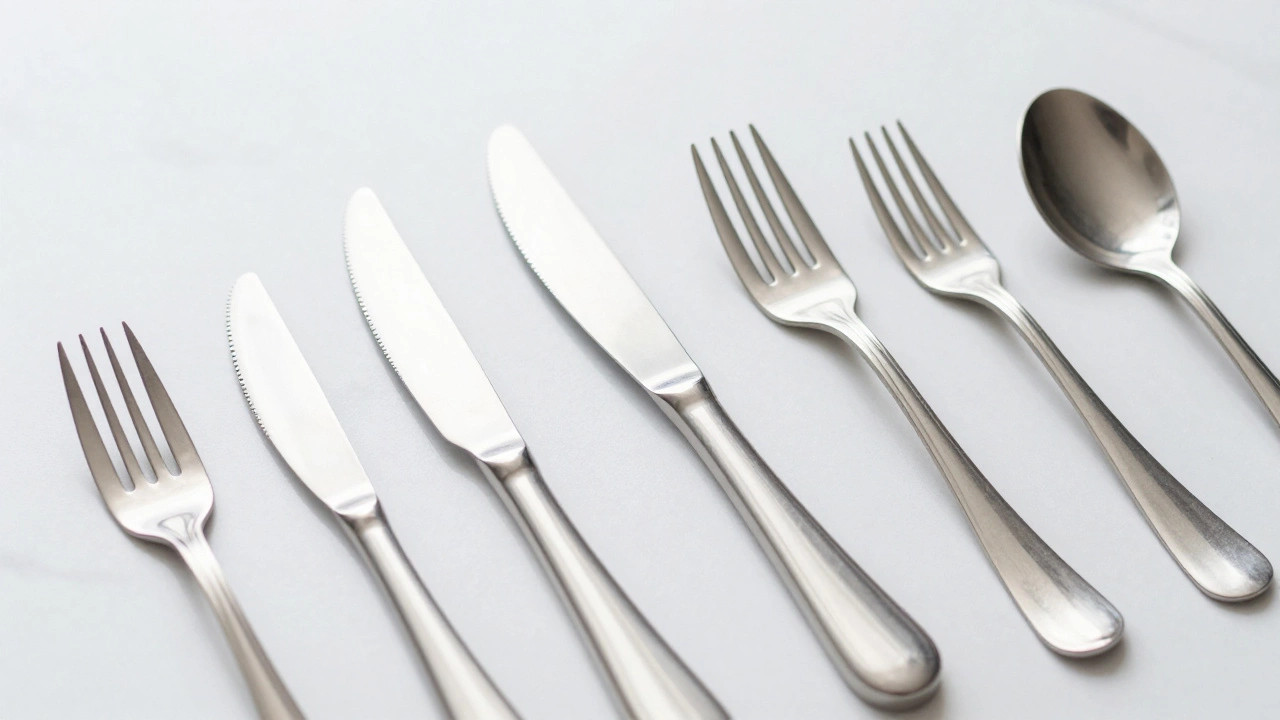
The Cutlery Terminology & Material Guide
Not sure what to call your utensils? Tell us about your tools and where you are, and we'll give you the most accurate term.
-
The Great Debate: Cutlery vs. Flatware vs. Silverware
Most of us use these words interchangeably, but if you're talking to a collector or a professional chef, the distinctions matter. Using the wrong term won't get you kicked out of a dinner party, but knowing the difference makes you look like you've got your life together.First, let's look at Flatware. This is a term you'll hear most often in North America. It refers to the "flat" nature of the tools-unlike a bowl or a plate, a fork or knife is relatively flat. If you're shopping at a big-box store in the US, you'll likely see "flatware sets" rather than cutlery sets.
Then there is Silverware. This is where people get tripped up. In a strict sense, silverware is only silverware if it's made of silver. However, most of what we use today is actually Stainless Steel. Calling a cheap set of steel forks "silverware" is common, but technically inaccurate. It's like calling every white tissue a "silk handkerchief." It looks the part, but the material is totally different.
| Term | Primary Region | Strict Meaning | Common Usage |
|---|---|---|---|
| Cutlery | UK, AU, NZ | Tools that cut (mostly) | All eating utensils |
| Flatware | USA, Canada | Flat-shaped tools | Forks, knives, spoons |
| Silverware | Global | Made of silver metal | Anything shiny and metallic |
Breaking Down the Tableware Family
To understand where your knife and fork fit in, you have to look at the bigger picture. They are all part of Tableware, which is the umbrella term for everything used to set a table. This includes your plates, glassware, and the tools themselves.Within tableware, you have "holloware." If you've ever wondered why a teapot or a cream pitcher isn't called cutlery, it's because they are hollow. Cutlery is specifically the handheld tools. So, the hierarchy goes: Tableware → Cutlery/Flatware → Individual pieces like the steak knife or the dessert fork.
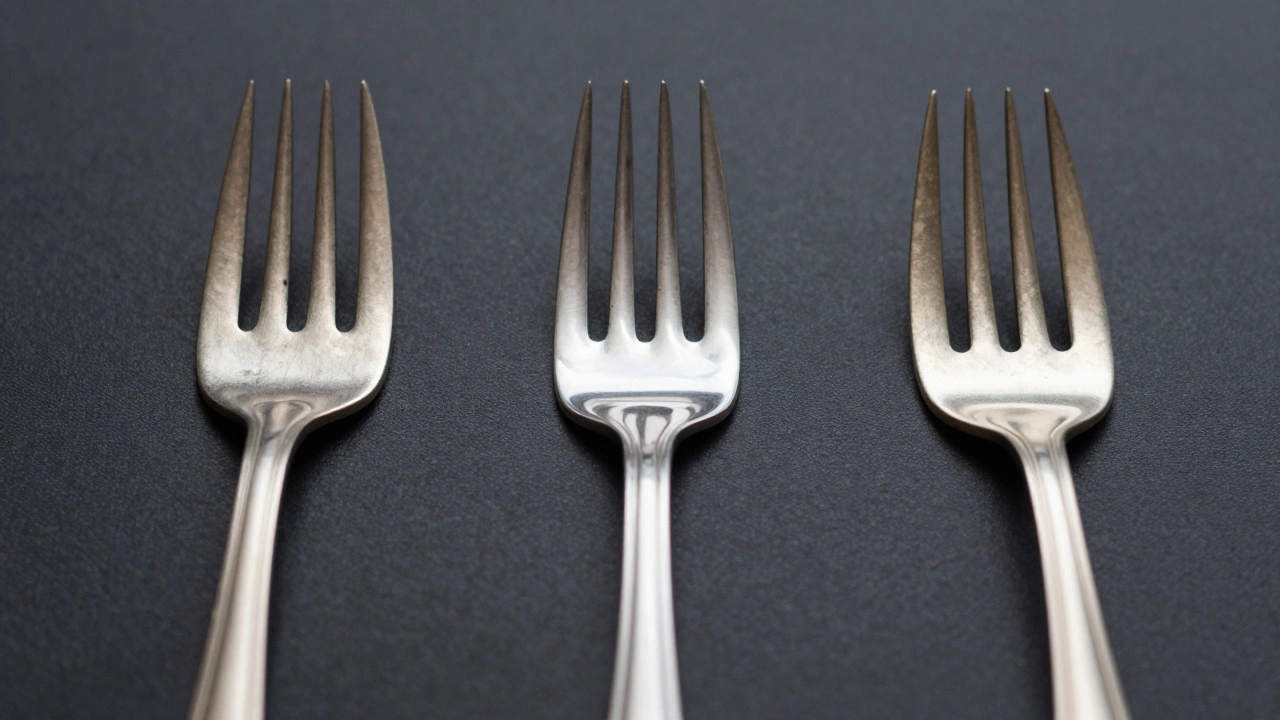
When you're putting together a set, you'll encounter different materials. While stainless steel is the king of the modern kitchen because it doesn't rust and is cheap to produce, high-end dining still leans on Sterling Silver. Sterling silver is 92.5% pure silver and 7.5% other metals (usually copper) to give it strength. It's beautiful, but it tarnishes, meaning you spend your weekends polishing it with a cloth-something you'd never have to do with a standard steel fork.
The Anatomy of a Proper Place Setting
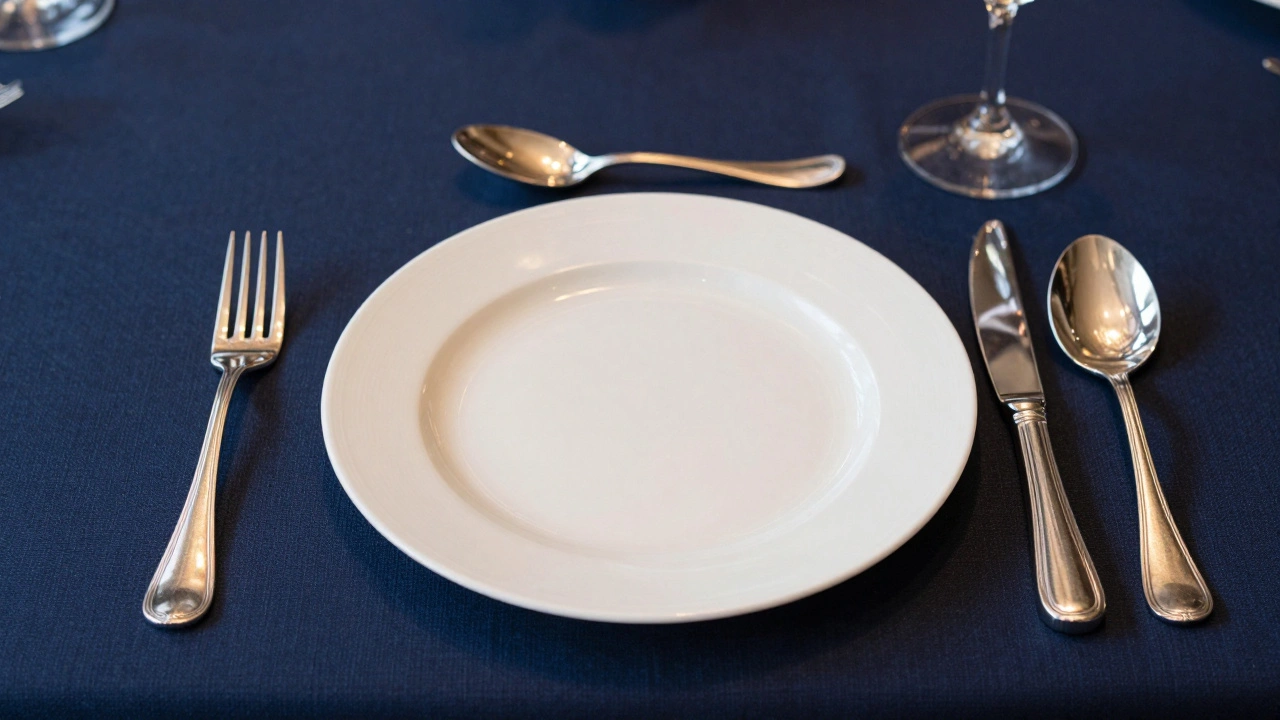
If you've ever sat down at a fancy restaurant and seen five different forks, don't panic. There is a logic to the madness. The general rule of thumb is to work from the outside in. The tools furthest from your plate are for the first course, and the ones closest are for the main event.- The Dinner Knife: Usually the largest knife, placed to the right of the plate with the cutting edge facing inward.
- The Dinner Fork: Placed to the left of the plate. In the American style, you might switch the fork to your right hand after cutting your meat.
- The Salad Fork: Smaller than the dinner fork and usually positioned to the left of it.
- The Soup Spoon: A large, rounded spoon to the right of the knife.
- The Dessert Spoon/Fork: These are often placed horizontally above the plate, waiting for the final course.
Have you ever noticed that some knives have serrated edges while others are smooth? A steak knife uses a serrated blade to saw through tough muscle fibers without squishing the meat. A butter knife, on the other hand, is intentionally dull because you aren't cutting through bone-you're just spreading a soft fat across a piece of toast.
Choosing the Right Material for Your Home
Not all "silver" is created equal. If you're buying new gear, you'll see a few specific labels that tell you exactly what you're getting. Understanding these prevents you from accidentally buying a set that will rust in three years.The gold standard for daily use is 18/10 stainless steel. The "18" refers to the percentage of chromium, which prevents rust. The "10" is the percentage of nickel, which gives the metal that brilliant, silver-like shine. If you see 18/0, it means there's no nickel. These are cheaper and more matte, but they can lose their luster faster and are more prone to pitting if you leave them in a salty environment.
Then there's silver-plated cutlery. This is a piece of base metal (like brass or copper) coated in a thin layer of real silver. It gives you the luxury look of sterling silver without the insane price tag. The downside? Once that silver layer wears off-which happens over years of scrubbing-you'll see the yellowish metal underneath.
Common Mistakes and Etiquette Pitfalls
Since we're talking about the names and uses of these tools, it's worth mentioning how to actually use them without looking like you've never eaten in public. Most people stick to one of two styles: Continental (European) or American.In the Continental style, the fork stays in the left hand and the knife in the right throughout the entire meal. You don't switch. It's more efficient and generally considered the "standard" in most of the world. The American style involves switching the fork to the right hand after cutting a piece of food. While common in the US, it's slower and involves more movement.
One big mistake people make is using the wrong tool for the job-like using a dinner knife to cut a very soft cake. Not only is it inefficient, but it can also damage the delicate frosting. That's why specialized tools, like cake servers or pastry forks, exist. They aren't just for show; they are designed for the physics of the food.
Maintaining Your Collection
Whether you have a set of heirloom sterling silver or a budget-friendly 18/0 set from a department store, how you treat them determines how long they last. The biggest enemy of your cutlery is the dishwasher's harsh chemicals.If you have high-end flatware, avoid the dishwasher. The heat and detergent can cause a reaction called "electrolytic corrosion," which creates tiny black pits in the metal. Instead, hand-wash with a mild soap and dry them immediately. Leaving them to air-dry can leave water spots, especially if you have "hard water" with high mineral content.
For those with real silver, the battle is against oxidation. Silver reacts with sulfur in the air to create tarnish. Instead of using those abrasive pastes that strip away the metal, use a silver polishing cloth. It's gentler and preserves the weight and value of the piece over decades.
Is it wrong to call it "silverware" if it is made of stainless steel?
In casual conversation, no. Most people use "silverware" as a generic term for all eating utensils. However, in a formal or professional setting, "cutlery" or "flatware" is more accurate since stainless steel contains no actual silver.
What is the difference between 18/10 and 18/0 stainless steel?
The numbers refer to the chromium and nickel content. 18/10 has 18% chromium and 10% nickel, making it more resistant to corrosion and giving it a shinier finish. 18/0 has no nickel, making it cheaper and more matte, though slightly less durable over time.
Which term is most common in the UK versus the USA?
In the UK, Australia, and New Zealand, "cutlery" is the dominant term. In the USA and Canada, "flatware" is more common in retail and home contexts, though "silverware" is used widely across all English-speaking regions.
How do I know which fork to use at a fancy dinner?
The golden rule is to work from the outside in. The utensil furthest from the plate is for the first course (usually a salad or appetizer), and as you progress through the meal, you move toward the utensils closest to the plate.
Can I put sterling silver in the dishwasher?
Absolutely not. Dishwasher detergents are far too abrasive for sterling silver and can cause permanent damage or extreme tarnishing. Always hand-wash and dry silver immediately with a soft cloth.