
What Category Is Kitchenware? Understanding Retail Classifications and Home Organization
Kitchenware Classification & Organization Tool
Identify Your Item
Enter a specific kitchen item to see how it is classified in retail, functionally, and by material.
Retail Category
Functional Group
Material & Care
Results will appear here
Try searching for: "Frying Pan", "Knife Set", "Blender", or "Ceramic Bowl"
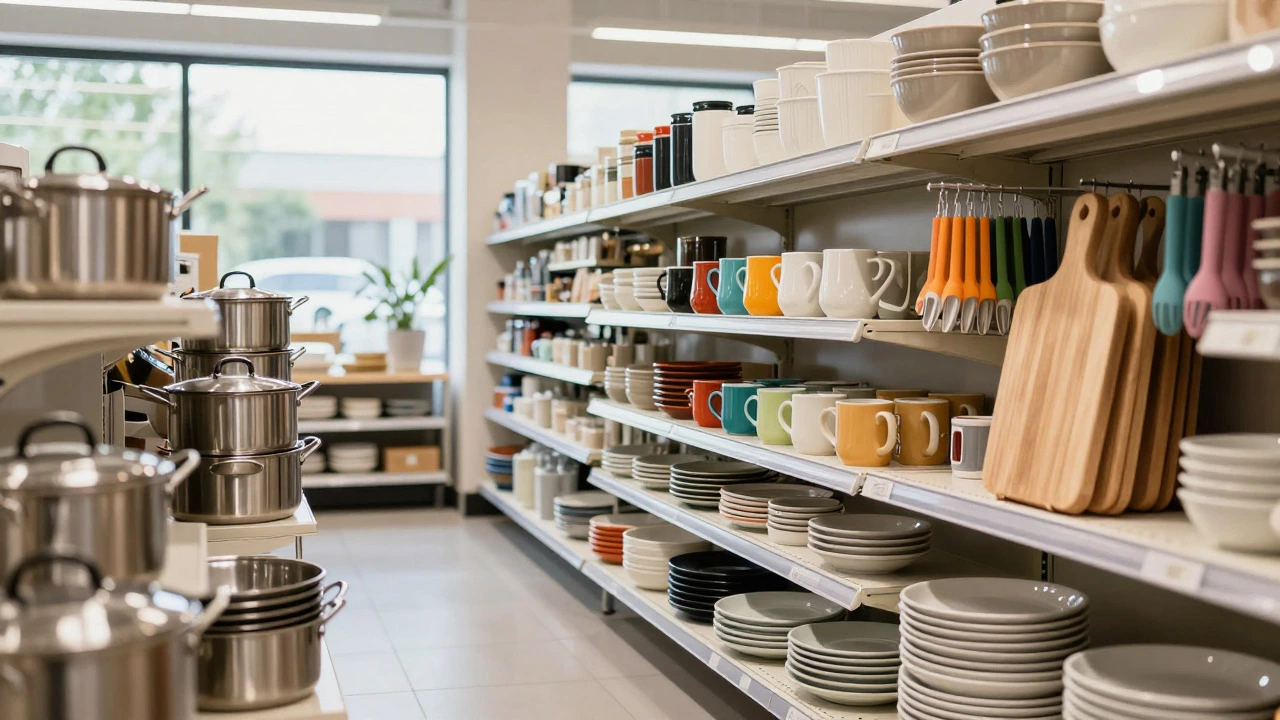
Walk into any large department store or browse a major online retailer, and you will quickly notice that kitchenware is rarely just sitting in one single aisle. It is scattered. You might find pots in the cookware section, knives near the gadgets, and mugs mixed with dinnerware. This fragmentation often leads to confusion for shoppers, small business owners trying to categorize their inventory, and homeowners trying to organize their cabinets. So, what category is kitchenware actually in?
The short answer is that it depends on who you ask. In retail, it usually falls under Home Goods or Kitchen & Dining. In broader economic terms, it is part of the Durable Goods sector. But if you are looking to organize your own home or manage an e-commerce store, the definition gets much more granular. To truly understand where kitchenware fits, we need to break down the different layers of classification: retail hierarchy, functional usage, and material composition.
The Retail Hierarchy: Where Do Stores Put It?
When you shop at a big-box retailer like Target, Walmart, or Amazon, they use a specific taxonomy to help customers navigate millions of products. At the top level, kitchenware belongs to the Home department. This is the parent category that includes everything from furniture to lighting.
Within the Home department, there is a sub-category typically labeled Kitchen & Dining or simply Kitchen. This is the primary bucket for all items used to prepare, serve, or eat food. However, even within this sub-category, retailers split items further to improve search relevance. For example:
- Cookware: Items that go directly onto heat sources, such as frying pans, saucepans, and Dutch ovens.
- Bakeware: Items designed for oven use, like baking sheets, cake pans, and muffin tins.
- Utensils & Gadgets: Tools for handling food, including spatulas, whisks, can openers, and peelers.
- Dinnerware & Serveware: Plates, bowls, cups, and serving platters.
- Small Appliances: Electric devices like blenders, toasters, and coffee makers (sometimes separated into an "Appliances" category).
This structure matters because it dictates how algorithms rank products. If you are selling a ceramic knife set, listing it under "Cutlery" might reach a different audience than listing it under "Kitchen Knives." Understanding these retail silos helps both buyers find what they need faster and sellers optimize their product listings.
Functional Classification: How We Use These Items
Retail categories are about sales, but functional categories are about utility. When organizing a professional kitchen or a well-stocked home pantry, experts group kitchenware by its role in the cooking process. This approach is often more practical than following store aisles.
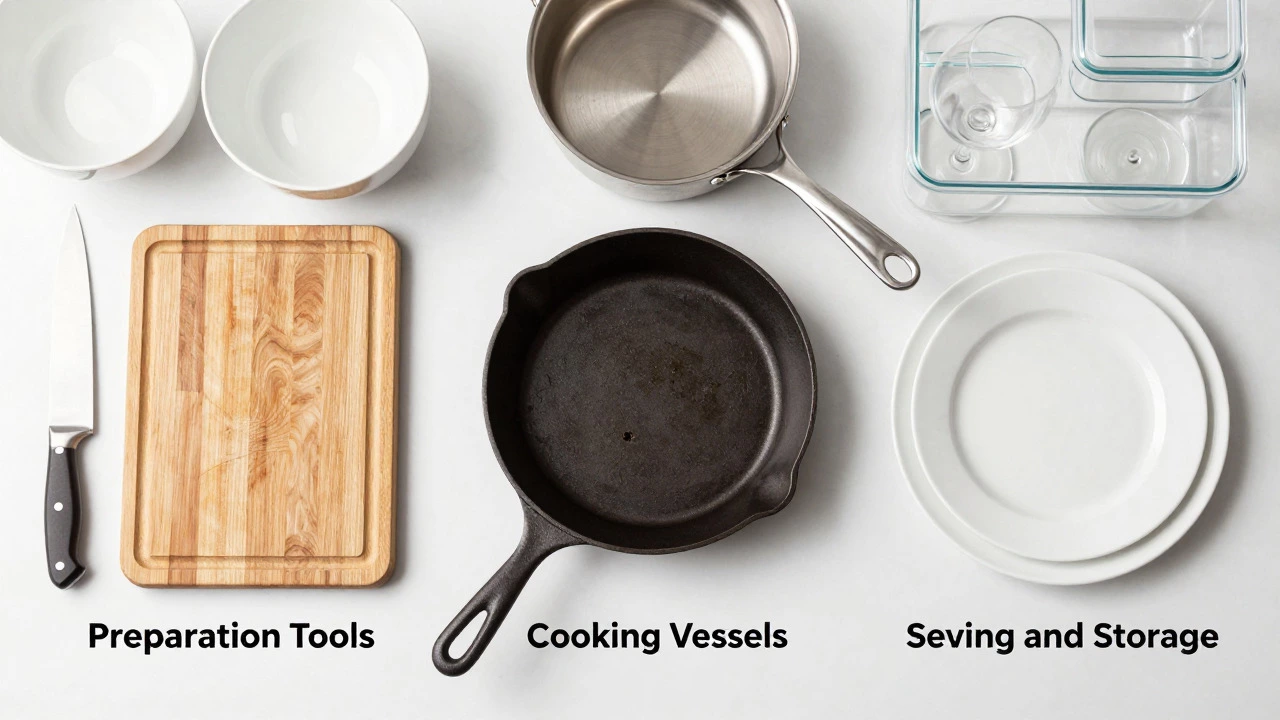
We can divide kitchenware into three main functional groups:
- Preparation Tools: These are items used before heat is applied. This includes cutting boards, knives, mixing bowls, measuring cups, and graters. The key characteristic here is that they handle raw ingredients.
- Cooking Vessels: These are the containers that hold food during the heating process. This includes pots, pans, skillets, and roasting trays. The defining attribute is heat resistance and thermal conductivity.
- Serving and Storage: These items come into play after cooking. This covers plates, glasses, serving spoons, Tupperware-style containers, and wine decanters. Their primary function is presentation and preservation.
By thinking in these functional terms, you can better assess what you actually need. For instance, if you love baking, your "Cooking Vessels" category should be heavy on bakeware. If you do most of your cooking on the stovetop, you might invest more in high-quality sauté pans rather than a dozen different types of spatulas.
Material-Based Categorization
Another way kitchenware is categorized is by the material it is made from. This is particularly important for durability, maintenance, and health considerations. Materials dictate not just how an item looks, but how it performs.
| Material | Common Uses | Key Attributes | Maintenance Level |
|---|---|---|---|
| Stainless Steel | Pots, pans, cutlery, mixing bowls | Durable, rust-resistant, non-reactive | Low (dishwasher safe) |
| Cast Iron | Skillets, Dutch ovens, griddles | Heavy, retains heat exceptionally well, requires seasoning | Medium (hand wash recommended) |
| Ceramic/Porcelain | Dinnerware, baking dishes, mugs | Aesthetic, microwave-safe, fragile | Low to Medium (can chip) |
| Silicone | Spats, baking mats, spatulas | Flexible, heat-resistant up to 450°F (230°C), non-stick | Low (dishwasher safe) |
| Wood/Bamboo | Cutting boards, spoons, bowls | Gentle on knife edges, antimicrobial properties, porous | High (hand wash, oil regularly) |
Notice how stainless steel dominates the "tools" category due to its hygiene and durability, while wood is reserved for preparation surfaces where gentleness is key. When buying kitchenware, knowing these material categories helps you avoid mismatches, like using a metal utensil on a non-stick pan, which scratches the coating.
Kitchenware vs. Cookware vs. Dinnerware
One of the biggest sources of confusion is the interchangeability of the words "kitchenware," "cookware," and "dinnerware." While people often use them synonymously in casual conversation, they have distinct meanings in industry standards.
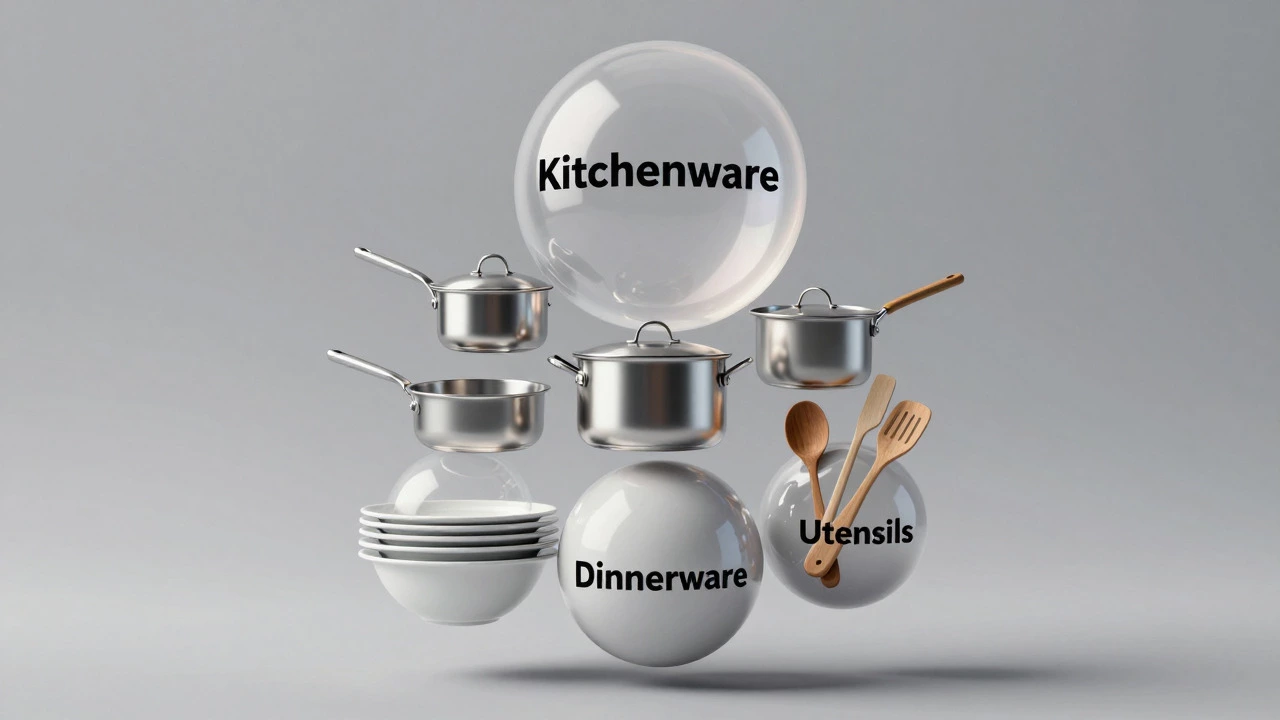
Kitchenware is the umbrella term. It encompasses every item found in the kitchen, from the trash can to the toaster. Think of it as the broadest possible category.
Cookware is a subset of kitchenware. It specifically refers to vessels used for cooking on a stovetop or in an oven. If it holds food while being heated, it is cookware. A blender is kitchenware, but it is not cookware. A frying pan is both.
Dinnerware (or tableware) is another subset. It refers to the items used for eating and serving. Plates, forks, and glasses fall here. You generally do not cook in dinnerware (unless it is oven-safe casserole dish, which blurs the line).
Understanding this distinction is crucial for shopping. If you search for "kitchenware sets," you might get a mix of tools and pots. If you want just the pots, you should look for "cookware sets." If you are setting a table for guests, you need "dinnerware sets." Precision in terminology saves time and money.
Organizing Your Own Kitchen Inventory
For homeowners, understanding these categories isn't just academic; it’s a practical tool for decluttering. Many kitchens suffer from "category bleed," where utensils are stored in drawers meant for silverware, or baking sheets are stacked behind pots.
To create a logical system, try grouping items by the functional categories mentioned earlier. Keep your preparation tools together in a drawer near your prep space. Store your cookware on racks or shelves where they are accessible but protected from chipping. Place your dinnerware in cabinets close to the dishwasher or sink for easy drying and storage.
If you are running an online store, this same logic applies to your backend inventory management. Grouping products by clear, mutually exclusive categories improves the user experience. Customers don't want to scroll past fifty types of spatulas to find a rice cooker. Clear navigation paths based on these standard categories reduce bounce rates and increase conversion.
The Impact of Trends on Categorization
Finally, it is worth noting that kitchenware categories are evolving. The rise of meal kits and ready-to-eat foods has shifted demand away from extensive cookware collections toward smaller, multi-functional tools. Similarly, the trend toward sustainability has introduced new materials like bamboo fiber and recycled aluminum, creating new sub-categories for eco-conscious consumers.
Smart appliances also complicate things. Is an air fryer kitchenware? Yes. Is it cookware? Technically, yes, because it cooks food. But it is also an appliance. Modern retailers often create a separate "Air Fryer Accessories" category because the ecosystem around these devices has grown so large. This shows that while the core definitions remain stable, the market creates new niches that require flexible categorization.
In summary, kitchenware is primarily categorized under Home Goods or Kitchen & Dining in retail environments. Functionally, it splits into preparation, cooking, and serving tools. Materially, it is defined by substances like steel, ceramic, and silicone. By understanding these layers, you can navigate stores more effectively, organize your home with greater efficiency, and make smarter purchasing decisions.
Is kitchenware considered furniture?
No, kitchenware is generally not considered furniture. Furniture refers to large, movable objects intended to support various human activities such as seating (chairs, stools, sofas), sleeping (beds), and placing things (tables). Kitchenware consists of smaller, portable items used for preparing, cooking, and serving food. While a kitchen island might be considered furniture, the pots and pans stored inside it are kitchenware.
What is the difference between kitchenware and crockery?
Crockery is a specific type of kitchenware that refers to earthenware, pottery, or porcelain items used for eating and serving, such as plates, bowls, and mugs. Kitchenware is the broader term that includes crockery but also encompasses metal cookware, wooden utensils, glassware, and small appliances. All crockery is kitchenware, but not all kitchenware is crockery.
How should I categorize kitchen items for an online store?
For an online store, use a hierarchical structure. Start with a main category like "Kitchen & Dining." Then, create sub-categories based on function: "Cookware," "Bakeware," "Utensils," "Dinnerware," and "Appliances." Within those, you can add filters for material (e.g., Stainless Steel, Ceramic) and brand. This mirrors how physical stores are organized and helps customers find exactly what they need without confusion.
Are small appliances considered kitchenware?
Yes, small appliances like blenders, toasters, and coffee makers are considered part of the kitchenware family, specifically under the sub-category of "Small Kitchen Appliances." However, in some retail contexts, they may be separated into a distinct "Appliances" department to differentiate them from manual tools and cookware. For organizational purposes, they are best grouped with other electric kitchen devices.
What is the most durable type of kitchenware?
Stainless steel is widely regarded as the most durable type of kitchenware material. It is resistant to rust, staining, and corrosion, and it does not react with acidic foods. Cast iron is also extremely durable and can last for generations if properly seasoned, but it is heavier and requires more maintenance. For everyday use that combines durability with ease of cleaning, high-quality stainless steel is the top choice.