What Are Cushions Called? The Real Names for Every Type of Cushion in Your Home

Cushion Type Identifier Quiz
Cushion Type Identification Quiz
6 QuestionsWhat is the main purpose of this cushion?
Your result will appear here
Ever sat on your sofa and wondered, What’s that fluffy thing called? You’re not alone. People use cushions every day, but most can’t name the different kinds beyond ‘pillow’ or ‘cushion.’ The truth is, there’s a whole vocabulary for these soft, supportive pieces - and each one has a job to do. Knowing what they’re called helps you shop smarter, talk design with confidence, and even fix your own furniture.
Throw Pillows: The Decor Stars
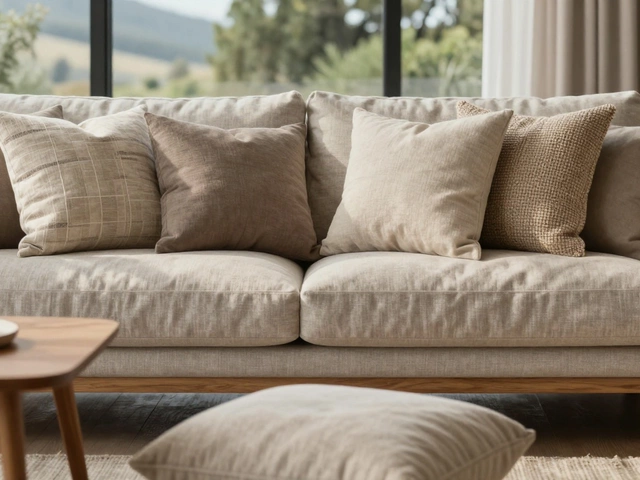
These are the ones you see piled on sofas and beds. They’re not meant for sitting - they’re for looks. Throw pillows come in all sizes, fabrics, and patterns. You’ll find them in linen, velvet, cotton, or even faux fur. Their main job? To add color, texture, and personality to a room. In New Zealand homes, you’ll often see them in earthy tones or woven textures, especially in coastal or Scandinavian-style interiors. They’re called ‘throw’ pillows because you literally throw them onto furniture for a quick style boost. Don’t confuse them with seat cushions - they’re smaller, lighter, and not built to take weight.
Seat Cushions: The Functional Foundation
These are the cushions you actually sit on. You’ll find them on wooden chairs, benches, or even outdoor patio sets. Seat cushions are thicker, firmer, and usually have a non-slip bottom to stay in place. They’re designed to turn hard surfaces into something comfortable. In a kitchen nook or a dining bench, a seat cushion makes meals feel cozier. They’re often filled with high-density foam or polyester fiber, and covered in durable, easy-to-clean fabric. Unlike throw pillows, seat cushions are built to last - you’re not just decorating here, you’re supporting your hips and back.
Lumbar Pillows: The Back Support Heroes
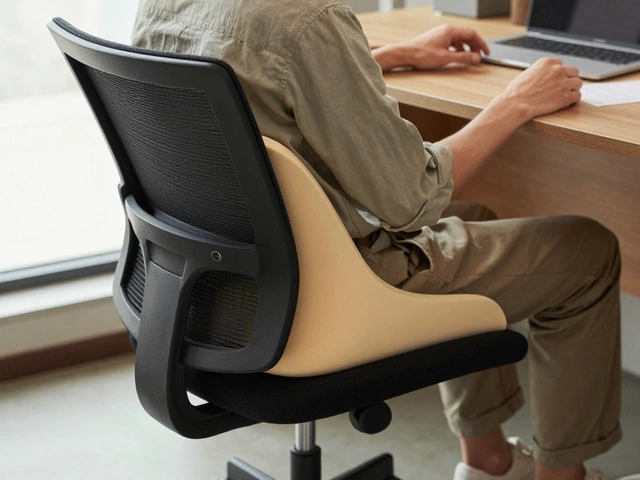
Ever sit at a desk and feel your lower back ache? That’s where lumbar pillows come in. These are long, narrow cushions, usually 12 to 16 inches, placed behind your lower spine. They’re shaped to fit the natural curve of your back and help prevent slouching. You’ll see them in office chairs, car seats, and even on sofas. In homes where people work remotely, lumbar pillows are no longer optional - they’re essential. Some come with memory foam, others with adjustable straps to lock them in place. Don’t call them ‘back pillows’ - that’s too vague. The correct term is lumbar pillow, and it’s the only one designed specifically for spinal alignment.
Bolsters: The Long, Firm Supporters
Bolsters are those cylindrical cushions you see propped up on beds or sofas. They’re longer than lumbar pillows and often firmer. Bolsters can be used vertically as back support, horizontally as armrests, or even as a leg rest. In traditional Indian and Middle Eastern homes, bolsters are a staple - used for seating and lounging. In modern homes, they’re popular in reading nooks or as a visual anchor on a large sectional. Unlike throw pillows, bolsters have a solid core, often made of foam or rolled batting, so they hold their shape even after years of use. They’re not decorative afterthoughts - they’re structural.

Floor Cushions: The Casual Seaters
These are the big, plump cushions you sit on directly on the floor. Common in Japanese-style rooms, meditation corners, or kids’ play areas, floor cushions are usually round, square, or rectangular. They’re filled with something soft but supportive - think kapok, buckwheat hulls, or high-loft polyester. In New Zealand homes, you’ll find them in living rooms where families gather for movie nights or tea. They’re called ‘zabuton’ in Japan, but in English, they’re just ‘floor cushions.’ Unlike couch cushions, they’re meant to be moved around, stacked, or stored easily. Some even come with removable, machine-washable covers.
Window Seat Cushions: The Hidden Comfort
If your home has a window seat - that cozy nook built into a bay window - then you’ve got window seat cushions. These are custom-shaped to fit the exact curve of the window frame. They’re usually made with thick foam and a durable, UV-resistant fabric because they get direct sunlight. In Auckland homes, where natural light is prized, window seats are popular. The cushions here aren’t just decorative; they’re part of the architecture. You don’t buy them off the shelf - they’re often made to measure. Think of them as built-in furniture with padding.
Car Seat Cushions: The Travel Must-Haves
These are the ones you slide into your car seat to make long drives less painful. Car seat cushions are designed with a cutout in the back to relieve pressure on the tailbone - a feature called a ‘coccyx cutout.’ Many include memory foam or gel inserts. Some even have built-in heating or cooling. Unlike regular seat cushions, they’re shaped to fit the contours of a car seat and often come with straps to keep them from sliding. In New Zealand, where road trips are common, these cushions are a quiet necessity. They’re not called ‘car pillows’ - they’re car seat cushions, and they’re engineered for safety and comfort.

Outdoor Cushions: The Weatherproof Ones
These cushions live on patios, decks, or garden benches. They’re made from quick-dry foam and solution-dyed acrylic fabric - materials that resist fading, mold, and water. You can leave them out in the rain, and they’ll dry fast. Unlike indoor cushions, they’re not soft and fluffy. They’re firm, dense, and built for the elements. Brands like Sunbrella and Outdura dominate this space. In Auckland’s damp climate, outdoor cushions need to be tough. If yours are getting soggy or moldy, they’re not the right kind. Look for the label: ‘UV-resistant,’ ‘mildew-resistant,’ ‘quick-dry.’ That’s what makes them outdoor cushions - not just ‘cushions you put outside.’
How to Tell Them Apart
Here’s a quick way to sort them out:
- Size and shape: Throw pillows are small and square; bolsters are long and round; lumbar pillows are narrow and curved.
- Placement: Throw pillows go on top; seat cushions go under you; lumbar pillows go behind your back.
- Firmness: Seat and outdoor cushions are firm. Throw pillows are soft. Bolsters are in between.
- Function: Decor? Throw pillows. Support? Lumbar, seat, bolster. Weather? Outdoor cushions.
Knowing the difference isn’t just about words - it’s about getting the right cushion for the right job. A throw pillow won’t support your back. A lumbar pillow won’t make your sofa look fancy. And an indoor cushion left outside will rot in three months.
Why Naming Matters
When you shop online or talk to a designer, using the right term saves time. If you ask for ‘cushions for the chair,’ you’ll get a mix of things. But if you ask for ‘seat cushions with non-slip backing,’ you’ll get exactly what you need. Same goes for cleaning - you can’t machine-wash an outdoor cushion unless it’s labeled as removable and washable. You can’t dry-clean a floor cushion unless you know what’s inside. The name tells you the material, the use, and how to care for it.
In the end, cushions aren’t just fluffy extras. They’re tools. Each type solves a different problem - comfort, posture, style, weather resistance. Once you know what they’re called, you start seeing them differently. You stop thinking ‘cushion’ and start thinking ‘lumbar support,’ ‘outdoor seating,’ ‘floor lounging.’ That’s when your home starts to feel truly intentional.
Are throw pillows and cushions the same thing?
Not exactly. All throw pillows are cushions, but not all cushions are throw pillows. Throw pillows are small, soft, and used for decoration. Cushions is the broader term - it includes seat cushions, lumbar pillows, bolsters, and outdoor cushions, which are built for function, not just looks.
Can I use a lumbar pillow as a seat cushion?
No. Lumbar pillows are narrow and curved to support your lower back. They’re too thin and too short to sit on comfortably. Using one as a seat cushion won’t give you proper support - it might even make your posture worse. Use a proper seat cushion instead.
What’s the difference between a bolster and a regular pillow?
A bolster is long, firm, and cylindrical, designed to be propped up for support. A regular pillow is soft, flat, and meant for your head while sleeping. Bolsters don’t flatten easily - they keep their shape for sitting or leaning. Regular pillows are meant to be squished.
Why do outdoor cushions cost more?
Because they’re made with special materials that resist water, UV rays, and mold. Indoor cushion fabrics fade in sunlight and mildew when wet. Outdoor cushions use solution-dyed acrylic or polyester that lasts years in rain and sun. That tech comes at a price - but it’s worth it if you want them to last.
Should I wash my cushions?
Only if the cover is removable and labeled as machine-washable. Most cushions have stuffing inside that shouldn’t get wet. Always check the care tag. For non-removable covers, spot clean with mild soap and water. Never throw a whole cushion in the washer - you’ll ruin the filling.
Are floor cushions only for kids?
No. Floor cushions are used by adults too - for meditation, reading, or casual seating. In many homes, they’re part of a minimalist or Japanese-inspired layout. They’re great for small spaces because they’re easy to move and store. Kids use them, but so do yoga lovers, remote workers, and anyone who likes to sit low.