How to Pick a Sofa for a Small Living Room
Small Room Sofa Fit Calculator
Measure Your Space
If you’ve ever tried to squeeze a giant sectional into a tiny living room, you know the struggle. The sofa dominates the space - but if it’s too big, you’re left with zero room to move. Too small, and it looks lost. Picking the right sofa for a small living room isn’t about compromise. It’s about smart choices that give you comfort, style, and breathing room.
Measure First - Really Measure
Stop guessing. Start measuring. Use a tape measure, not your eyes. Write down the width, depth, and height of your living room. Then note where doors, windows, and outlets are. A sofa might fit in the space on paper, but if it blocks the TV or blocks the door, it’s a bad fit.Leave at least 18 inches between the sofa and any wall or walkway. That’s the minimum for comfortable movement. If you have a coffee table, make sure there’s 12 to 18 inches between it and the sofa. You don’t want to scrape your knees every time you stand up.
Measure your entryways too. A sofa that’s 80 inches wide won’t help if your hallway is only 30 inches. Many people buy sofas online, only to realize they can’t get them through the door. Always check the delivery dimensions - and if you live in an apartment, ask about elevator size or stairwell turns.
Choose the Right Shape
Not all sofas are created equal when space is tight. Here’s what works best:- Chaise sofas - One long armrest that doubles as a footrest. Great for tucking into a corner. They take up less floor space than a full sectional.
- Love seats - Usually 50 to 60 inches wide. Perfect for couples or solo dwellers. Easy to move and often come with storage underneath.
- Compact two-seaters - Look for models under 70 inches wide. Some are designed specifically for apartments and small homes.
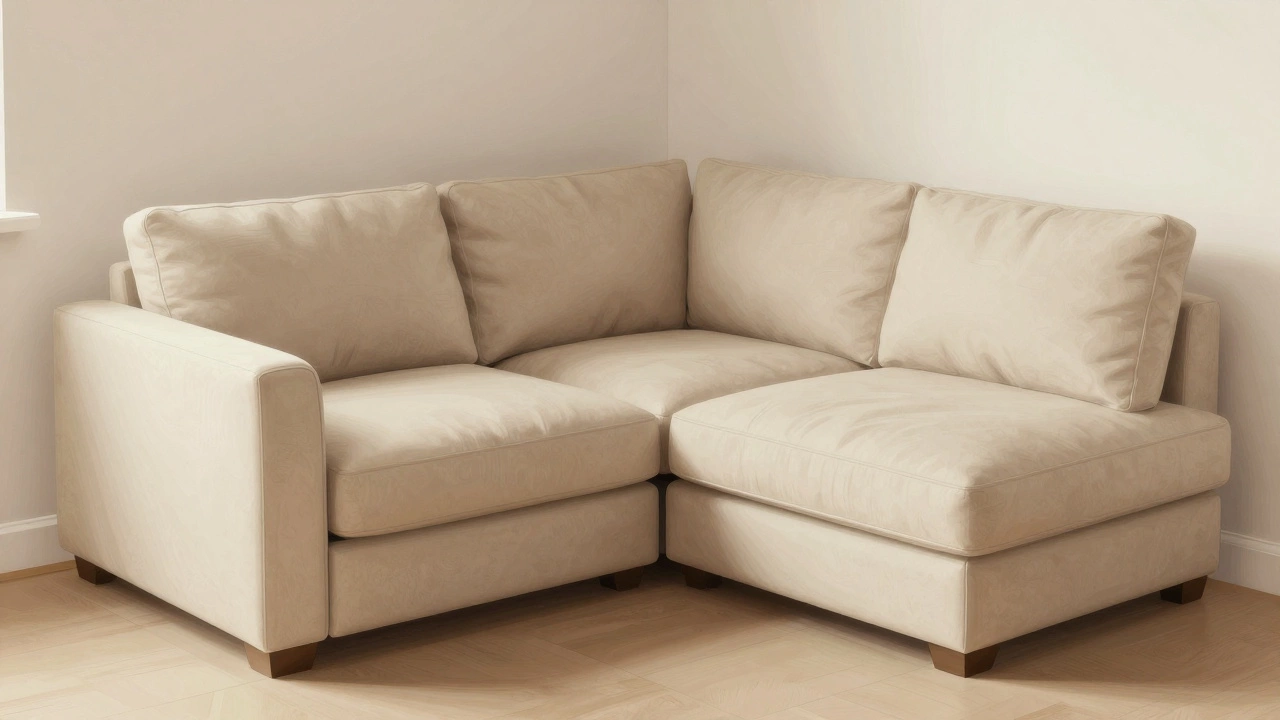
- Corner sofas - Use the corner efficiently. A small L-shaped sofa can feel bigger than it is because it follows the room’s natural shape.
Avoid oversized sectionals, bulky armrests, or deep seat depths over 22 inches. Those eat up space and make the room feel cramped.
Go Low and Light
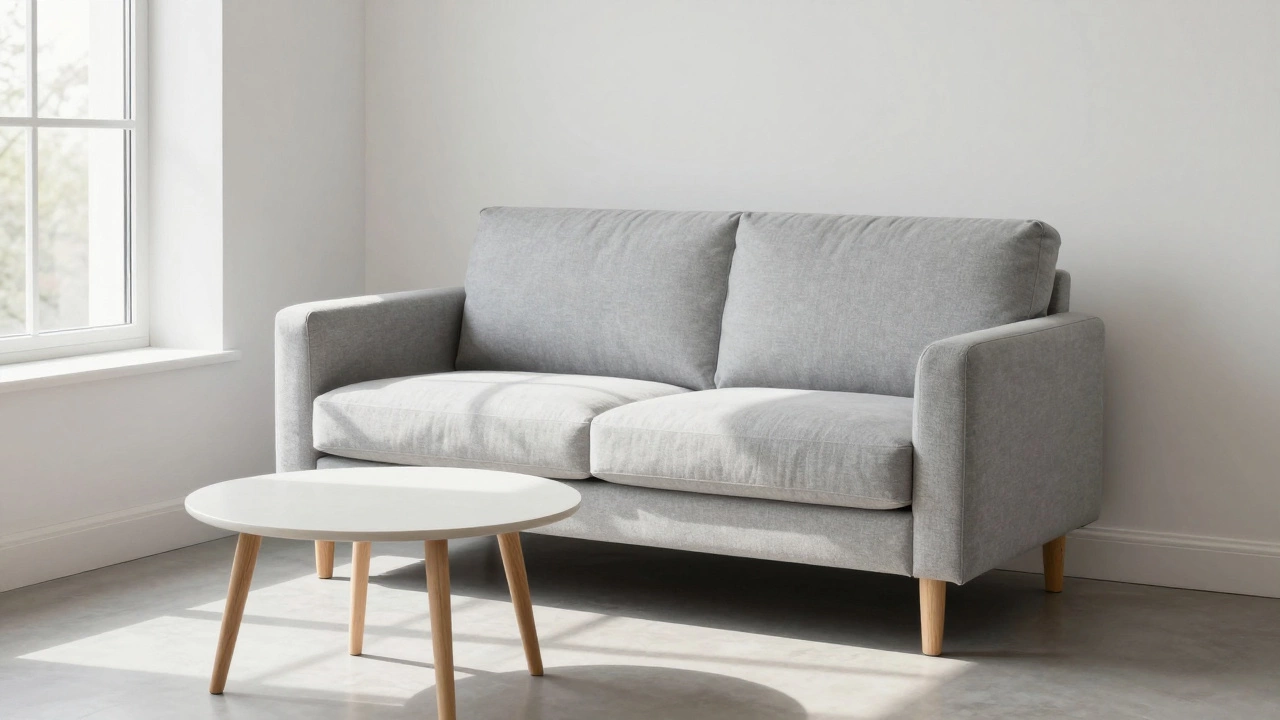
High-backed, heavy-looking sofas can make a small room feel like a cave. Instead, look for low-profile designs. Sofas with arms that sit below eye level create a sense of openness. Legs? Go for exposed legs - even just 2 to 3 inches - they make the sofa look lighter and let light flow underneath.Light colors help too. Beige, soft gray, or pale blue reflect light and make the room feel bigger. Dark colors absorb light and can make the space feel smaller. If you love dark tones, use them on throw pillows or a rug instead of the whole sofa.
Materials matter. Velvet and microfiber look cozy without adding visual bulk. Avoid thick tufting or exaggerated stitching - they add visual weight. Clean lines are your friend.
Look for Hidden Storage
In a small living room, every inch counts. A sofa with built-in storage is like getting extra storage for free. Look for:- Storage ottomans that double as seats
- Love seats with lift-up seats for blankets or books
- Chaise sofas with hidden compartments under the footrest
Some models even have USB charging ports built into the armrest. That’s not just convenient - it eliminates the need for extra side tables cluttering up your floor space.
Test the Seat Depth
A deep sofa feels luxurious - until you realize you’re sinking in like a marshmallow. For small spaces, aim for a seat depth between 18 and 21 inches. That’s deep enough to sit comfortably, but not so deep you’re practically lying down.Try sitting on the sofa in the store. Your knees should bend at about a 90-degree angle when your back is against the backrest. If your feet dangle or you’re curled up, it’s too deep. If you feel like you’re sitting on the edge, it’s too shallow.
Also check the seat height. It should be around 17 to 19 inches from the floor. That’s the sweet spot for easy standing and sitting - especially important if you have older family members or kids in the house.
Consider Modular or Sectional Options
Don’t rule out sectionals just because your room is small. Modular sofas let you customize the shape. You can start with a two-seater and add a chaise later. Brands like IKEA, Article, and Burrow offer modular pieces that fit together like puzzle blocks.These systems let you adapt as your needs change. Maybe you start with just a loveseat, then add a corner piece when you get a roommate. You’re not stuck with a bulky, fixed shape.
Don’t Forget the Scale of Other Furniture
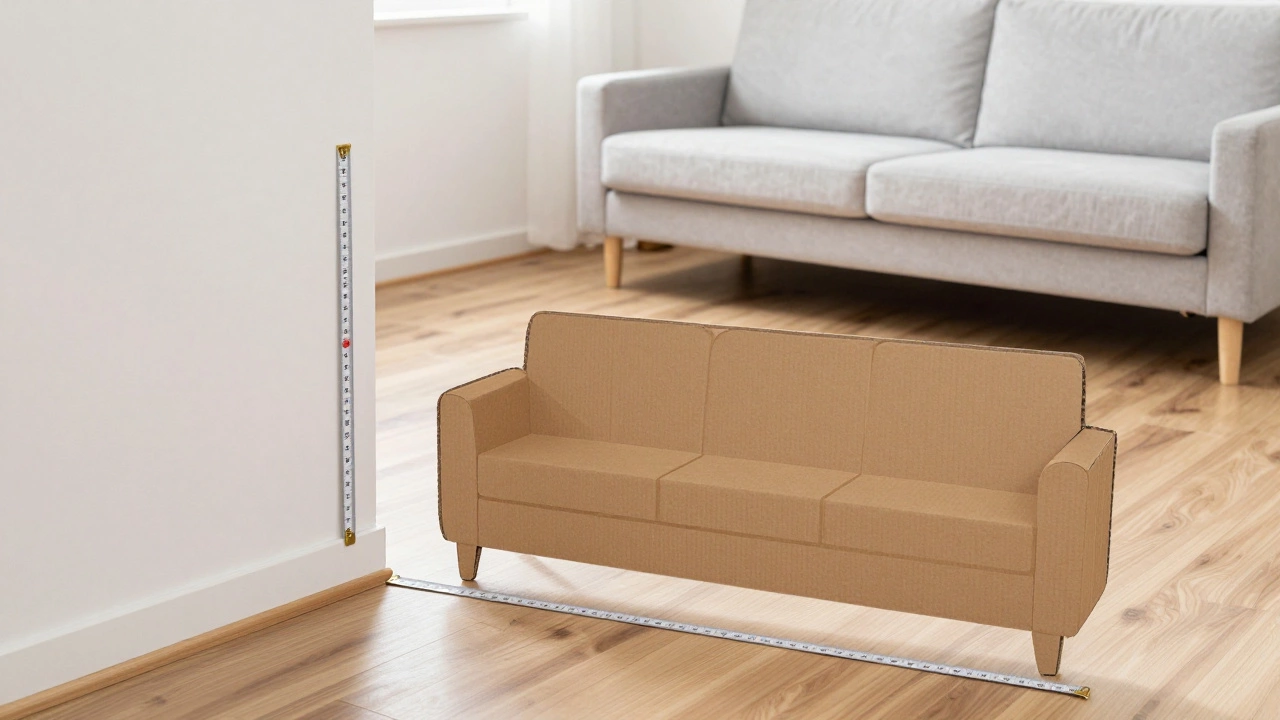
A small sofa looks out of place if you pair it with a giant TV stand or a bulky coffee table. Keep the rest of your furniture in proportion. A low, narrow console behind the sofa works better than a wide bookshelf. A round or oval coffee table takes up less visual space than a rectangular one.Try this trick: lay down cardboard cutouts of your furniture on the floor. Move them around. See how they fit. You’ll spot problems before you spend money.
Think About How You Use the Space
Is your living room for watching TV, reading, hosting friends, or all of the above? Your sofa should match your lifestyle.- If you watch TV daily, get a sofa with good back support and enough width for two people.
- If you read a lot, look for one with a slightly reclined back or a chaise for propping up your legs.
- If you host guests often, consider a sleeper sofa. Many modern ones are thin and sleek - not the bulky, lumpy kind from the ‘90s.
Also, think about pets and kids. If you have furry friends, choose a durable, stain-resistant fabric like performance microfiber or Crypton. Leather is easy to clean but can show scratches. Avoid velvet if you have claws or rough play.
Where to Buy
You don’t need to spend thousands. Many affordable brands make excellent small-space sofas:- IKEA - Known for compact, modular designs. The KIVIK line is popular for its slim profile and storage options.
- Article - Modern, clean lines. Their Sven sofa is under 70 inches wide and has a low profile.
- Burrow - Modular, easy to assemble, and ships in boxes. Great for apartments.
- Wayfair - Huge selection. Filter by "small space" or "narrow sofa" to cut through the noise.
- Local makers - Check Etsy or local upholstery shops. Custom sofas can be made to fit your exact dimensions.
Always check return policies. Some online retailers charge high restocking fees. Look for ones that offer free returns within 30 days - you’ll want to test the sofa in your actual space.
Final Checklist
Before you buy, run through this quick list:- Does the sofa fit through the door and into the room?
- Is the width under 70 inches?
- Is the seat depth between 18 and 21 inches?
- Are the legs exposed or low-profile?
- Is the color light or neutral?
- Does it have storage or a sleeper option if you need it?
- Is the fabric easy to clean?
If you answered yes to all of these, you’ve got a winner.
What’s the smallest sofa that’s still comfortable?
A love seat between 50 and 60 inches wide is the smallest practical size for two people. Anything smaller - like a 40-inch chair - might be too tight for long sitting. Look for models with deep cushions and firm support. Some compact two-seaters are designed specifically for small spaces and still offer full comfort.
Can a sectional work in a small living room?
Yes, but only if it’s designed for small spaces. Avoid full L-shaped sectionals that fill the whole room. Look for compact L-shapes under 80 inches total width, or modular pieces you can start with just one section. A chaise sofa that tucks into a corner is often a better fit than a bulky sectional.
Should I get a sofa with arms?
It depends. Armless sofas make the room feel more open, but they offer less back support. Low, slim arms (under 4 inches wide) give you a place to rest your arms without blocking sightlines. Avoid wide, high arms - they make the sofa look bigger than it is and can block windows or decor.
Is a sleeper sofa a good idea for a small room?
Yes, if you occasionally have guests. Modern sleeper sofas are much thinner than older models - some are only 8 to 10 inches thick when converted. Look for ones with a metal frame and memory foam mattress. Avoid bulky, boxy styles. Many now look like regular sofas when closed.
How do I make a small sofa look bigger?
You can’t make the sofa bigger, but you can make the room feel bigger around it. Use light walls, mirrors opposite the sofa, and a small rug that doesn’t cover the whole floor. Keep the space around the sofa clear. Add tall plants or wall shelves to draw the eye upward. Lighting helps too - floor lamps and wall sconces reduce visual clutter.