How to Spot a High-Quality Sofa: The Ultimate Buyer's Guide
Sofa Quality Assessment Tool
Use this tool to evaluate the construction quality of a sofa based on key industry standards for frames, suspension, foam, and upholstery.
Walk into any furniture store in Auckland or browse the endless listings online, and you’ll see it: the same sleek silhouette, the same inviting look. But sit down for five minutes, and the truth comes out. One sofa feels like a cloud that supports your back; the other feels like it’s trying to fold you in half. The difference isn’t just price-it’s construction. Buying a sofa is one of the biggest investments you make for your home, often costing more than your car or even your first apartment deposit. If you pick the wrong one, you’re stuck with sagging cushions, squeaky frames, and stained fabric for years. So, how do you tell if a sofa is actually high quality before you hand over your credit card? It’s not about the brand name on the tag. It’s about what’s hidden underneath.
The Foundation: Frame Materials That Last
Think of the frame as the skeleton of the sofa. If the bones are weak, the whole thing collapses. Most budget sofas use particleboard, MDF (medium-density fiberboard), or softwoods like pine. These materials are cheap and easy to mass-produce, but they don’t hold up to daily life. Particleboard swells when exposed to humidity-a common issue in coastal cities like Auckland-and screws pull out of it after a year or two. A high-quality sofa uses hardwoods. We’re talking oak, ash, beech, or maple. These woods are dense, rigid, and resistant to warping.
Here’s a trick most people miss: lift the corner of the sofa. Yes, really. If it weighs less than 50 kilograms for a standard three-seater, be suspicious. Solid wood frames are heavy. They shouldn’t feel light or hollow. Look at the joinery too. Cheap sofas rely on nails and staples. Quality pieces use mortise-and-tenon joints-where one piece of wood is cut to fit perfectly into another-or double-doweled corners reinforced with glue and corner blocks. This kind of craftsmanship prevents the frame from twisting under weight. When you sit on a well-built frame, you won’t hear creaks or pops. It should feel solid, almost immovable.
Is plywood better than solid wood for sofa frames?
High-grade plywood can be excellent because it resists splitting better than solid wood in some cases, but it must be thick (at least 18mm) and made from hardwood veneers. Avoid thin, chip-filled plywood often found in budget furniture.
Suspension Systems: The Secret to Comfort
Once you have a strong frame, you need something to support the seat cushions. This is called the suspension system, and it’s where comfort lives. There are three main types: sinuous springs, eight-way hand-tied coils, and webbing. Sinuous springs are continuous S-shaped wires that run across the frame. They’re common in mid-range sofas and offer decent bounce, but they can sag over time if not properly anchored. Webbing is strips of synthetic material stretched across the frame. It’s cheap and quiet, but it loses tension quickly, leading to that dreaded "bottoming out" feeling.
The gold standard is eight-way hand-tied coil springs. Each spring is individually tied to the frame with cotton twine. This allows each spring to move independently, contouring to your body rather than pushing back uniformly. It’s labor-intensive and expensive, which is why you mostly find it in high-end custom furniture. When testing a sofa, press firmly into the seat. You should feel resistance that gives slightly, then rebounds. If it feels rock-hard or mushy, the suspension is likely compromised. Also, check the edges. A good sofa has edge support so you don’t slide off when sitting near the armrest.
Cushion Fillings: Foam vs. Down vs. Hybrid
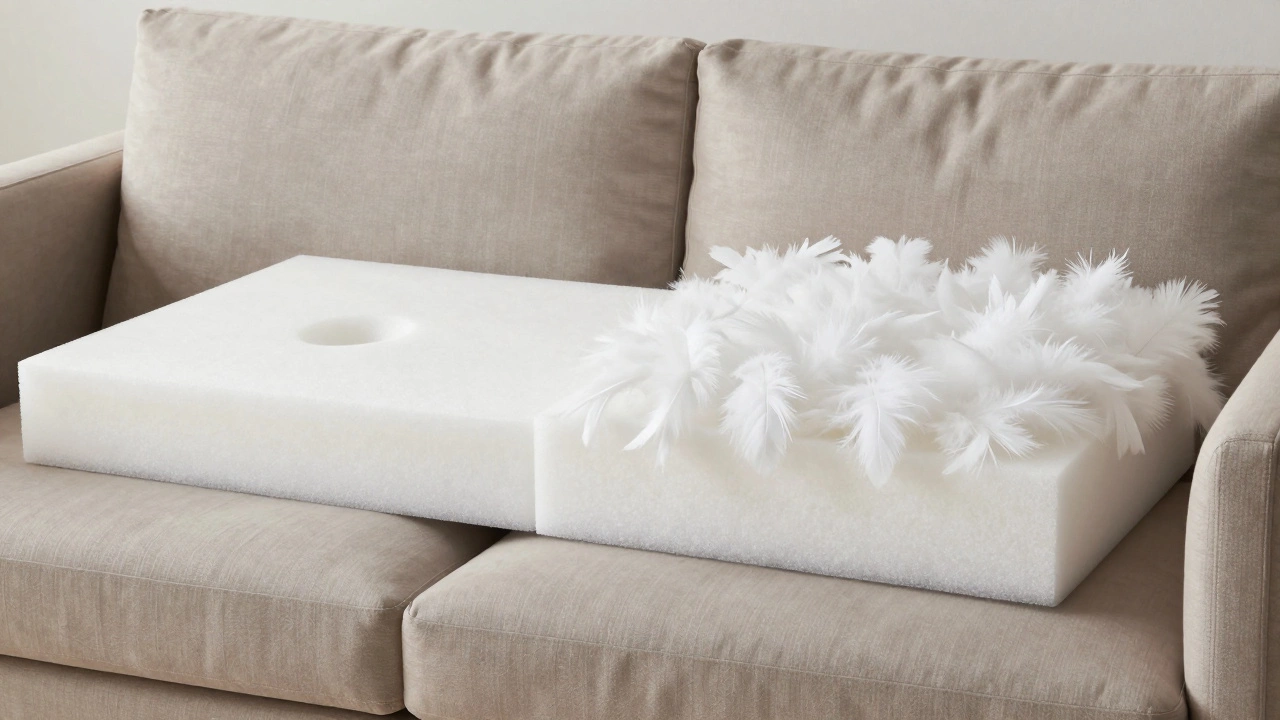
The cushion is what you touch every day, so its material dictates longevity and feel. Polyurethane foam is the most common filling. Not all foam is created equal, though. Density matters more than firmness. High-resilience foam with a density of at least 1.8 pounds per cubic foot will retain its shape for years. Low-density foam (under 1.5) compresses rapidly, leaving permanent dents. If you want a plush, sink-in feel, look for down feathers or a down-blend. Pure down is luxurious but requires fluffing daily and can shift around. A hybrid approach-foam core wrapped in down or fiber-is often the best balance. It offers structure with a soft top layer.
Check the zipper on removable covers. If you can’t remove the cushion cover, you can’t replace the filling or clean the fabric easily. Removable covers are a sign of thoughtful design. Also, shake the cushion. If it feels lumpy or uneven, the filling wasn’t distributed correctly during manufacturing. For back cushions, ensure they stay upright. Many modern sofas use loose back cushions that fall flat unless you prop them up constantly. Look for options with internal ties or channels that keep them in place.
Upholstery: Fabric Choices That Defy Wear
Fabric is the skin of the sofa, and it takes the most abuse from pets, kids, spills, and sunlight. Natural fibers like cotton and linen look beautiful but stain easily and wear thin. Synthetic blends, particularly those with polyester or nylon, are tougher. Microfiber is incredibly durable and repels liquids, making it great for households with young children. Leather is another top contender, especially full-grain or top-grain leather. It develops a patina over time, looking better with age, whereas bonded leather peels and cracks within a few years.
Ask for the rub count or Martindale rating. This measures how many times the fabric is rubbed back and forth before showing signs of wear. For residential use, aim for at least 15,000 double rubs. Commercial-grade fabrics exceed 100,000. If the seller doesn’t know this number, they probably aren’t using quality textiles. Test the colorfastness by rubbing a white cloth against an inconspicuous area. If dye transfers, the fabric will fade or bleed when cleaned. Always request a sample swatch to test at home with water, wine, or pet accidents before committing.
| Material | Durability | Maintenance | Best For |
|---|---|---|---|
| Full-Grain Leather | Very High | Low (wipe clean) | Pet owners, long-term investment |
| Microfiber | High | Medium (spot clean) | Families with kids, stain resistance |
| Linen Blend | Medium | High (professional cleaning) | Low-traffic areas, aesthetic focus |
| Bonded Leather | Low | Low | Budget buys, short-term use |
Legs and Base: Stability Meets Style
We often overlook the legs, but they bear the entire weight of the sofa and its occupants. Plastic legs are lightweight and cheap but prone to cracking. Metal legs can be stylish but may wobble if not securely attached. Wood legs, especially those made from the same hardwood as the frame, offer the best stability. Check how the legs are attached. They should be screwed directly into the frame, not glued or clipped on. Loose legs cause wobbling, which stresses the frame joints over time.
Consider the height. Legs that are too low make cleaning underneath difficult, trapping dust and pests. Legs that are too high can tip the sofa forward if someone stands on it. A height of 4 to 6 inches is generally ideal. Also, look at the base skirt. Some sofas have a dust cover made of non-woven fabric that traps moisture and smells. A wooden apron or breathable fabric is preferable for hygiene and air circulation.

Red Flags: Signs of Poor Construction
Even if a sofa looks good, certain details scream "cheap." First, inspect the stitching. Uneven, loose, or frayed threads indicate rushed assembly. High-quality sofas have tight, consistent stitching with reinforced seams at stress points like the arms and seat edges. Second, smell the sofa. Strong chemical odors suggest volatile organic compounds (VOCs) from glues and foams, which can affect indoor air quality. Third, check the back of the sofa. If it’s covered with rough burlap or unfinished cardboard, it’s likely a budget item. Quality sofas have finished backs with proper fabric or wood paneling, allowing them to be placed in the middle of a room without looking awkward.
Another red flag is the warranty. Reputable manufacturers stand behind their products. Look for warranties that cover structural defects for at least five years and foam/cushion issues for two to three years. Short-term warranties (one year or less) often signal that the company expects the product to fail soon. Read the fine print. Does it cover normal wear and tear? Is service available locally? A warranty is only useful if you can actually claim it.
Testing in Person: What to Do Before Buying
Never buy a sofa without sitting on it. Bring your family members who will use it most. Sit in different positions: cross-legged, reclined, on the edge. Stay for at least ten minutes. Your back might feel fine initially, but discomfort reveals itself over time. Check the armrest height. It should align with your natural elbow position when seated. Too high causes shoulder strain; too low makes standing up difficult. Measure your doorway and elevator dimensions. A large sectional might look perfect in the showroom but won’t fit through your front door. Take photos of your space and compare proportions.
If buying online, look for detailed specifications, not just marketing photos. Ask for close-ups of the frame joinery and cushion zippers. Read reviews from verified buyers who mention long-term use, not just unboxing experiences. Look for comments about sagging, fading, or squeaking after six months. These are the real indicators of quality.
Maintenance Tips to Extend Lifespan
Even the best sofa needs care. Vacuum weekly to remove dust and debris that grind into fibers. Rotate cushions monthly to ensure even wear. Use coasters and placemats to prevent stains. For leather, condition every six months to keep it supple. For fabric, treat with a stain repellent spray designed for the specific material. Address spills immediately-blot, don’t rub. Professional cleaning every one to two years removes deep-set dirt and allergens. Keep the sofa away from direct sunlight to prevent fading. With proper care, a high-quality sofa can last 10 to 15 years or more.
How long should a high-quality sofa last?
A well-made sofa with a hardwood frame and high-density foam should last 10 to 15 years with regular use. With excellent maintenance, some heirloom pieces last decades.
Are expensive sofas always better quality?
Not necessarily. Price includes brand markup, design fees, and retail margins. Focus on construction details like frame wood type, spring system, and foam density rather than just the price tag.
Can I fix a sagging sofa cushion?
If the cushion has a zipper, you can add high-loft batting or replace the foam insert. However, if the underlying suspension springs are broken, professional repair is needed.
What is the best fabric for pet owners?
Microfiber and tightly woven synthetics are best because they resist claws and hide hair. Full-grain leather is also excellent as it’s easy to wipe clean and doesn’t trap dander.
Should I choose a sofa with or without arms?
Arms provide support and define the seating area, making them practical for most homes. Armless designs save space but can feel less secure and lack ergonomic support for resting elbows.