
Will Medicare Pay for a TempurPedic Mattress? Here's What You Really Need to Know

Medicare doesn’t just cover doctor visits and prescriptions-it can cover certain medical equipment, including mattresses, but only under very specific conditions. If you’re wondering whether Medicare will pay for a TempurPedic mattress, the short answer is: usually not. But there are exceptions that could make it possible-if your doctor certifies it as medically necessary and meets strict Medicare guidelines.
Medicare Only Covers Durable Medical Equipment (DME)
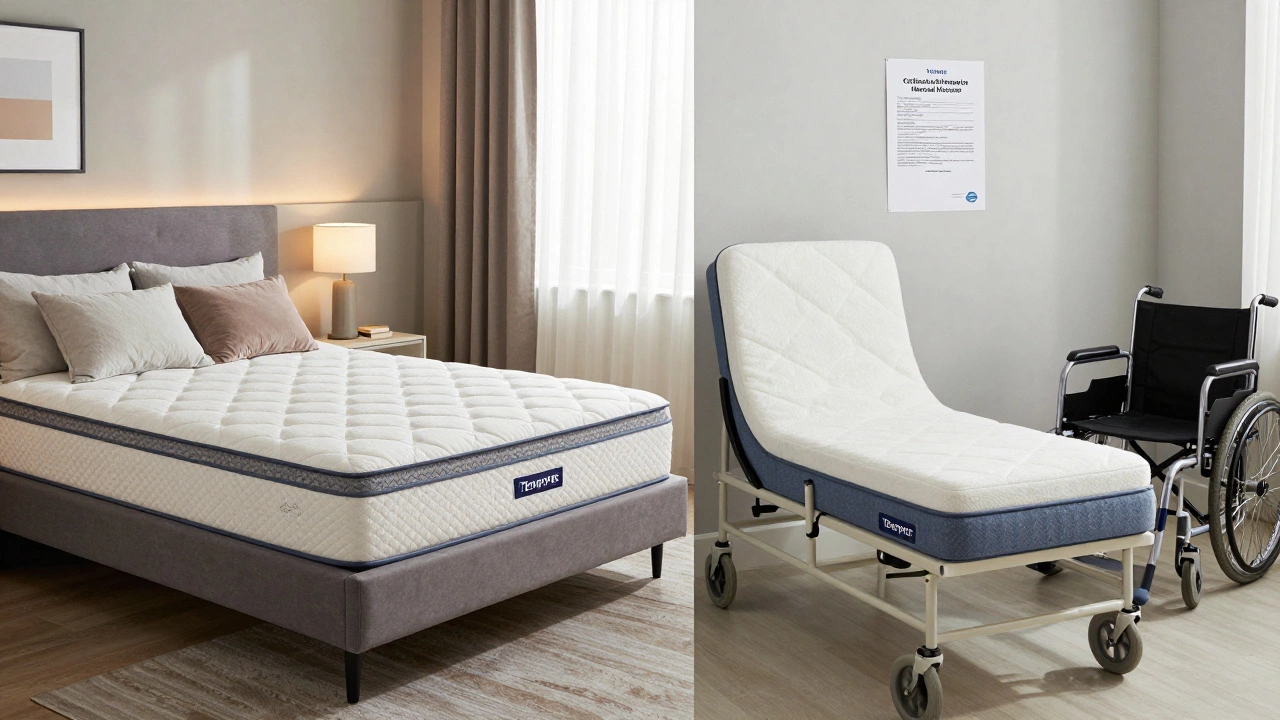
Medicare Part B pays for durable medical equipment (DME) that’s prescribed by a doctor and used for a medical reason. This includes things like wheelchairs, walkers, oxygen tanks, and hospital beds. A mattress qualifies only if it’s considered essential for treating a medical condition-not for comfort or convenience.TempurPedic mattresses are marketed as premium sleep products with pressure-relieving foam. While they’re great for people with back pain or arthritis, Medicare doesn’t recognize them as medical devices unless they’re specifically designed and certified as DME. Most TempurPedic models are sold as consumer goods, not medical equipment.
When Could a Mattress Be Covered?
Medicare might cover a specialized mattress if:- You have a diagnosed medical condition like severe pressure ulcers (bedsores), spinal cord injury, or advanced neuromuscular disease
- Your doctor prescribes a therapeutic mattress as part of your treatment plan
- The mattress is classified as DME by Medicare and comes from an approved supplier
- The mattress is medically necessary to prevent injury or deterioration of your condition
For example, if you’re bedridden and developing stage 3 pressure sores, Medicare may cover a therapeutic alternating pressure mattress-like those made by Hill-Rom or Stryker-not a TempurPedic. These are different products. They’re designed with air cells, sensors, and pressure redistribution technology that meets Medicare’s DME standards.
TempurPedic vs. Medicare-Covered Mattresses
| Feature | TempurPedic Mattress | Medicare-Covered Therapeutic Mattress |
|---|---|---|
| Primary Purpose | Comfort, sleep quality | Medical treatment, pressure ulcer prevention |
| Medicare Coverage | No | Possible, if prescribed |
| Supplier Requirements | Any retail store | Must be Medicare-enrolled DME supplier |
| Documentation Needed | None | Doctor’s prescription, Certificate of Medical Necessity |
| Cost Range | $1,500-$5,000 | $800-$3,000 (Medicare pays 80% after deductible) |
Even if you buy a TempurPedic mattress on your own, you can’t submit the receipt to Medicare for reimbursement. The product must be billed directly by a Medicare-approved supplier using the correct HCPCS code (like E0601 for a therapeutic mattress). TempurPedic doesn’t participate in Medicare billing, so their products can’t be processed through the system.
What If You Have Severe Back Pain or Arthritis?
Many people assume that because a TempurPedic mattress helps with back pain or joint discomfort, Medicare should cover it. But Medicare doesn’t cover mattresses for general pain relief or improved sleep. The condition must be serious enough to require a therapeutic intervention.For example, if you have osteoarthritis and can’t turn in bed without severe pain, Medicare might cover a hospital bed with adjustable positioning-but not a memory foam mattress alone. If you have diabetes and neuropathy leading to foot ulcers, a pressure-relieving mattress might be covered if it’s part of a wound care plan.
How to Get Medicare to Cover a Therapeutic Mattress
If you believe you qualify, here’s what to do:- Visit your doctor and explain your condition and how your current mattress is affecting your health
- Ask your doctor to write a prescription for a therapeutic mattress and complete a Certificate of Medical Necessity (CMN)
- Find a Medicare-enrolled DME supplier who carries approved products
- Confirm the supplier will bill Medicare directly
- Pay your 20% coinsurance after meeting your Part B deductible
Don’t buy the mattress first. If you pay out of pocket and then try to get reimbursed, Medicare won’t pay you back. The supplier must submit the claim before you receive the equipment.
Alternatives If Medicare Won’t Cover It
If you don’t qualify for Medicare coverage but still need pressure relief, consider these options:- Pressure-relieving mattress toppers: Some foam or gel toppers cost under $300 and can help reduce pressure points. They won’t be covered by Medicare, but they’re more affordable.
- Veterans Affairs benefits: If you’re a veteran, VA may cover a therapeutic mattress if you have a service-related condition.
- Medicaid: Some state Medicaid programs cover DME with fewer restrictions than Medicare. Check with your state agency.
- Nonprofit assistance: Organizations like the National Pressure Injury Advisory Panel or local charities sometimes help low-income seniors with medical equipment.

Common Misconceptions
Many people believe that because a product is sold in medical supply stores or labeled "orthopedic," it’s automatically covered. That’s not true. Labels like "doctor-recommended" or "clinically proven" on TempurPedic packaging are marketing terms-not medical certifications.
Also, some salespeople at DME stores will tell you they can "get Medicare to cover" a TempurPedic mattress. This is misleading. If they say that, they’re either misinformed or trying to sell you something you don’t need.
Medicare audits suppliers closely. If a supplier bills for a non-covered item, they risk fines, loss of billing privileges, or even criminal charges.
What to Do If You’re Denied Coverage
If your claim is denied, you have the right to appeal. Start by reviewing the Medicare Summary Notice (MSN) for the reason given. Common reasons include:- Insufficient medical documentation
- Supplier not enrolled in Medicare
- Product doesn’t meet DME criteria
You can file an appeal in writing within 120 days. Include your doctor’s letter, medical records, and any test results that support your need. Many appeals succeed if you provide clear, documented evidence of medical necessity.
Can I use my HSA or FSA to buy a TempurPedic mattress?
Only if your doctor writes a letter stating the mattress is medically necessary for a specific condition like pressure ulcers or spinal deformity. Even then, you must keep the prescription and receipt. Most HSA/FSA administrators require this documentation before approving reimbursement.
Does Medicare Advantage cover TempurPedic mattresses?
Medicare Advantage plans follow the same coverage rules as Original Medicare for DME. They won’t cover TempurPedic mattresses unless they meet the same strict medical criteria. Some plans offer extra benefits like wellness allowances, but these rarely include mattresses.
Is there a cheaper alternative that Medicare might cover?
Yes. Medicare covers therapeutic mattresses like the Invacare Perfect Sleep or Drive Medical Pressure Relief Mattress, which cost between $800 and $2,500. These are designed specifically for medical use and meet Medicare’s DME standards.
What if I’m in a nursing home? Will Medicare pay for a mattress there?
No. Medicare doesn’t pay for equipment in nursing homes. The facility is responsible for providing appropriate bedding under federal care standards. If you’re in a skilled nursing facility after a hospital stay, Medicare covers your stay, but not individual items like mattresses.
Can I rent a therapeutic mattress instead of buying one?
Yes. Medicare allows rental of DME for up to 13 months. After that, you own the equipment. Renting can be a good option if you need a mattress temporarily-for example, after surgery or during recovery from a wound.