How to Choose the Right Mirror: Size, Shape, and Style Guide
Mirror Size & Placement Calculator
1. Define Your Space
Recommended Specifications
Visual Preview:
Preview
Placement Guidelines for this Room:
Enter your details to see the perfect mirror size.
Have you ever walked into a room that felt cramped, dark, or just... off? You might not need new furniture. You might just need a better mirror. Mirrors are one of the most powerful tools in interior design, yet they are often an afterthought. People grab whatever is on sale at the hardware store, hang it up, and wonder why the room doesn't feel quite right.
Choosing the right mirror isn't about guessing. It’s about understanding how light, space, and style interact. Whether you are trying to make a tiny hallway feel wider or add a focal point to a living room, the rules of thumb are simple once you know them. Let's break down exactly how to pick the perfect reflection for your home.
Getting the Size Right: The Golden Rules
The biggest mistake people make with mirrors is buying them too small. A tiny mirror on a large wall looks like a sticker. It draws attention to the empty space around it rather than enhancing the room. So, how do you know what size to buy?
For vanities and side tables, there is a standard rule: the mirror should be roughly two-thirds the width of the furniture piece below it. If your vanity is 48 inches wide, aim for a mirror that is about 32 inches wide. This creates visual balance. If the mirror is narrower than the cabinet, the setup looks top-heavy and awkward.
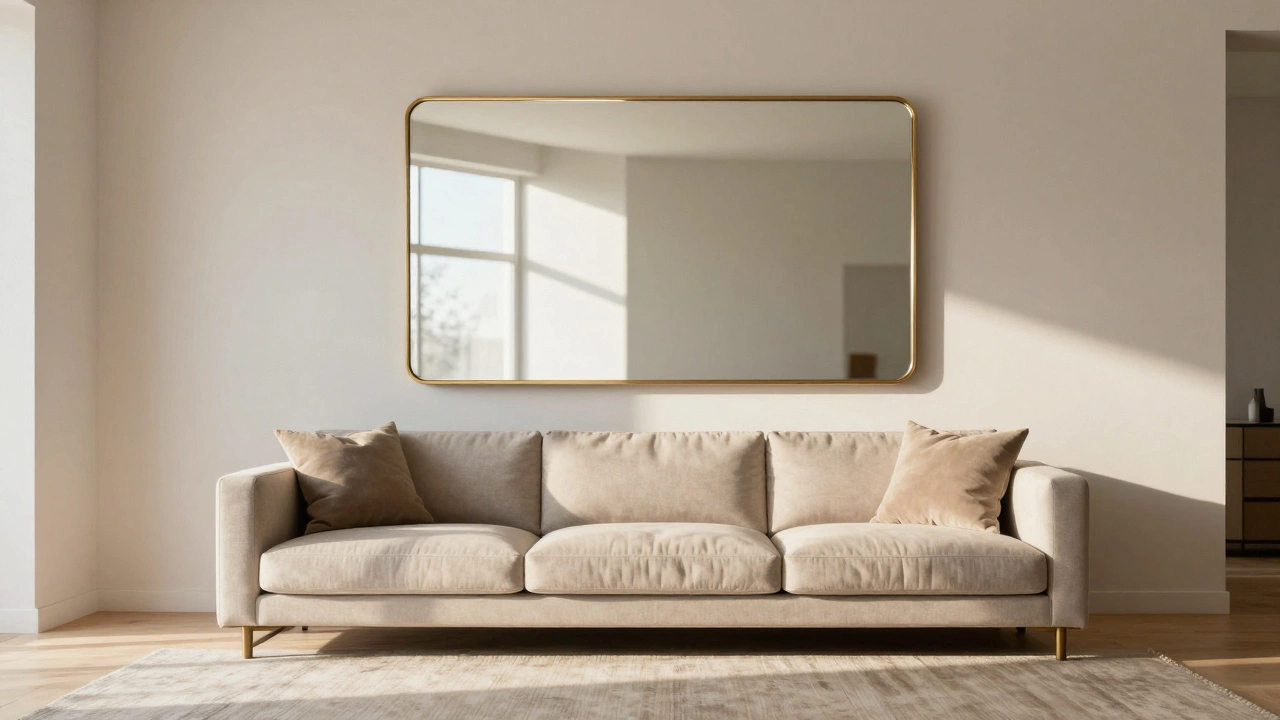
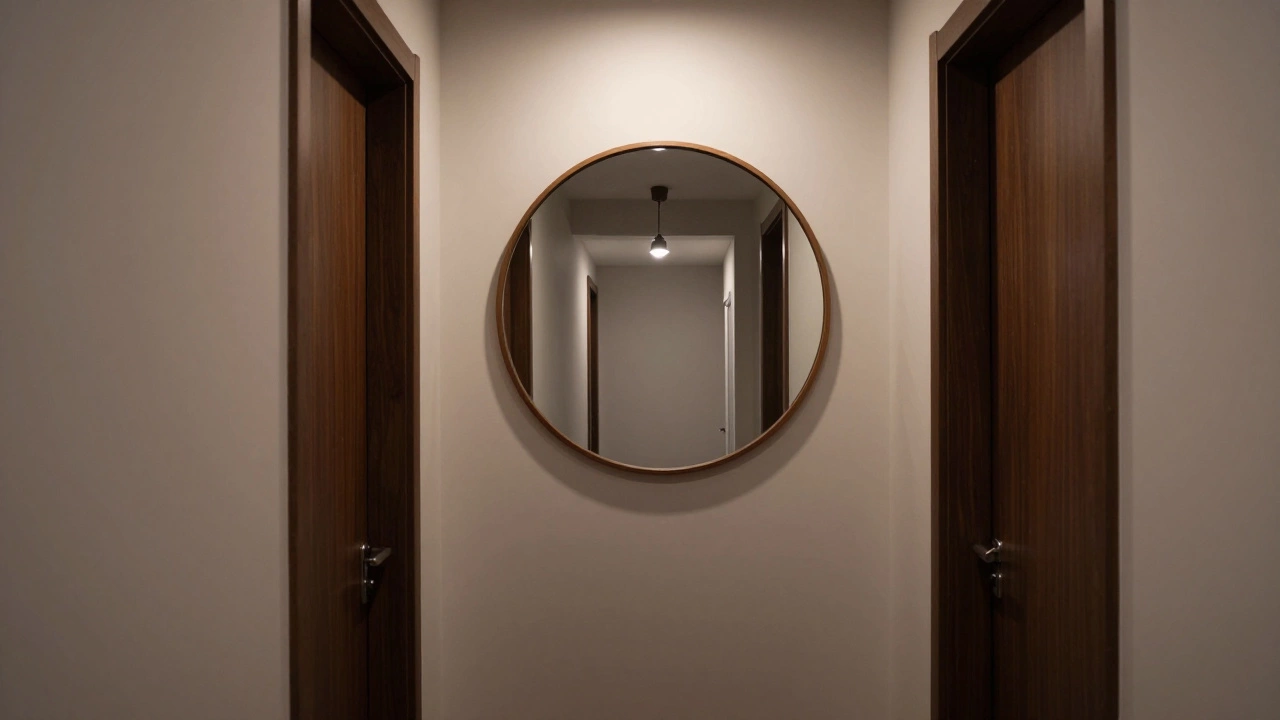
In living rooms or bedrooms, think about the wall space, not just the furniture. A large mirror above a sofa can anchor the seating area. Here, bigger is usually better. A floor-to-ceiling mirror or a large rectangular piece can double the perceived depth of the room. If you are working with a small entryway, a round mirror centered at eye level (about 57 to 60 inches from the floor) works best because it breaks up the vertical lines of the door frame without overwhelming the narrow space.
| Room/Placement | Recommended Size Rule | Why It Works |
|---|---|---|
| Bathroom Vanity | 2/3 width of sink cabinet | Creates symmetry and functional visibility |
| Above Sofa | 1/2 to 2/3 width of sofa | Anchors the furniture grouping |
| Entryway/Hall | Round or oval, max 3ft diameter | Softens hard angles, fits narrow walls |
| Floor Mirror | At least 5ft tall | Allows full-body check, elongates ceiling height |
Shape Matters: Rectangles vs. Circles
Shape dictates the mood of the room. Rectangular mirrors are classic, structured, and professional. They reinforce the grid-like nature of most homes-windows, doors, and walls are all rectangles. If you want a clean, modern look, stick with rectangles. They are also the most versatile shape for bathrooms and dressing areas because they align naturally with the human face and body.
Circular or oval mirrors introduce softness. In a room filled with sharp corners and straight lines, a round mirror acts as a visual relief. It feels organic and calming. Think of placing a round mirror in a bedroom with a square bed frame or a living room with boxy modular sofas. The contrast makes the design feel intentional and curated rather than rigid.
Arched mirrors have become incredibly popular in recent years. They offer the best of both worlds: the structure of a rectangle with the softness of a curve at the top. An arched mirror can mimic the shape of a window or a doorway, creating architectural interest even if your home lacks those features. Just be careful not to overdo it; one statement arch per room is enough.
Frame Choices: Minimalist vs. Statement
The frame does more than hold the glass; it sets the tone for the decor. Frameless mirrors are sleek, modern, and disappear into the background. They are ideal for small spaces where you want to maximize the reflective surface without adding visual clutter. A frameless mirror in a minimalist bathroom or a contemporary office keeps things looking airy and open.
If you want the mirror to be a piece of art itself, go for a framed option. Wood frames bring warmth and texture. A natural oak or walnut frame pairs beautifully with Scandinavian or rustic styles. Metal frames, especially in black, brass, or gold, lean towards industrial or glam aesthetics. A thick, ornate gilt frame can transform a plain hallway into something that feels like a gallery.
Consider the lighting when choosing a frame. Dark frames absorb light, while metallic or light-colored frames reflect it. In a dim room, a bright metal frame can help bounce light around, making the space feel brighter. In a sun-drenched room, a darker wood frame can add necessary contrast and depth.
Placement Strategy: Where to Hang Your Mirror
You already know not to put a mirror directly opposite a messy pile of laundry. But strategic placement goes beyond avoiding clutter. The goal is to capture what you want to see more of.
Place a mirror opposite a window. This is the number one trick for making a dark room feel bright. The mirror reflects natural light back into the room, effectively doubling your daylight. Even if the window faces north and gets little direct sun, the reflected ambient light still adds significant brightness.
In narrow hallways, hang a mirror on the long wall, not the short end wall. This technique tricks the eye into seeing the hallway as longer than it actually is. The reflection extends the perspective, reducing the feeling of being squeezed between walls.
Avoid hanging mirrors directly across from televisions or computer screens. The glare will be distracting, and the reflection of the screen can cause eye strain. Similarly, be mindful of streetlights outside. If a mirror catches harsh exterior lighting at night, it can turn your cozy living room into a spotlight zone.
Mirror Types for Specific Needs
Not all mirrors are created equal. The type of glass and coating matters depending on where you use it.
Anti-fog mirrors are essential for bathrooms. Standard mirrors steam up quickly during hot showers, ruining your morning routine. Anti-fog mirrors have a heated element behind the glass that prevents condensation. They plug into a nearby outlet and keep the surface clear instantly.
For dressing areas, consider a full-length mirror. These should ideally be placed near a window with natural light. Artificial light can distort colors, making you think your outfit looks different than it really does. Natural light gives you the truest representation of how you look to others.
Decorative mirrors, such as convex mirrors (which bulge outward) or antique-style silvered glass, serve purely aesthetic purposes. Convex mirrors widen the field of view, making them great for tight corners where you need to see around a bend. Antique mirrors add character and history, though they may show slight distortions or discoloration, which is part of their charm.
Installation and Safety Tips
Hanging a mirror correctly is half the battle. Large mirrors are heavy. Never rely on drywall anchors alone for anything larger than 24 inches. Locate the studs in your wall and secure the mirror directly into them. If you can't hit a stud, use heavy-duty toggle bolts designed for the weight.
For frameless mirrors, adhesive strips can work for smaller sizes, but again, check the weight limit. For larger pieces, a D-ring hanger system attached to the back of the mirror and screwed into the wall provides the most secure hold. It also allows you to adjust the height slightly before final tightening.
Safety first: if you have children or pets, consider safety film. This is a thin plastic layer applied to the back of the glass. If the mirror breaks, the shards stick to the film instead of shattering across the floor. It’s a cheap insurance policy that saves cleanup time and potential injuries.
Budgeting for Quality
You don’t need to spend a fortune, but avoid the absolute cheapest options. Cheap mirrors often have poor-quality silvering, leading to black edges (silvering decay) within a few years, especially in humid bathrooms. Look for mirrors with sealed edges. This means the back is coated with paint or resin to protect the reflective layer from moisture and air.
Invest in a good mirror for high-use areas like the bathroom and entryway. You’ll look into these mirrors daily. A clear, distortion-free reflection improves your daily experience. For accent walls or low-traffic areas, you can save money with simpler designs or second-hand finds. Vintage mirrors often have unique frames that cost far less than reproducing them today.
How high should I hang a mirror in the bathroom?
The center of the mirror should be at eye level for the average user, which is typically 57 to 60 inches from the floor. If multiple people of different heights use the bathroom, aim for the taller person's eye level or choose a larger mirror that accommodates everyone.
Can I put a mirror above a fireplace?
Yes, but be cautious. Heat and soot from a real fire can damage the mirror's backing over time. Ensure the mirror is heat-resistant and kept at a safe distance. For gas or electric fireplaces, this is less of an issue, making it a stylish way to add height to the mantel area.
Do mirrors make a room look bigger?
Absolutely. Mirrors create an illusion of depth by reflecting the room. Placing a large mirror opposite a window or on a long wall can visually double the space. Lighter frames and minimal borders enhance this effect by blending into the surroundings.
What is the difference between a regular mirror and an anti-fog mirror?
Regular mirrors fog up due to condensation from steam. Anti-fog mirrors have a built-in heating element that warms the glass slightly, preventing water droplets from forming. They require an electrical connection but provide a clear view immediately after showering.
Is it bad feng shui to have a mirror facing the bed?
In Feng Shui, having a mirror directly reflect the bed is discouraged because it is believed to disturb sleep energy and cause restlessness. If your mirror reflects the bed, try covering it at night with a cloth or moving it to a different wall.