
Will Medicare Pay for Caregivers? The Truth About In-Home Care Costs

Caregiver Payment Eligibility Checker
Your Assessment Results
You’ve probably heard the promise that Medicare is the federal health insurance program for people aged 65 and older or those with certain disabilities. It covers hospital stays, doctor visits, and some medical equipment. But when your mother’s health declines and she needs help getting out of bed, bathing, or just staying safe at home, you might wonder if that same card will pay you to provide that care.
The short answer is no. Standard Medicare does not pay family members to act as caregivers. If you are looking for a paycheck from the government to stay home with your mom, you will likely be disappointed unless you meet very specific, narrow criteria. Understanding exactly what Medicare covers-and what it doesn’t-is crucial before you make any financial commitments.
The Hard Truth: Medicare Doesn’t Pay for Custodial Care
To understand why Medicare won’t write you a check, you have to look at how the program defines "medical necessity." Medicare Part A (hospital insurance) and Part B (medical insurance) are designed to cover skilled medical services. This means care provided by licensed professionals like registered nurses, physical therapists, or speech-language pathologists.
Caregiving for an aging parent is often what experts call custodial care. This includes help with activities of daily living (ADLs), such as:
- Bathing and grooming
- Dressing
- Eating
- Using the toilet
- Transferring from bed to chair
Medicare considers these tasks non-medical. Since they don’t require a licensed medical professional to perform, Medicare generally refuses to cover them. Even if your mother has a serious illness like dementia or heart failure, if her primary need is help with daily routines rather than skilled medical treatment, standard Medicare steps back.
The Exception: Home Health Benefits
There is a glimmer of hope within Medicare Part A and Part B known as Home Health Services is a benefit that covers intermittent skilled nursing care, physical therapy, speech-language pathology, and medical social services. However, this benefit comes with strict rules that most families find difficult to navigate.
To qualify, your mother must be deemed "homebound" by a doctor. This means leaving home requires considerable and taxing effort. She also needs a plan of care certified by a physician. Most importantly, the care must be "intermittent," meaning it’s needed only part-time. If she needs 24-hour care, Medicare Home Health won’t cover it.
Even if she qualifies, Medicare pays the agency, not you directly. The agency hires the nurse or therapist. You cannot insert yourself into this arrangement to get paid. The agency might hire you as a Certified Nursing Assistant (CNA) if you have the proper certification and pass their background checks, but this is rare and usually treated as regular employment, not a family caregiving stipend.
Respite Care: A Short Break for Family Caregivers
If your mother has Alzheimer’s disease or another form of dementia, Medicare offers a small relief valve called Respite Care is short-term care provided to give the primary caregiver a break. Under Medicare Part A, you can get up to 28 days of inpatient respite care per year. This isn’t cash in your pocket; it’s coverage for your mother to stay in a skilled nursing facility while you take a breather.
This benefit is limited. It doesn’t cover home-based respite where someone comes to your house to watch her. It also doesn’t pay you. It simply removes the burden of care from your shoulders for a few days so you don’t burn out. While it doesn’t put money in your bank account, it saves you the cost of hiring a temporary sitter during those days.
Medicaid: The Real Alternative for Long-Term Care
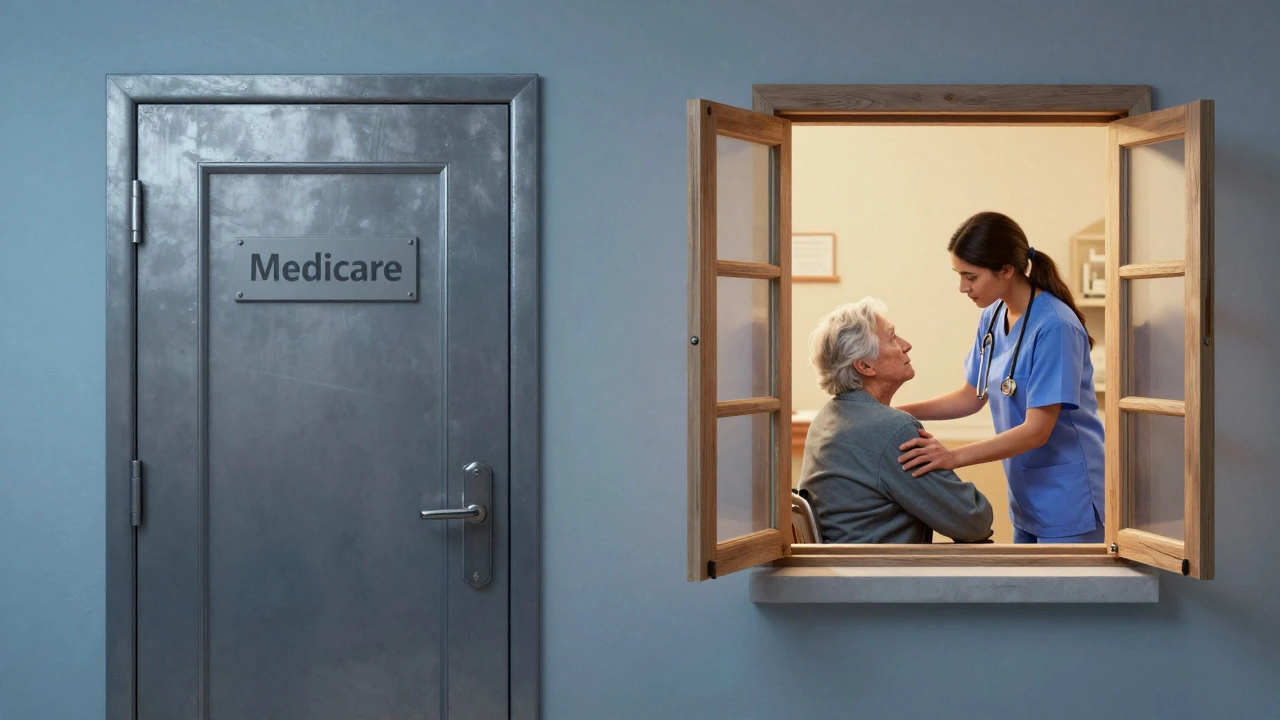
If Medicare is a door slammed shut, Medicaid is a joint federal and state program that helps with medical costs for some people with limited income and resources. is the window that might open. Unlike Medicare, Medicaid is a needs-based program. It varies significantly by state, but many states offer programs specifically designed to keep seniors at home rather than in institutions.
These are often called Cash and Counseling Programs or Consumer Directed Personal Assistance Programs (CDPAP). In states like New York, California, and Pennsylvania, Medicaid may allow your mother to hire a personal assistant. In some cases, she can hire you.
Here is the catch: Your mother must qualify for Medicaid, which usually means having very low income and assets. She might need to "spend down" her savings first. Also, there are strict eligibility requirements for the caregiver. You usually can’t be her spouse or legal guardian, but adult children are often eligible. The process involves paperwork, training, and oversight, but it is one of the few ways to get paid legally to care for a parent.
| Feature | Medicare | Medicaid | Long-Term Care Insurance |
|---|---|---|---|
| Pays Family Members? | No (Rare exceptions) | Yes (In select states/programs) | Depends on policy |
| Covers Custodial Care? | No | Yes (If asset-poor) | Yes |
| Income Limits? | No | Strict | No (Premium-based) |
| Skilled Medical Care? | Yes (Intermittent) | Yes | Limited |
What About Veterans Benefits?
If your mother served in the military, or if she is the surviving spouse of a veteran, you might have another option. The Department of Veterans Affairs offers the Aid and Attendance Benefit is an additional pension benefit for veterans who require the aid of another person for daily activities. This is not healthcare; it’s a tax-free monthly payment added to a basic VA pension.
This money goes directly to the veteran or survivor. They can use it however they want, including paying a family member for care. There are income and net worth limits, and the application process can be slow, but it is a legitimate source of funds for in-home support that Medicare ignores.

Private Duty Nursing and Out-of-Pocket Costs
If neither Medicare nor Medicaid fits your situation, you are left with private options. Some people opt for Private Duty Nursing is skilled nursing care provided in the home for extended periods, often 24 hours a day. This is expensive, often costing $200-$300 per hour depending on your location. Medicare rarely covers this unless it’s strictly for post-hospital recovery and meets the "intermittent" rule.
Another route is long-term care insurance. If your mother bought a policy years ago, it might cover homemaker services or companion care. Check her old documents. These policies vary wildly, but they are designed specifically for the gap Medicare leaves behind.
Practical Steps to Take Now
Don’t assume anything. Start by calling your local Area Agency on Aging. They know the specific Medicaid waivers available in your county. Ask about "Program of All-Inclusive Care for the Elderly" (PACE). PACE combines medical and social services and allows participants to remain in the community. It’s funded by Medicare and Medicaid jointly and might offer more flexibility than standard plans.
Also, talk to your mother’s doctor. Sometimes, a creative prescription for "home health aide" services under Medicare can buy you a few weeks of help after a hospital discharge. Use that time to set up a sustainable long-term plan, whether that involves hiring outside help or applying for Medicaid.
Can I get paid by Medicare to care for my elderly mother?
Generally, no. Medicare does not pay family members for custodial care. It only pays for skilled medical services provided by licensed professionals through certified agencies. Exceptions are extremely rare and usually involve specific work-for-hire arrangements with home health agencies.
Does Medicaid pay family caregivers?
Yes, in many states. Through programs like Consumer Directed Personal Assistance Programs (CDPAP) or Cash and Counseling, Medicaid may allow a qualified family member to be hired as a personal care attendant. Eligibility depends on state laws and the patient's financial status.
What is the difference between Medicare and Medicaid for home care?
Medicare is an entitlement program based on age or disability, covering short-term skilled medical care. Medicaid is a needs-based program covering long-term custodial care for those with limited income and assets. Medicare rarely covers daily living assistance, while Medicaid often does.
How much does private home care cost?
Costs vary by region, but national averages range from $25 to $30 per hour for non-medical companionship and up to $50+ per hour for skilled nursing. Monthly costs for full-time care can exceed $8,000 to $10,000.
Can Medicare cover respite care for dementia patients?
Yes, Medicare Part A covers up to 28 days of inpatient respite care per year for individuals with Alzheimer’s or related dementias. This allows the primary caregiver to take a break while the patient stays in a skilled nursing facility. It does not cover in-home respite services.