What Is the Rule of Two in Mirrors? Interior Design Secrets
Rule of Two Mirror Simulator
Discover the perfect pairing for your space. Select a primary mirror type and a secondary element to see if it adheres to the "Rule of Two" for optimal visual balance.
You walk into a room and something feels off. The space is cluttered, or maybe it just doesn't feel "finished." You tweak the sofa, swap out a cushion, but the vibe remains stubbornly wrong. Often, the culprit isn't your furniture layout-it's how you're handling reflections. Specifically, you might be breaking what designers call the Rule of Two.
No, this isn't about physics or optical illusions where two mirrors face each other to create an infinite tunnel (though that’s fun). In interior design, the Rule of Two refers to balance, symmetry, and pairing. It suggests that mirrors work best when they aren't solitary islands floating on a wall. They need a partner. Whether that partner is another mirror, a piece of art, or a specific light source, understanding this principle can instantly elevate your home from "okay" to "intentional."
Why One Mirror Rarely Works Alone
Think about a single small mirror hung in the middle of a large blank wall. It looks lonely, right? It draws attention to itself as an object rather than integrating into the room's flow. Human eyes are wired to look for patterns and pairs. When we see two similar objects, our brain perceives stability and order. This is why the Rule of Two is so effective: it leverages basic visual psychology.
A lone mirror often acts like a dead end. Light hits it, bounces back, and stops. But two mirrors? They create a dialogue. Even if they aren't identical twins, placing them in proximity creates a sense of rhythm. This rhythm guides the eye around the room, making spaces feel larger and more dynamic. If you've ever felt a room was too "busy," adding a second mirror can actually calm it down by organizing the visual noise.
The Three Ways to Apply the Rule of Two
Applying this rule doesn't mean you must buy two identical mirrors. That would look like a hotel lobby. Instead, think of three distinct strategies for pairing your reflective surfaces.
- Mirror-Mirror: Place two mirrors side-by-side or opposite each other. This works beautifully above a console table or in a narrow hallway. For example, two round mirrors of slightly different sizes hung at staggered heights create interest without feeling rigid.
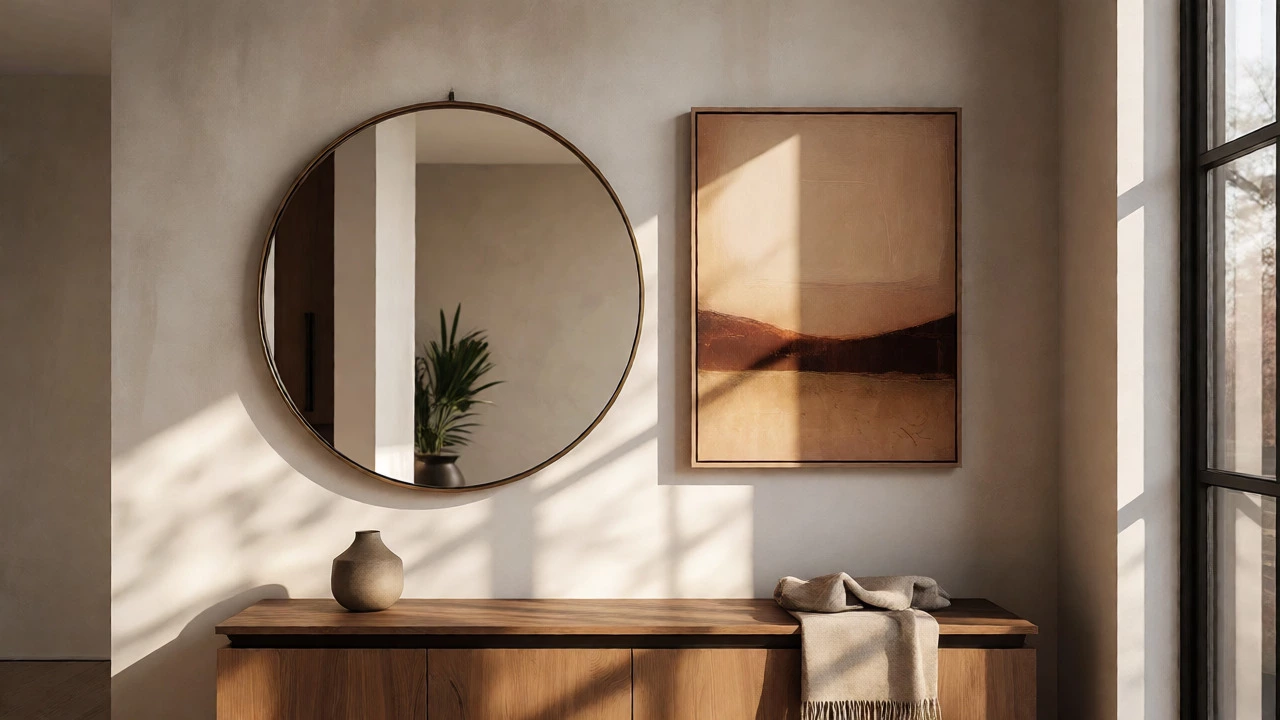
- Mirror-Art: Pair a mirror with a framed artwork of similar scale. The mirror reflects light; the art adds color. Together, they balance function and aesthetics. This is perfect for entryways where you want to check your coat but also make a statement.
- Mirror-Light: Pair a mirror with a sconce or pendant light. The light fixture illuminates the mirror, which then bounces that light deeper into the room. This duo maximizes brightness, especially in rooms with few windows.
Bathroom Styling: Beyond the Vanity
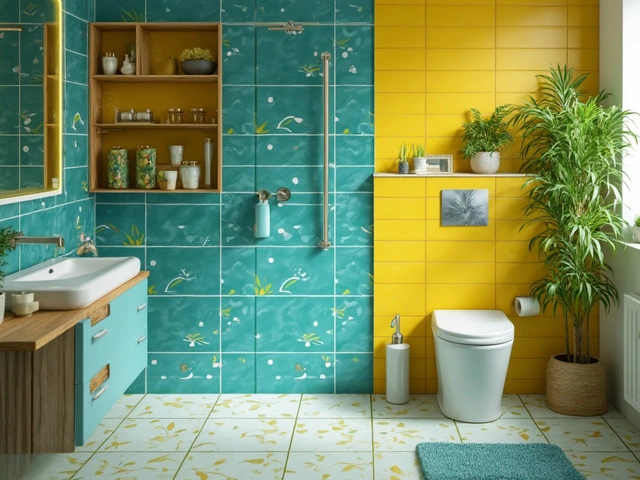
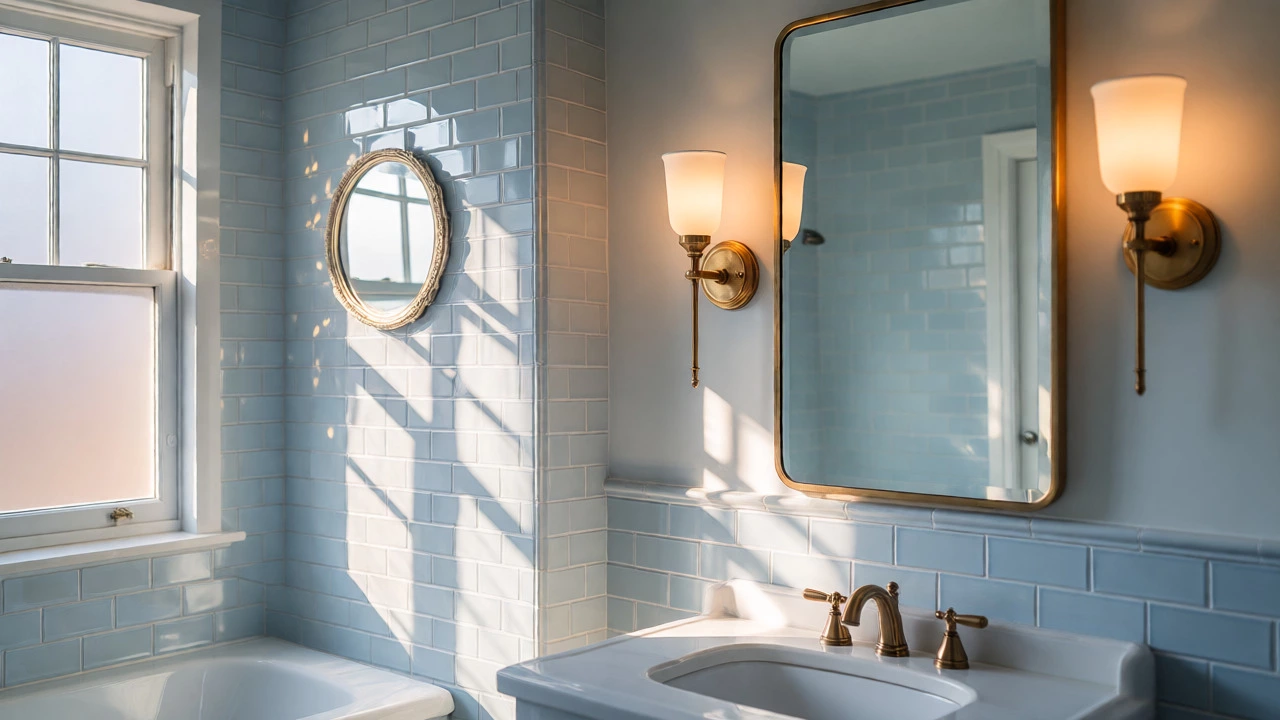
Bathrooms are where people most often break the Rule of Two unintentionally. We tend to hang one large mirror over the sink and stop there. While functional, it misses an opportunity. Consider adding a smaller decorative mirror on an adjacent wall or near the bathtub. This second reflection catches natural light from the window and scatters it across the tiles, making the whole room glow.
| Room Type | Primary Mirror Role | The "Second" Element | Design Goal |
|---|---|---|---|
| Living Room | Reflects window view | Framed Art or Second Mirror | Create depth and focal point |
| Entryway | Functional check-out | Console Table + Lamp | Warm welcome and utility |
| Dining Room | Amplifies chandelier | Sideboard or Buffet | Elegant ambiance |
| Bathroom | Vanity functionality | Sconces or Decorative Accent | Spa-like brightness |
Common Mistakes That Break the Flow
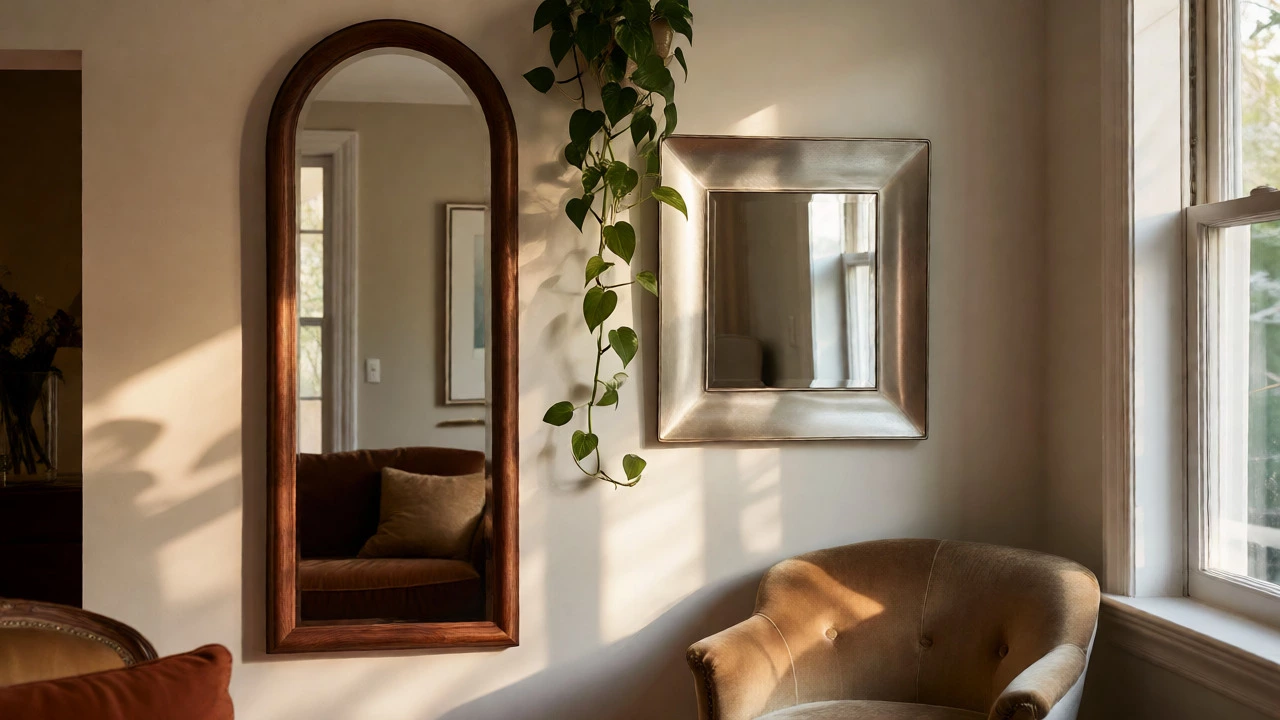
Even when you try to follow the rule, you might fall into traps. The biggest mistake is matching too perfectly. Two identical rectangular mirrors with thick gold frames can look sterile. Aim for "near-matches." Different shapes-like a circle next to a rectangle-or different frame materials-wood vs. metal-add texture. This contrast keeps the eye engaged.
Another pitfall is ignoring scale. If you pair a tiny hand mirror with a giant floor mirror, the balance fails. The Rule of Two relies on visual weight. A large arched mirror needs a substantial partner, like a large canvas print or a robust light fixture. Small mirrors should be grouped in clusters of two or three to compete with larger elements.
Lighting and Reflection: The Hidden Partner
Remember, light is invisible until it hits something. Your mirror is the catcher; the light source is the thrower. If you place a mirror opposite a dark corner, you’re wasting its potential. Always position your paired setup to catch the brightest available light. In Auckland, where daylight shifts dramatically, positioning matters. Face your primary mirror toward the north-facing windows to capture consistent soft light throughout the day.
Consider the angle. Tilting a mirror slightly downward can reflect ceiling details or hanging plants, adding vertical interest. When paired with a second element, ensure they don’t fight for dominance. The goal is harmony, not competition.
How to Test It in Your Home
You don’t need to renovate to test this. Start small. Take that extra mirror you’ve been storing in the closet. Hang it next to your existing bedroom mirror. Step back. Does the wall feel more anchored? Now, try removing one. Does the space feel emptier? This simple experiment proves the psychological impact of pairing.
If you lack a second mirror, borrow one. Lean a large standing mirror against a wall near a seated area. It counts as a reflective surface and provides the "second" element needed for balance. It’s flexible, easy to move, and requires no drilling.
Does the Rule of Two apply to all types of mirrors?
Yes, the principle applies universally. Whether it’s a full-length wardrobe mirror, a bathroom vanity, or a decorative accent, pairing helps integrate the object into the room’s composition. However, very large statement pieces sometimes stand alone if they have significant architectural presence.
Can I use two mirrors facing each other?
You can, but be cautious. Facing mirrors create an infinite reflection effect, which can feel disorienting or chaotic in small spaces. Use this technique sparingly, perhaps in a long hallway, to visually extend the length of the corridor.
What if my wall is too small for two mirrors?
In tight spaces, substitute the second mirror with a high-reflectivity material like polished chrome, glass shelving, or a metallic light fixture. These act as "visual mirrors" by bouncing light similarly, satisfying the Rule of Two without taking up physical space.
Is feng shui compatible with the Rule of Two?
Absolutely. Feng shui emphasizes balance and energy flow. Paired mirrors help circulate chi (energy) evenly throughout a room. Avoid placing mirrors directly opposite doors, as this can bounce energy out of the space instead of retaining it.
How do I choose frames for paired mirrors?
Stick to a cohesive palette. If one frame is brass, the other should share that warm tone, even if the style differs. Mixing wood tones can work if they are complementary (e.g., oak and walnut), but avoid clashing metals like silver and gold unless you’re aiming for an eclectic, curated look.