What Is a Luxury Rug? Key Features That Set It Apart
Luxury Rug Knot Count Checker
Check Your Rug's Luxury Potential
Luxury rugs typically have over 100 knots per square inch. This tool helps you verify if your rug meets luxury standards based on its size and knot density.
Why This Matters
According to luxury rug experts, true luxury rugs have at least 100 knots per square inch (14,400 knots per square foot). The tool shows how your rug compares to this standard. Rugs with fewer than 80 knots per square inch are typically not considered luxury.
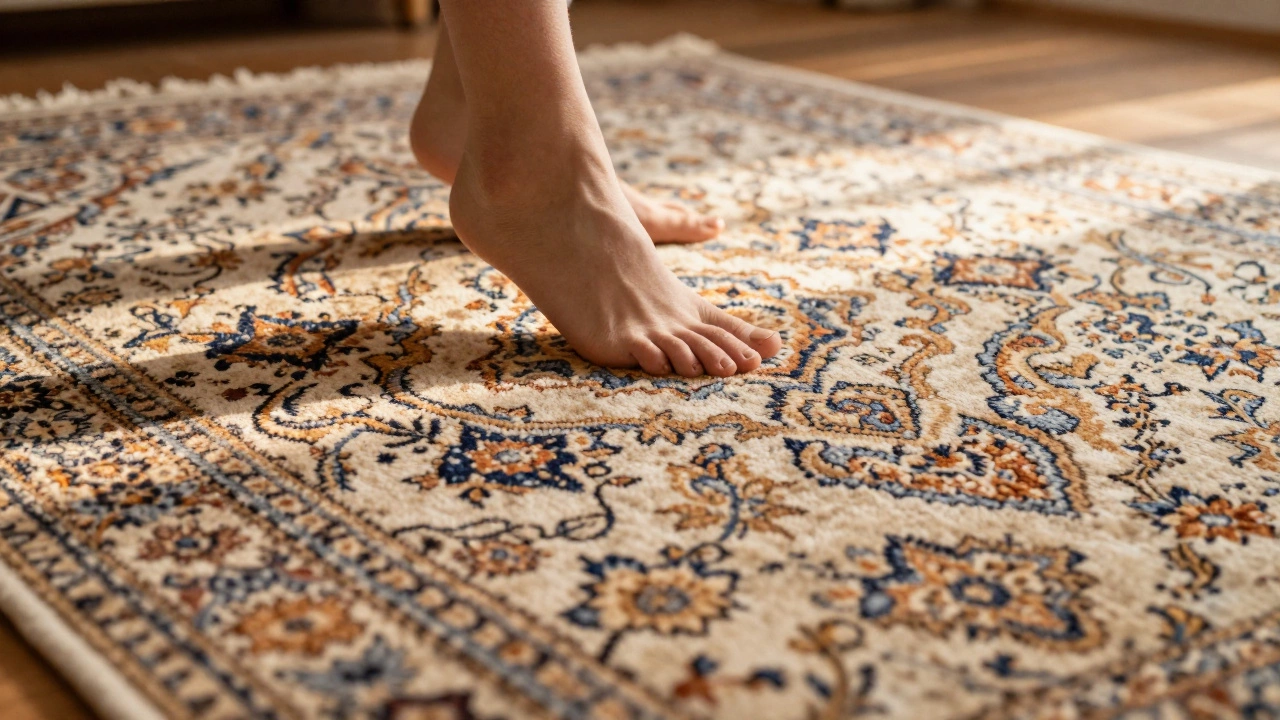
A luxury rug isn't just a floor covering-it's a statement. It’s the kind of piece that changes the energy of a room, not because it’s loud, but because it’s quiet in its perfection. You don’t notice it at first glance. You feel it when you walk barefoot across it, when the light hits the weave just right, or when you realize it’s been there for decades and still looks like new. Luxury rugs are made to last, to be passed down, and to carry stories in their threads.
What Makes a Rug Truly Luxury?
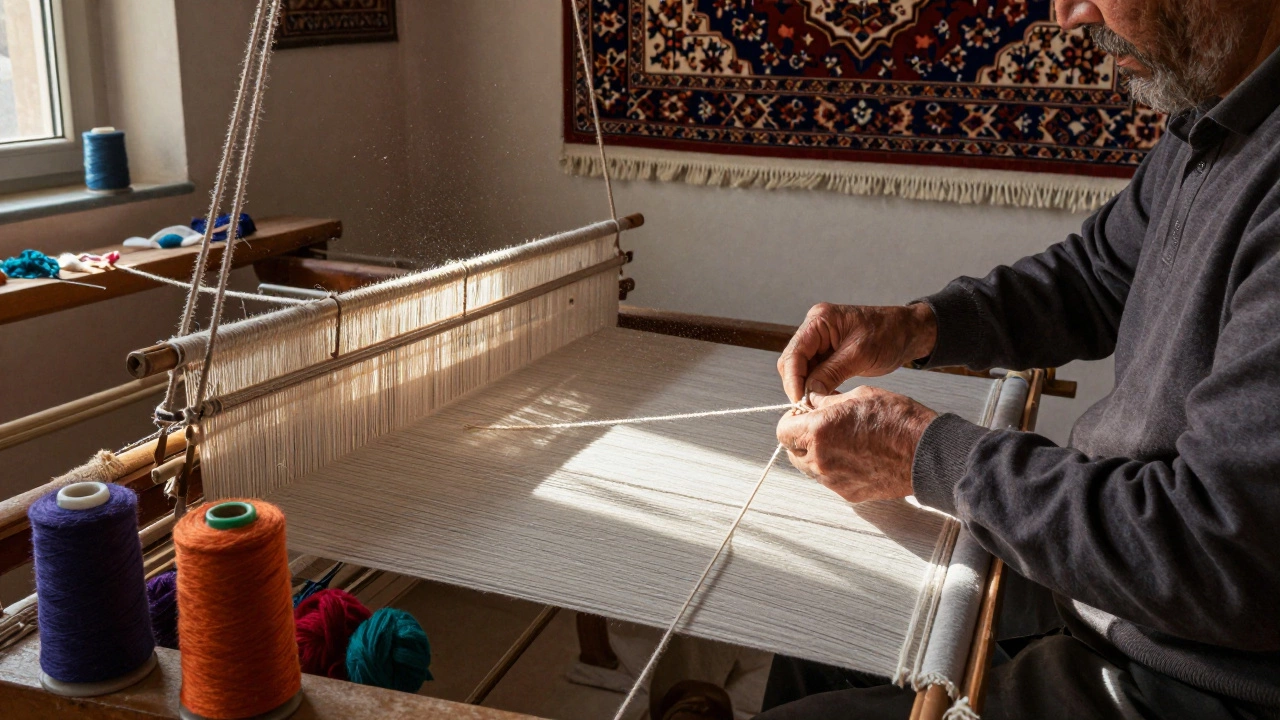
A luxury rug isn’t defined by price alone. You can pay $2,000 for a machine-made rug with a fancy name, and it still won’t be luxury. Real luxury comes from craftsmanship, materials, and time. The best luxury rugs are hand-knotted, one knot at a time, by skilled artisans who spend months or even years on a single piece. A single square meter of a fine Persian rug can contain over 100,000 knots. That’s not decoration-that’s devotion.
The materials matter just as much. Wool from highland sheep, especially from Iran, Afghanistan, or New Zealand, is the gold standard. It’s dense, resilient, and naturally resistant to stains. Silk is used for highlights, giving subtle shine and intricate detail to floral patterns or border designs. Some rugs blend silk with wool to balance durability and elegance. Cotton is rarely used for the pile-it’s reserved for the foundation, the warp and weft, because it’s strong but not soft underfoot.
Where Do Luxury Rugs Come From?
The most famous luxury rugs come from regions with centuries of weaving tradition. Persian rugs from Iran are the most sought-after. Cities like Isfahan, Tabriz, and Kashan each have their own signature styles-Isfahan rugs are known for their floral medallions and soft color palettes, while Tabriz rugs often feature elaborate, detailed scenes. Turkish rugs, especially from Hereke, are prized for their fine silk weaves and geometric precision. Indian rugs, particularly from Jaipur and Agra, often carry Mughal-inspired designs with rich reds and blues.
But luxury isn’t limited to the Middle East. Tibetan rugs use thick, hand-spun wool and bold, symbolic patterns rooted in Buddhist culture. Moroccan rugs, like Beni Ourain, are made by Berber women using undyed wool and simple geometric shapes-minimalist, but deeply meaningful. Even New Zealand wool rugs, woven in Europe or the U.S., are gaining recognition for their sustainable sourcing and clean, modern designs.
How to Spot a Real Luxury Rug
If you’re shopping for a luxury rug, there are three things you must check: the back, the fringe, and the knot count.
First, flip it over. A hand-knotted rug will have a clear, detailed pattern on the back, almost like a mirror image of the front. Machine-made rugs have a fuzzy, glued backing with no visible knots. You can’t fake that.
Second, look at the fringe. On a real hand-knotted rug, the fringe is an extension of the warp threads-it’s not sewn on. If the fringe looks glued, stitched, or too perfect, it’s a sign the rug was made by a machine.
Third, count the knots. A luxury rug typically has at least 100 knots per square inch. High-end pieces can reach 500 or more. To check, turn the rug over and count the knots in a 1-inch square. Multiply that number by 144 to get knots per square foot. Anything below 80 is not considered luxury.
Why Do Luxury Rugs Cost So Much?
It’s not just about the materials. It’s about the hours. A skilled weaver can tie about 10,000 knots per day. A large 8x10-foot Persian rug with 200 knots per square inch takes roughly 1,440,000 knots. At 10,000 knots a day, that’s 144 days of work-nearly five months. And that’s just one person, working 8 hours a day, in a quiet room with nothing but a loom and a pattern.
Then there’s the dye. Natural dyes from indigo, madder root, or pomegranate rind fade slowly and deepen with age. Synthetic dyes fade quickly and look flat. A luxury rug made with natural dyes will look richer after 20 years than it did the day it was made.
And don’t forget the sourcing. Wool from specific regions, hand-spun yarn, and dye batches mixed by traditional recipes all add cost. But they also add soul.
What You’re Really Buying
When you buy a luxury rug, you’re not buying floor cover. You’re buying history, patience, and artistry. You’re buying the hands of someone who learned the craft from their grandmother, who knows the exact pressure needed to tighten a knot without breaking the thread. You’re buying a piece that will outlive trends, furniture, and even the house it’s in.
Luxury rugs don’t follow fashion. They set it. A well-placed Persian rug in a modern living room can make the whole space feel grounded. A Beni Ourain in a minimalist bedroom adds warmth without clutter. A high-knot-count Indian rug in a dining room turns a meal into a ritual.
And unlike furniture, which wears out or goes out of style, a luxury rug gets better with time. The wool softens. The colors deepen. The stories woven into it become more visible. That’s why collectors don’t just buy rugs-they build legacies.
How to Care for a Luxury Rug
They’re durable, but they’re not indestructible. Vacuum weekly with a suction-only setting-no beater bar. Rotate it every six months to prevent uneven wear. If you spill something, blot immediately with a clean, dry cloth. Never scrub. Never use chemical cleaners. For deep cleaning, hire a specialist who understands natural dyes and hand-knotted fibers.
Keep it out of direct sunlight for long periods. UV light fades natural dyes faster than anything else. If you have large windows, use sheer curtains. A rug placed under a skylight might look stunning in January, but by July, half the pattern could be gone.
And if you’re storing it? Roll it, don’t fold it. Use acid-free paper to wrap it. Store it in a dry, cool place. Moths hate cedar, so tuck in a few cedar blocks. But never use mothballs-they leave a chemical residue that can damage the fibers.
Who Buys Luxury Rugs?
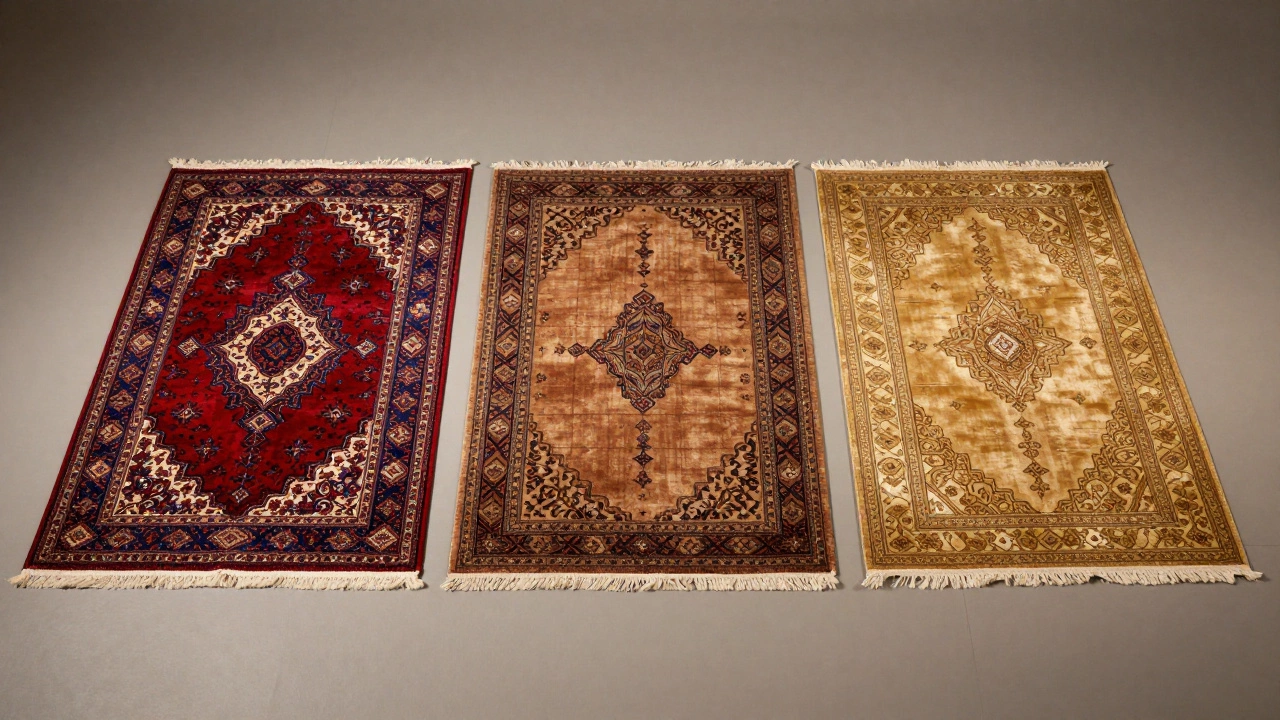
It’s not just the ultra-rich. Interior designers, collectors, and even young homeowners who value long-term beauty over fast trends are choosing luxury rugs. In Auckland, we’re seeing more people invest in one statement piece rather than filling a room with cheap, disposable decor. A luxury rug becomes the anchor. Everything else in the room is built around it.
People who buy these rugs often don’t rush. They wait. They visit dealers, ask questions, touch the rugs, and sometimes return months later. They know it’s not a purchase-it’s a commitment.
What to Avoid
Don’t be fooled by terms like "handmade," "oriental," or "antique." These are marketing buzzwords, not guarantees. A rug labeled "handmade" might mean the fringe was sewn by hand. "Antique" doesn’t mean it’s 100 years old-it could mean it was made to look old.
Avoid rugs with synthetic fibers like polyester or nylon in the pile. They look shiny at first, but they flatten fast, trap dust, and can’t be cleaned without damage.
And never buy a luxury rug without seeing the back. If a dealer refuses, walk away. Real luxury doesn’t hide.
Final Thought
A luxury rug isn’t about showing off. It’s about honoring craft. It’s about choosing something that will outlive your phone, your car, even your furniture. It’s about bringing a piece of centuries-old tradition into your home-and letting it speak for itself.
What’s the difference between a luxury rug and a regular rug?
A luxury rug is hand-knotted using natural fibers like wool or silk, with over 100 knots per square inch. It’s made by skilled artisans over months or years. Regular rugs are machine-made, use synthetic fibers, and often have glued backing. They’re cheaper, faster to produce, and don’t last as long. The difference is in the texture, the detail, and how the rug ages over time.
Are Persian rugs always luxury rugs?
Not all Persian rugs are luxury, but most luxury rugs are Persian. Persian refers to the origin-Iran. Within that, quality varies. A low-knot-count Persian rug made with synthetic dyes and machine-assisted weaving isn’t luxury. True luxury Persian rugs come from specific cities like Isfahan or Tabriz, use natural dyes, and have knot counts above 200 per square inch. Always check the back and the knot density.
Can I find luxury rugs online?
Yes, but be careful. Reputable dealers provide high-resolution images of the rug’s back, detailed knot counts, fiber content, and origin. They’ll answer questions about dye sources and weaving techniques. Avoid sites that use stock photos, don’t show the back, or can’t tell you where the rug was made. Trust your gut-if it feels too good to be true, it probably is.
How long does a luxury rug last?
A well-made luxury rug can last 100 years or more. Wool naturally resists wear, and hand-knotted construction allows the rug to flex without breaking fibers. With proper care-rotating it, avoiding direct sun, and professional cleaning-it can easily outlive the building it’s in. Many antique rugs still in use today are over 150 years old.
Do luxury rugs increase home value?
Yes, especially in high-end markets. A genuine, high-quality hand-knotted rug can add character and perceived value to a home. Real estate agents in cities like Auckland, Sydney, or London often note that homes with authentic luxury rugs sell faster and at higher prices. It’s not just about the rug-it’s about the story and craftsmanship it represents.