What Kitchenware Do Professional Chefs Use? The Tools Behind Restaurant-Quality Food
Ever wonder why restaurant food tastes so much better than what you make at home? It’s not magic. It’s not secret ingredients. It’s the tools they use every day. Professional chefs don’t rely on fancy gadgets or expensive brands-they use a core set of tools that have stood the test of time, tested in high-pressure kitchens across the world. If you want to cook like a pro, you need to know what’s actually in their drawers, not what’s advertised on TV.
Knife Skills Start With the Right Blade
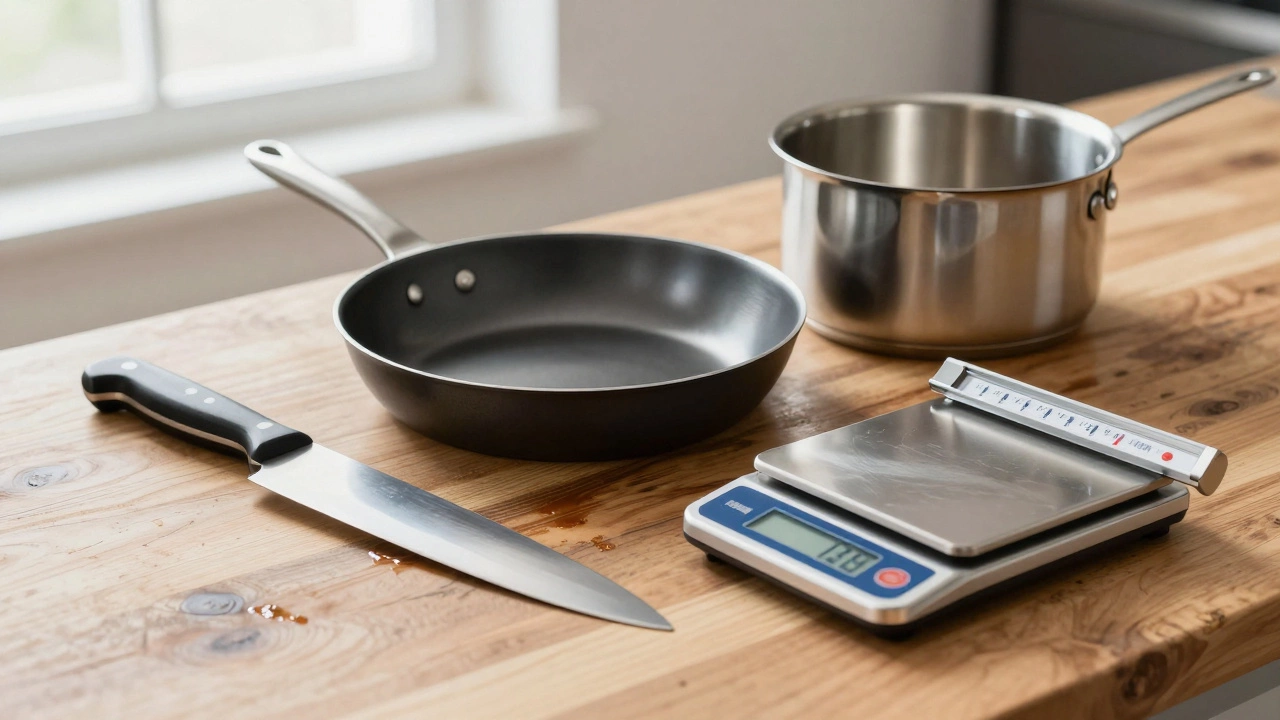
The single most important piece of kitchenware in any chef’s arsenal? A good knife. Not just any knife-a chef’s knife with an 8- to 10-inch blade. That’s the standard. Japanese brands like Global and Shun are popular, but so are German ones like Wüsthof and Zwilling. Why? Because they hold an edge longer and feel balanced in the hand. Most chefs own at least two knives: the chef’s knife for chopping, slicing, and dicing, and a paring knife for fine work like peeling garlic or trimming herbs.
But here’s what you won’t see in home kitchens: the boning knife. Thin, flexible, and sharp, it’s used to remove meat from bones without wasting an ounce. And don’t forget the serrated bread knife. A dull serrated edge is useless. Chefs sharpen theirs regularly because a clean cut through crusty sourdough matters as much as a perfect sear.
The Pan That Does It All
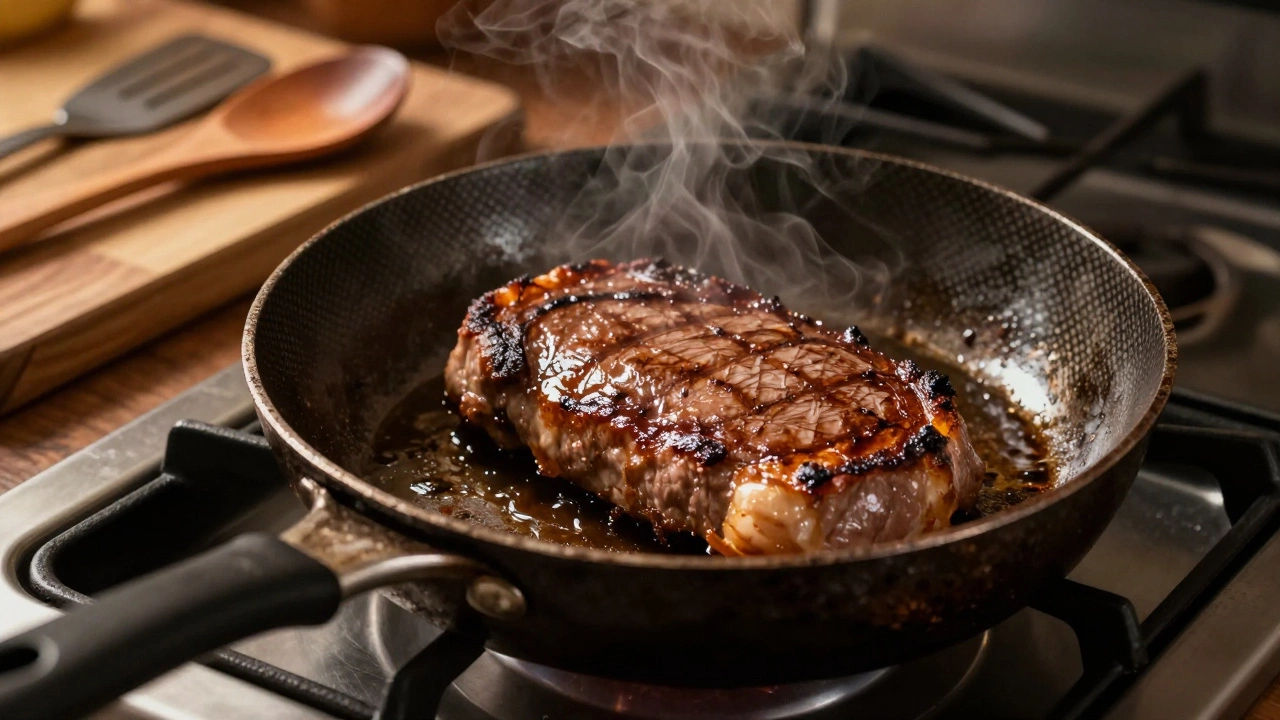
When chefs reach for a pan, they’re not reaching for a nonstick coating. They’re reaching for carbon steel or cast iron. Why? Because those materials build up a natural nonstick layer over time-called seasoning-and they hold heat like nothing else. A 12-inch carbon steel pan is the workhorse in most professional kitchens. It can go from stovetop to oven, sear a steak to perfection, and even bake a frittata without sticking.
Cast iron is equally loved, especially for slow-cooked dishes like braises or cornbread. But unlike home cooks who treat theirs like museum pieces, chefs use them daily. They scrub them with hot water and a brush-no soap, no special cleaners. The seasoning gets better with use.
Stainless steel pans? Yes. But only for sauces, reductions, and deglazing. Why? Because you can see what’s happening. You can scrape up the browned bits-the fond-that turn into rich sauces. Nonstick pans? Rarely. They can’t handle high heat, and they wear out too fast under constant use.
Why Chefs Skip the Nonstick Fad
Nonstick cookware has a place in home kitchens-especially for eggs or delicate fish. But in professional kitchens? It’s a liability. The coating flakes over time, especially when metal utensils are used (and they are). Plus, you can’t sear at high temperatures without damaging it. Chefs need pans that can handle 500°F+ without breaking down. That’s why carbon steel and cast iron dominate. They’re durable, repairable, and improve with age.
And here’s a truth most home cooks ignore: you don’t need a dozen pans. One good skillet, one large pot, and a saucepan are enough to cook 90% of meals. The rest is just marketing.
Wooden Spoons, Metal Spatulas, and Other Unsexy Tools
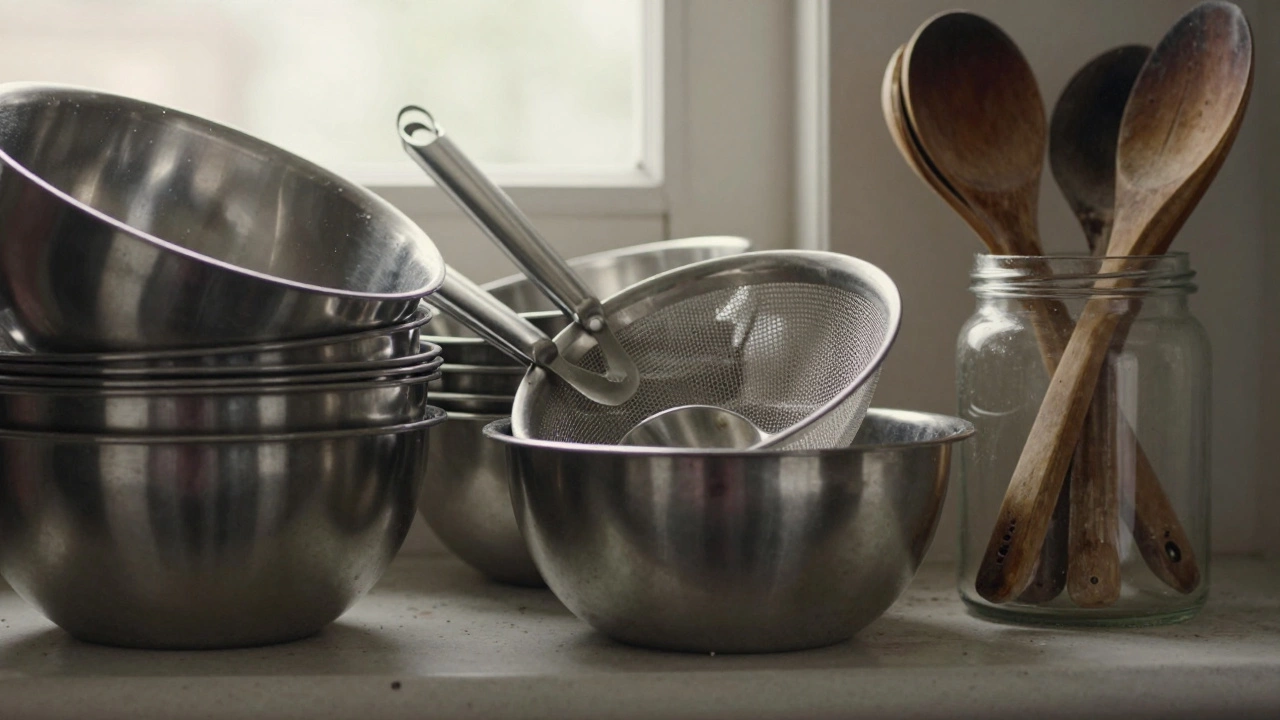
Forget about silicone spatulas with colorful handles. Chefs use wooden spoons-real ones, carved from beech or maple. Why? Because they don’t scratch pans, they don’t conduct heat, and they’re gentle on delicate sauces. A well-used wooden spoon has a smooth, worn surface that fits perfectly in the hand. You’ll find them in every kitchen, stacked in jars like pencils.
For flipping, scraping, and stirring, metal spatulas rule. Stainless steel, thin, and slightly flexible. They can get under a seared salmon without breaking it apart. Silicone spatulas? They melt under high heat. Chefs use them for mixing batters, but never for direct contact with hot pans.
And then there’s the whisk. Not the fancy balloon kind you see in baking blogs. Chefs use a flat, sturdy stainless steel whisk for emulsifying dressings, whipping cream, and stirring risotto. It’s built to last, not to look pretty.
Measuring Isn’t Optional-It’s Precision
Home cooks often eyeball salt or oil. Chefs don’t. They use digital scales to measure every ingredient. Why? Because baking is chemistry. Even a gram off can ruin a dough. A 100-gram difference in flour changes the hydration level in bread. In a restaurant, consistency is everything.
They also use measuring spoons and cups, but the scale is king. Most kitchens have at least two: one for dry ingredients, one for liquids. And they’re calibrated monthly. A scale that’s off by 5% means every dish is off. No one wants a customer complaining about dry chicken because the flour was measured wrong.
Strainers, Colanders, and the Secret of Stock
Clearing stock? That’s where the china cap comes in. It’s a conical strainer with a fine mesh, used to remove every last bit of sediment from broths. You won’t find this in most home kitchens, but it’s essential for restaurant-quality soups and sauces.
Colanders? Chefs use them, but not the plastic kind. Stainless steel, with large holes and a sturdy base. They’re used for draining pasta, rinsing greens, and even cooling blanched vegetables in ice baths. A good colander can handle 100 pounds of pasta without bending.
And don’t forget the slotted spoon. It’s the unsung hero. Used to lift dumplings out of boiling water, remove fried foods from oil, or scoop vegetables from a simmering pot. It’s simple. It’s effective. And it’s in every kitchen.
Thermometers: No Guessing Allowed
Chefs don’t poke chicken to see if it’s done. They use a digital instant-read thermometer. The Thermapen Mk4 is the gold standard. It reads temperature in under a second. Why? Because undercooked meat is dangerous. Overcooked meat is ruined. A steak at 130°F is medium-rare. At 135°F, it’s medium. That 5-degree difference matters.
They also use probe thermometers for roasts and slow-cooked dishes. One probe stays in the meat while it cooks, connected to a digital display on the counter. No opening the oven. No guessing. Just precision.
What’s Missing From Most Home Kitchens
Here’s what you probably don’t have-but chefs do:
- Spring-loaded tongs-strong, balanced, and easy to use one-handed. Perfect for flipping burgers or tossing pasta.
- Spider skimmer-a wide, flat wire basket used to lift food out of hot oil or water without splashing.
- Mandoline slicer-for uniform, paper-thin slices of potatoes, onions, or cucumbers. No knife skills needed.
- Immersion circulator-for sous vide cooking. It’s not a trend. It’s a tool for perfect texture.
- Heavy-duty mixing bowls-stainless steel, not glass. They don’t break, they don’t slide, and they stack.
These aren’t luxury items. They’re practical. They save time. They reduce waste. And they make food better.
Build Your Kitchen Like a Chef
You don’t need to buy everything. Start with these five essentials:
- A 8- to 10-inch chef’s knife
- A carbon steel or cast iron skillet
- A stainless steel saucepan
- A digital kitchen scale
- An instant-read thermometer
That’s it. Master those, and you’re already ahead of 80% of home cooks. The rest? It’s just noise. Chefs don’t collect tools. They choose them. They use them. They maintain them. And they know exactly why each one matters.
Final Thought: It’s Not About the Gear
Yes, the tools matter. But what matters more is how you use them. A great knife won’t make you a better cook. Practice will. A perfect sear comes from patience, not a fancy pan. The best kitchenware doesn’t change your skill-it supports it.
So stop chasing the latest kitchen gadget. Start with the basics. Sharpen your knife. Season your pan. Measure your ingredients. And cook like someone who cares about the result-not the brand on the box.
What knife do most chefs use?
Most chefs use an 8- to 10-inch chef’s knife, often from brands like Wüsthof, Zwilling, Global, or Shun. These knives are balanced, hold a sharp edge, and handle everything from chopping vegetables to breaking down poultry. Many chefs also keep a paring knife for detailed work and a serrated bread knife for slicing crusty loaves.
Why don’t chefs use nonstick pans?
Nonstick pans can’t handle high heat, which is essential for searing, browning, and deglazing. The coating also wears out quickly under constant use and can flake off when metal utensils are used. Chefs prefer carbon steel and cast iron because they get better with age, hold heat better, and don’t rely on chemical coatings.
Do chefs really use wooden spoons?
Yes. Wooden spoons are preferred because they don’t scratch pans, don’t conduct heat, and are gentle on delicate sauces. A well-used wooden spoon becomes smooth and comfortable in the hand. Many kitchens keep a jar of them, and they’re replaced only when they crack or splinter.
Is a kitchen scale necessary for home cooks?
Yes-if you want consistent results. Measuring by volume (cups, tablespoons) can vary by up to 20% depending on how you pack ingredients. A digital scale gives you exact weights, which is critical for baking, bread-making, and even balancing sauces. Most professional kitchens rely on scales for every ingredient.
What’s the most underrated kitchen tool?
The spring-loaded tongs. They’re not flashy, but they’re essential for flipping, turning, and serving. They give you control without burning your fingers, and they work with one hand. Many chefs say they use them more than any other tool-even their knife.