
What Does the Bible Say About Mirrors? Biblical Meaning and Symbolism
Biblical Mirror Symbolism Explorer
Have you ever paused in front of your bathroom mirror and wondered if looking at yourself is a sin? It’s a strange question to ask in 2026, when we spend hours curating our online personas. Yet, for centuries, people have looked to the Bible is the sacred text of Christianity containing the Old and New Testaments for answers about daily habits, including grooming and self-reflection. The short answer? The Bible doesn’t ban mirrors. In fact, it uses them as powerful metaphors. But there is a deeper conversation here about vanity, truth, and how we see ourselves before God.
We need to clear up a common myth right away: nowhere in Scripture does it say "thou shalt not look in a mirror." There are no commandments against glass or polished metal surfaces. However, the concept of the mirror appears repeatedly, often carrying heavy symbolic weight. To understand what the Bible says about mirrors, we have to look past the physical object and examine the spiritual lessons attached to it.
The Ancient Mirror: Bronze, Not Glass
When we think of mirrors today, we picture flat glass with a silver backing. That technology didn’t exist in biblical times. If you were living in ancient Israel or Rome, your mirror was likely a polished sheet of bronze is an alloy of copper and tin used for tools and ornaments in antiquity. These bronze mirrors were convex, meaning they distorted your image slightly. They weren’t perfect reflections; they were approximations.
This distinction matters because it changes how we read certain passages. When women in Exodus donated their mirrors to build the Tabernacle, they weren’t giving up modern vanity tools. They were offering valuable household items made of precious metal. This act shows that personal possessions, even those used for beauty, could be repurposed for holy service without being inherently evil.
Mirrors in the Old Testament
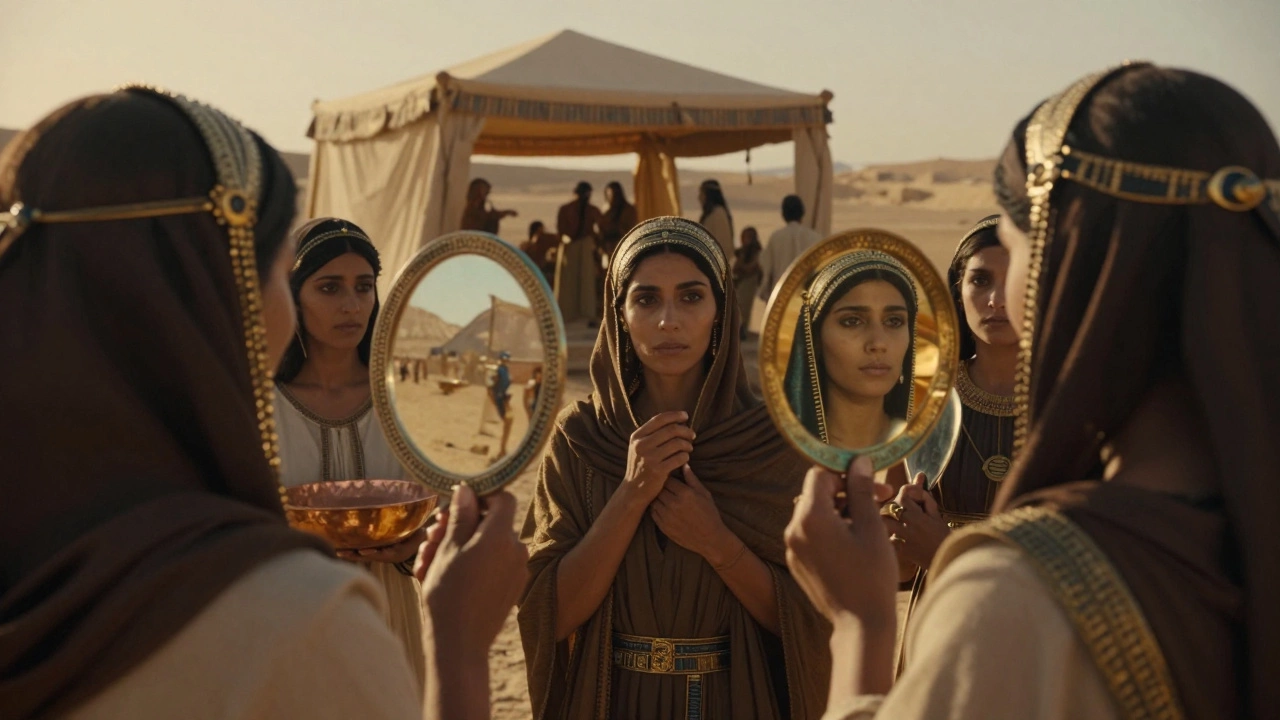
In the Old Testament is the first part of the Christian Bible based on the Hebrew Bible, mirrors appear primarily as objects of value and symbols of womanhood. One of the most famous instances occurs in Exodus 38:8. After the Israelites escaped Egypt, Moses instructed the people to build the Tabernacle (a portable sanctuary). Part of this structure required copper basins for washing.
Who provided the copper? Women. Specifically, the text says, "And he made the laver of bronze, with its base of bronze, from the mirrors of the serving women who served at the entrance of the tent of meeting" (Exodus 38:8, ESV). Imagine the scene: women taking their personal mirrors-items associated with their identity and appearance-and melting them down to create a vessel for priests to wash themselves before entering God’s presence.
This isn’t a condemnation of mirrors. It’s a celebration of sacrifice. The women gave up something personal for a communal, holy purpose. It suggests that while caring for one’s appearance is natural, dedicating oneself to God’s work is higher. The mirror becomes a symbol of transformation: from personal vanity to divine service.
Another reference appears in Song of Solomon, where the bride compares her beloved to a banner over her, but also uses imagery of reflection and beauty throughout the book. While not explicitly mentioning "mirrors," the poetic language of seeing oneself reflected in love aligns with the broader theme of reflection found in Scripture.
Mirrors in the New Testament
The New Testament is the second part of the Christian Bible detailing the life of Jesus and early church takes the metaphor of the mirror much further. Here, the mirror stops being just a physical object and becomes a tool for understanding spiritual truth. Two key passages stand out: James 1:23-24 and 1 Corinthians 13:12.
James: The Forgetful Looker
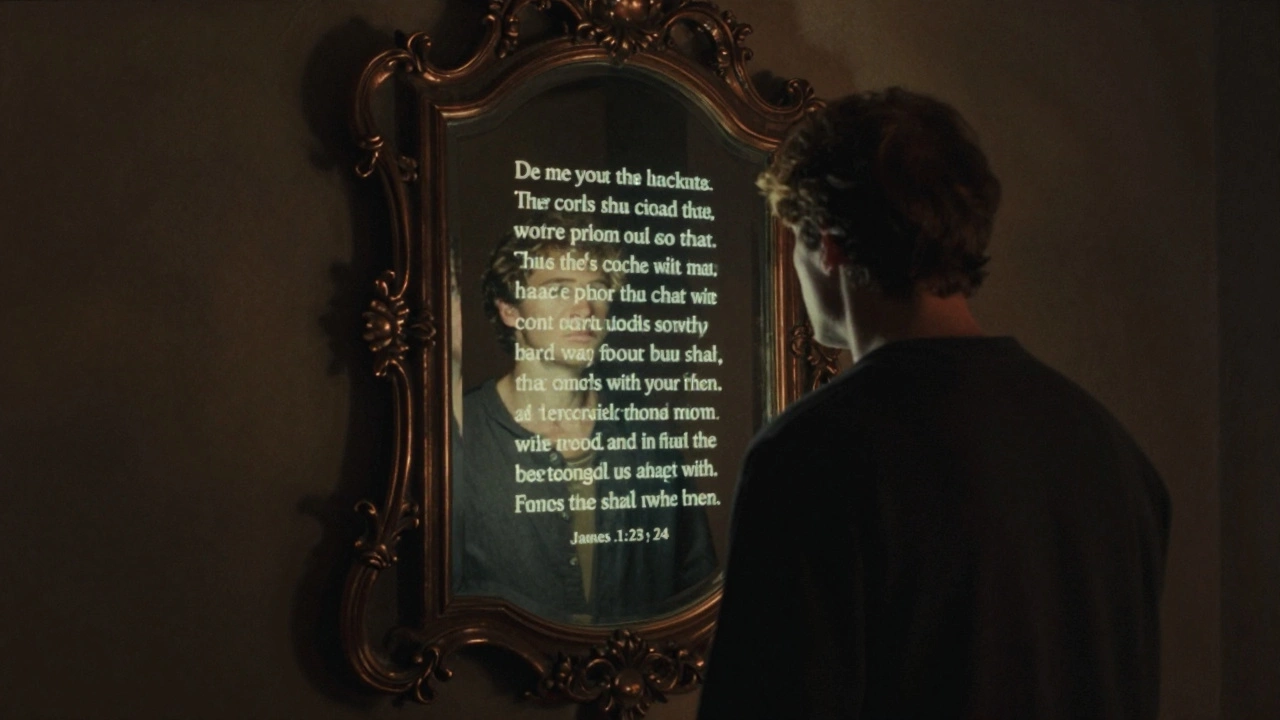
James writes about someone who looks into a "perfect law that gives freedom" but then forgets what they saw. He compares this person to someone who looks at their natural face in a mirror and immediately forgets what they look like. In this context, the mirror represents the Word of God. Just as a mirror shows you dirt on your face so you can wipe it away, Scripture shows you sin so you can repent.
The problem isn’t the mirror; it’s the lack of action. If you look in the mirror and don’t clean your face, the mirror hasn’t failed you. You failed to use the information it provided. James argues that reading the Bible without applying it is spiritually useless. The mirror reveals truth, but only if you let it change your behavior.
Paul: Seeing Dimly
Apostle Paul offers a different perspective in 1 Corinthians 13:12: "For now we see in a mirror dimly, but then face to face." Again, remember the bronze mirror. It wasn’t HD quality. It was blurry, dark, and indirect. Paul uses this limitation to explain our current state of faith. We don’t fully understand God’s plan yet. Our view is partial, obscured, and imperfect.
But the promise is future clarity. "Then face to face" implies a direct, unmediated encounter with God in eternity. Until then, we rely on these "dim" reflections-Scripture, prayer, community-to guide us. The mirror here symbolizes human limitation versus divine perfection.
Vanity vs. Stewardship
If mirrors aren’t bad, why do some Christians feel guilty using them? The fear usually stems from a misunderstanding of vanity is excessive pride in or admiration of one's own appearance or achievements. Vanity is indeed condemned in Ecclesiastes: "Vanity of vanities, all is vanity." But vanity refers to emptiness and futility, not just checking your hair.
God created humans with an innate desire for beauty. Proverbs 31 describes a virtuous woman who makes tapestries and sells linen, implying she cares about craftsmanship and presentation. Esther prepared herself for months before approaching the king, using oils and perfumes. This wasn’t called sin; it was called wisdom and preparation.
Using a mirror for hygiene and modesty is stewardship, not vanity. It’s respecting the body God gave you. The line crosses when the mirror becomes an idol-when your self-worth depends entirely on the reflection rather than your relationship with God. Ask yourself: Am I looking to fix my flaws, or am I trying to replace my soul?
| Context | Symbolism | Key Lesson |
|---|---|---|
| Exodus 38:8 | Sacrifice & Service | Personal items can be offered for holy purposes. |
| James 1:23-24 | Self-Examination | Truth must lead to action, not just observation. |
| 1 Corinthians 13:12 | Limited Understanding | Faith is currently partial; full knowledge comes later. |
| Ecclesiastes | Emptiness (Vanity) | Pride in appearance is futile without God. |
Modern Application: Social Media as Mirrors
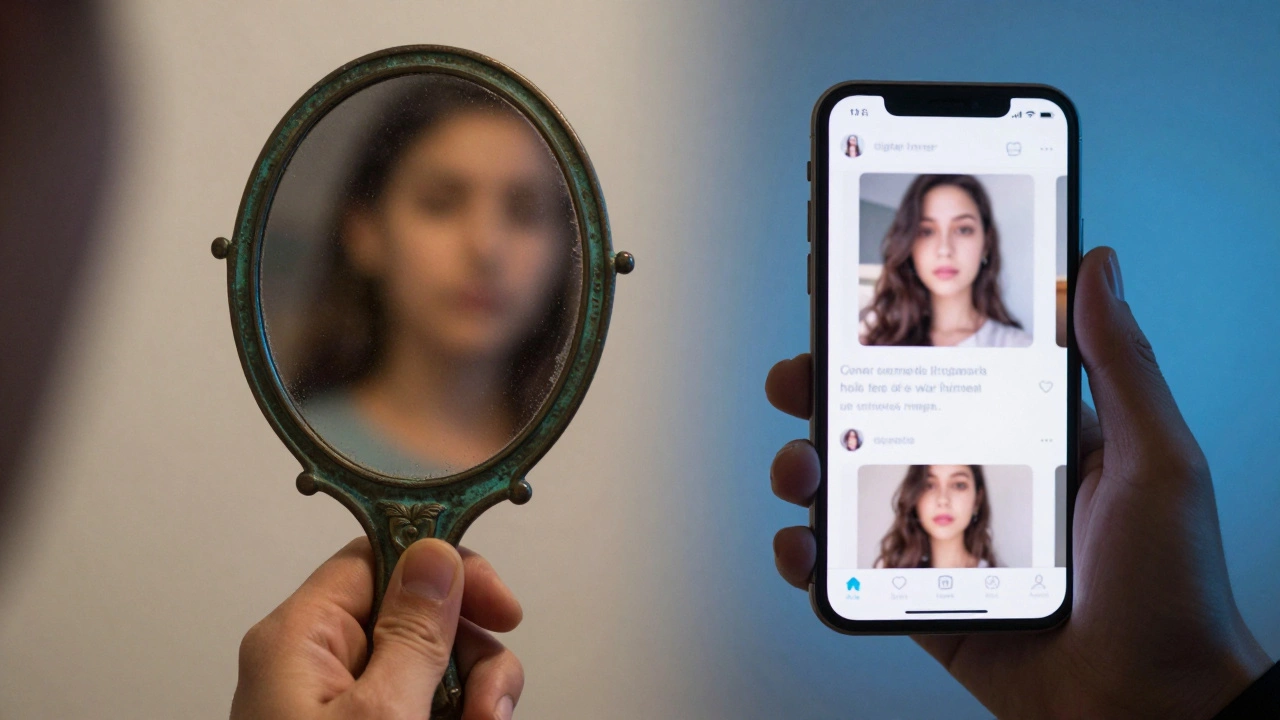
In 2026, our biggest mirrors aren’t in the bathroom. They’re in our pockets. Social media platforms act as digital mirrors, reflecting curated versions of ourselves back to us. The biblical warnings about vanity and false appearances apply strongly here.
When you scroll through Instagram or TikTok, you’re looking into a "bronze mirror"-distorted, selective, and often misleading. People post their best angles, filtered smiles, and highlighted moments. If you judge your worth by these reflections, you’re falling into the trap James warned against: looking but not seeing the truth.
The Bible encourages us to look inward, not outward. Philippians 2:3 says, "Do nothing from selfish ambition or conceit, but in humility count others more significant than yourselves." Digital mirrors often promote comparison and envy. Physical mirrors, when used correctly, promote care and readiness. The difference lies in intent.
How to Use Mirrors Wisely
You don’t need to throw away your mirror. Instead, change how you interact with it. Here are three practical ways to align your mirror usage with biblical principles:
- Practice Gratitude: When you look in the mirror, thank God for your health, senses, and ability to serve others. Your body is a temple (1 Corinthians 6:19).
- Check Your Heart: Use the mirror as a reminder of James’ lesson. Are you acting on the truths you know? Let the reflection prompt spiritual cleanliness, not just physical grooming.
- Limit Comparison: Recognize that every reflection is limited. Don’t let your self-image be dictated by external standards. Your value is defined by Christ, not cosmetics.
Conclusion: Reflection Without Distortion
The Bible doesn’t forbid mirrors; it elevates them. From the bronze sheets of Exodus to the spiritual metaphors of James and Paul, mirrors teach us about sacrifice, truth, and humility. They remind us that our current view of reality is partial, and that true clarity comes only through God.
So, go ahead and check your teeth. Fix your collar. Wash your face. But while you’re at it, ask God to polish your heart. That’s the reflection that truly matters.
Is it a sin to look in the mirror?
No, it is not a sin to look in the mirror. The Bible contains no prohibition against mirrors. In fact, mirrors are used positively as metaphors for spiritual truth and self-examination in books like James and 1 Corinthians. Sin occurs when looking in the mirror leads to excessive pride (vanity) or neglects spiritual duties, but the act itself is neutral.
Why did women give their mirrors in Exodus?
In Exodus 38:8, women donated their bronze mirrors to help build the Tabernacle. These mirrors were melted down to make a copper basin for washing. This act demonstrated generosity and sacrifice, showing that personal items used for beauty could be repurposed for holy service. It highlights the value of giving up personal comforts for God’s work.
What does "seeing in a mirror dimly" mean?
This phrase from 1 Corinthians 13:12 refers to the limitations of human understanding in this life. Ancient mirrors were made of polished metal and provided blurry, distorted images. Paul uses this to explain that our current knowledge of God and spiritual truths is partial and imperfect. In eternity, believers will see God "face to face" with complete clarity.
Does the Bible support wearing makeup?
The Bible does not explicitly forbid makeup. However, it emphasizes inner beauty over outer adornment. 1 Peter 3:3-4 advises against letting adorning consist of braided hair or gold jewelry, but rather the unfading beauty of a gentle and quiet spirit. Many Christians believe moderate grooming is acceptable as long as it doesn’t become a source of pride or distraction from character.
How is the mirror metaphor used in James?
In James 1:23-24, the mirror represents God’s Word. James compares a hearer who forgets what they heard to someone who looks in a mirror and forgets their appearance. The point is that knowing the truth isn’t enough; you must act on it. Just as a mirror helps you clean your face, Scripture helps you identify and remove sin from your life.