How to Store a House with No Storage: 15 Clever Hacks for Small Spaces
Small Space Storage Cost & Difficulty Estimator
*Estimates based on average retail prices for quality materials.
Installation Complexity
Living in a home with zero built-in closets or cupboards feels like playing life on hard mode. You buy groceries, and suddenly your kitchen counter is a disaster zone. You hang up a jacket, and it’s draped over the only chair in the room. It’s frustrating, but here’s the good news: you don’t need a renovation budget to fix this. You just need to change how you look at your walls, floors, and empty corners.
We’ve all been there-staring at a pile of stuff with nowhere to put it. The solution isn't always about buying more boxes; it's about using every cubic inch of air in your house. Let’s break down exactly how to turn a storage-less house into an organized sanctuary without spending a fortune.
Quick Summary
- Go Vertical: Use wall-mounted shelves and pegboards to free up floor space.
- Multi-Function Furniture: Choose ottomans, beds, and tables with built-in compartments.
- Hidden Corners: Utilize under-bed, behind-door, and window-seat areas for bulkier items.
- Visual Clarity: Clear bins and uniform containers reduce visual clutter instantly.
- The One-In-One-Out Rule: Prevent overflow by maintaining a strict intake policy.
Mastering Vertical Space
When you have no floor space, look up. Most people ignore the real estate between their desk and the ceiling. This is where vertical storage is the practice of organizing items upwards along walls rather than outwards on floors. By installing floating shelves or tall bookcases, you transform blank walls into functional libraries or display units.
Think about your entryway. Instead of a bulky coat rack that takes up square footage, install a pegboard is a perforated board used for hanging tools, accessories, or decor on hooks. A pegboard allows you to customize exactly what hangs where. Need to store keys? Add a hook. Need to hide mail? Add a small basket. When you move to another room, you can reconfigure it entirely. It’s flexible, cheap, and keeps the floor completely clear.
For heavier items like books or collections, invest in sturdy shelving that goes all the way to the ceiling. If the gap at the top bothers you, add a simple cornice or just leave it as a place for rarely used seasonal decor. The key is to anchor these units to the wall studs for safety. Nothing ruins a tidy vibe faster than a wobbly shelf.
Furniture That Works Double Time
In a home with no storage, every piece of furniture needs to earn its keep. If a table doesn’t hold things, why does it exist? Look for multi-functional pieces. An storage ottoman is a upholstered seat that opens up to reveal internal compartment space. serves as extra seating, a footrest, and a hiding spot for blankets or toys. It’s a triple threat.
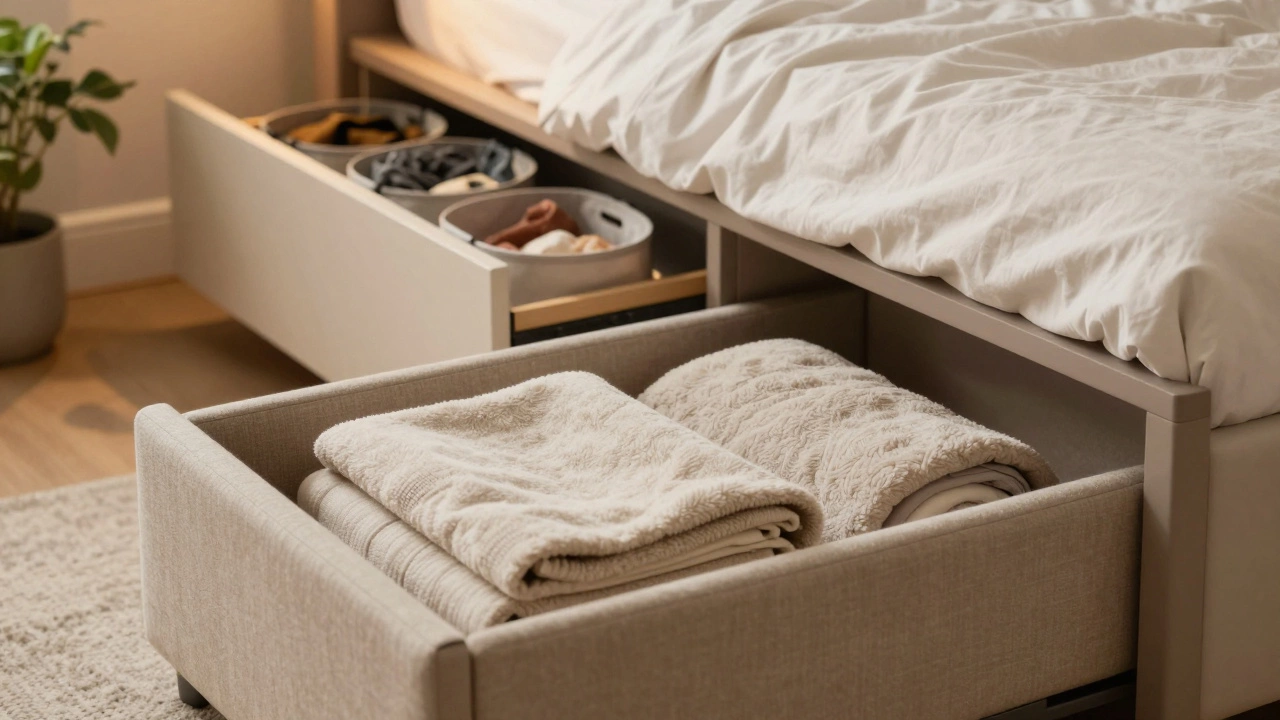
Beds are another goldmine. If you’re sleeping on a platform bed with nothing underneath, you’re wasting prime real estate. Swap it for a bed frame with drawers or use rolling bins that slide easily under the mattress. These bins are perfect for off-season clothes, shoes, or linens. Since they roll out, you can access them without lifting heavy mattresses.
Even your dining table can help. Consider a drop-leaf table that folds away when not in use, freeing up the center of the room. Or, if you have a larger table, use the space underneath for baskets holding magazines, pet food, or cleaning supplies. Just make sure the baskets are uniform in size and color to keep it looking intentional, not messy.
Exploiting Hidden Zones
There are pockets of space in almost every house that go unused because we don’t think to look there. Behind doors is one of the biggest offenders. Over-the-door organizers aren’t just for shoe racks anymore. There are fabric pockets for pantry items, vinyl strips for bathroom toiletries, and even magnetic boards for fridge-side notes.
Window seats are another classic example. If your home has a bay window or a recessed window sill, build a bench with hinged lids. Inside, you can store everything from holiday decorations to extra pillows. It turns an awkward architectural feature into a cozy reading nook with secret storage.
Don’t forget the backs of cabinets. In kitchens and bathrooms, the inside of cabinet doors is often bare. Install tension rods to hold spice jars upright, or mount adhesive hooks for measuring cups and spatulas. This frees up valuable shelf space for larger appliances or dishes. It’s a small change that makes a huge difference in accessibility.
The Power of Visual Uniformity
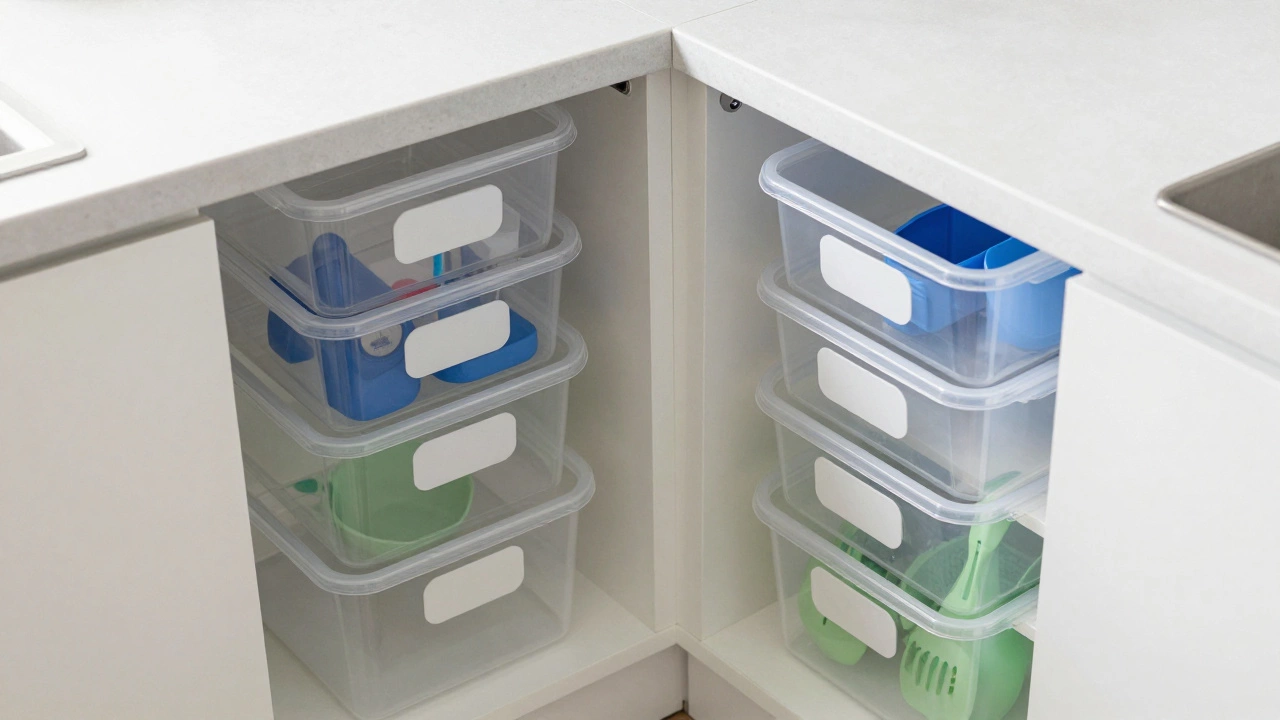
Clutter isn’t just about the amount of stuff you own; it’s about how much of it you can see. Even if you have great storage solutions, mismatched plastic bins will make your home feel chaotic. Switch to clear, uniform containers. Clear bins let you see what’s inside without opening them, saving time and frustration. Uniform shapes stack neatly, maximizing space efficiency.
Labeling is non-negotiable. Use a label maker or clean handwritten tags on the front of every bin. “Winter Clothes,” “Office Supplies,” “Holiday Decor.” When everyone knows where things go, maintenance becomes easier. You stop digging through piles because you know exactly which box holds the extension cords.
Color coding can also help. Assign colors to categories or rooms. Blue for bathroom items, green for kitchen gadgets. This creates a visual system that’s intuitive for kids and guests alike. It reduces decision fatigue and keeps the aesthetic pleasing.
Maintaining Order: The Mindset Shift
Getting organized is easy; staying organized is hard. Without built-in storage, you have less margin for error. One new purchase can tip the balance back into chaos. Adopt the "one-in, one-out" rule. For every new item you bring into the house, one old item must leave. Donate it, sell it, or trash it. This prevents accumulation.
Regular audits are essential. Every season, go through your stored items. Do you still need those five scarves from 2019? Probably not. Freeing up that space gives you breathing room for new things. It’s a cycle of renewal that keeps your home feeling fresh and manageable.
Finally, embrace minimalism where possible. Ask yourself: do I really need this? Does it serve a purpose or bring me joy? If not, let it go. Less stuff means less need for storage. It’s the ultimate hack for living comfortably in a small space.
Comparison of Storage Solutions
| Solution Type | Best For | Cost Estimate | Installation Difficulty |
|---|---|---|---|
| Wall Shelves | Books, decor, everyday items | $20 - $100 | Medium (drilling required) |
| Pegboards | Kitchen tools, office supplies, craft items | $30 - $80 | Medium (mounting needed) |
| Under-Bed Bins | Clothing, linens, seasonal gear | $15 - $50 per bin | Easy (no installation) |
| Over-Door Organizers | Shoes, pantry goods, bathroom toiletries | $10 - $40 | Easy (hook-on or adhesive) |
| Storage Ottoman | Blankets, toys, remote controls | $50 - $200 | None (furniture purchase) |
Frequently Asked Questions
Can I install shelves in a rental apartment?
Yes, but check your lease first. Many landlords allow minor drilling if you fill the holes upon moving out. Alternatively, use tension rods, command strips, or freestanding ladder shelves that require no hardware at all.
What is the best way to store shoes without a closet?
Use over-the-door hanging organizers with clear windows so you can see your shoes. For bulkier boots, consider a narrow shoe tree rack that stands vertically against a wall. Avoid stacking boxes as they become unstable and hard to access.
How do I organize a kitchen with no cabinets?
Rely heavily on open shelving and countertop carts. Use tiered racks for spices and oils to maximize vertical space on counters. Install magnetic strips for knives and metal utensils. Keep daily-use items within arm's reach and store bulk goods in labeled bins on lower shelves.
Are plastic bins better than fabric cubes?
Plastic bins are sturdier and better for heavy items like books or electronics. They also wipe clean easily. Fabric cubes are lighter and softer, making them ideal for clothing, toys, or lightweight decor. Choose based on weight and durability needs.
How can I make a small bedroom feel bigger?
Keep the floor clear. Use wall-mounted nightstands instead of traditional tables. Hang mirrors opposite windows to reflect light and create depth. Store clothes in under-bed drawers or a compact wardrobe unit. Visual clutter makes spaces feel smaller, so maintain a minimalist aesthetic.