
How to Spot a High-Quality Sofa: A Buyer's Guide

Sofa Quality Grader
Select the specifications of the sofa you are considering to calculate its estimated quality grade and durability.
Analysis Result
Grade: -Please select options and click calculate.
Expert Recommendations:
You've spent three hours scrolling through Pinterest and your living room is finally mapped out. Now you're standing in a showroom, and every couch looks great under the spotlights. But here's the truth: a sofa that feels like a cloud in the store can turn into a sagging mess in eighteen months if the bones are wrong. You aren't just buying a place to sit; you're investing in something that needs to survive movie marathons, clumsy pets, and the occasional nap. How do you actually tell if a piece is built to last or just dressed up to look expensive?
Quick Check: The Quality Cheat Sheet
- The Frame: Look for kiln-dried hardwood, not particle board or plastic.
- The Joinery: Double-dowelled or reinforced corners are a must.
- The Suspension: Eight-way hand-tied springs are the gold standard.
- The Fabric: High rub-count fabrics (like performance linen or top-grain leather) beat cheap polyesters.
- The Foam: High-resiliency (HR) foam keeps its shape longer.
The Hidden Skeleton: Analyzing the Frame
The frame is the most critical part of the sofa because you can't see it, and you can't easily replace it. Most cheap sofas use Particle Board is an engineered wood made from sawdust and resin that lacks structural integrity over time or plywood. These materials warp and crack under pressure. If you see "engineered wood" on the spec sheet, be wary.
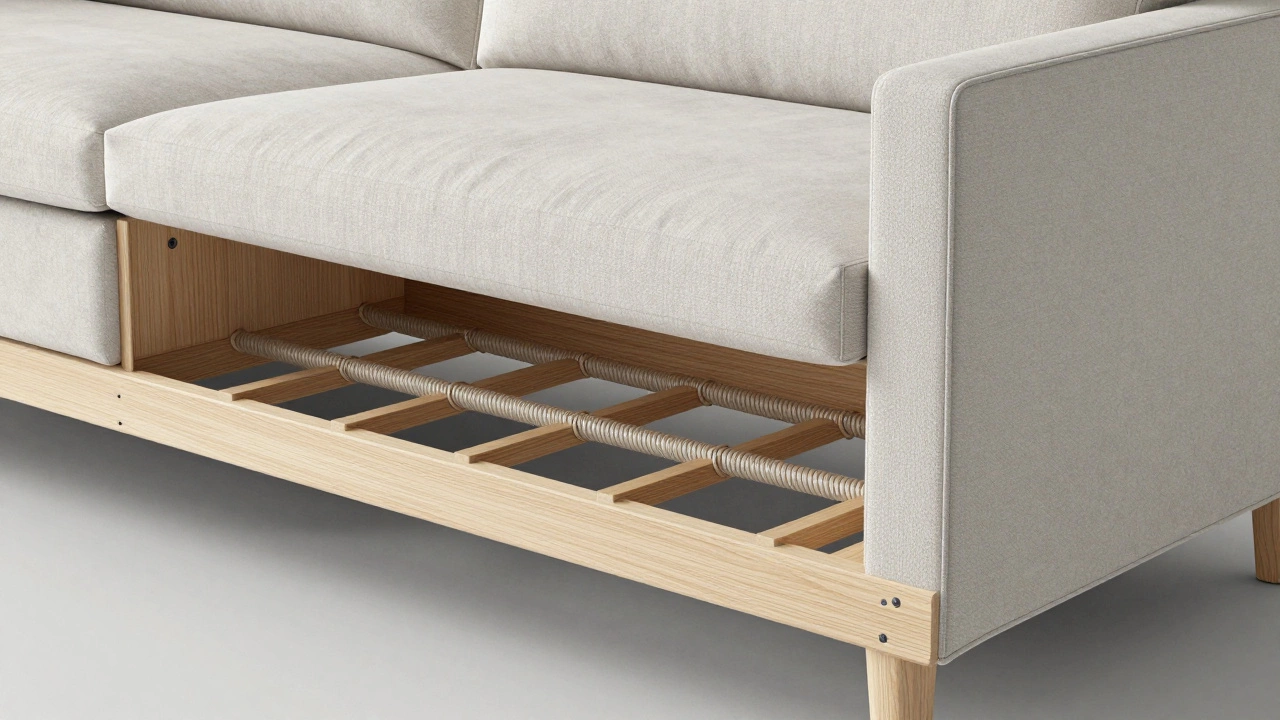
A quality sofa should be built with Kiln-Dried Hardwood is wood that has been oven-dried to remove moisture, preventing warping and shrinking. Why does the drying matter? If the wood is "green" (wet), it will shrink as it adjusts to your home's heating and cooling, leading to those annoying squeaks and creaks. Look for hardwoods like oak, maple, or ash. If a salesperson won't tell you what the frame is made of, it's usually because it's made of something cheap.
Check the joints. A flimsy sofa is just nailed or glued together. A professional-grade piece uses double-doweling or corner blocks-essentially extra wooden supports screwed into the corners. Give the sofa a "shake test." Grab the back and give it a firm wiggle. If the frame shifts or sways, the joinery is weak, and it will eventually collapse.
The Science of Sitting: Suspension and Support
Ever sat on a sofa that felt like a hammock? That's a failure of suspension. Most mid-range sofas use Sinuous Springs is S-shaped coils of wire that run across the frame from front to back. They are efficient and common, but they can bow over time if the gauge of the wire is too thin.
If you want the absolute best, look for Eight-Way Hand-Tied Springs is a system where springs are tied by hand in eight different directions to create a supportive, consistent seat. This is a labor-intensive process, which is why these sofas cost more. The result is a seat that distributes weight evenly and doesn't create "dips" where you usually sit.
| Suspension Type | Durability | Comfort Level | Price Point |
|---|---|---|---|
| Webbing (Elastic) | Low | Soft/Saggy | Budget |
| Sinuous Springs | Medium | Balanced | Mid-Range |
| Eight-Way Hand-Tied | High | Firm/Consistent | Premium |
Decoding the Cushions: Foam and Down
The filling determines whether your sofa stays plump or looks like a deflated balloon after a year. Cheap sofas use low-density poly-foam. This feels great for ten minutes but loses its "bounce" quickly. You want High-Resiliency Foam is a high-density foam that pushes back against the weight of the sitter to maintain shape, often labeled as HR foam.
Many luxury sofas use a "down-wrap." This is a core of foam wrapped in Down is the soft under-plumage of ducks and geese used for high-end cushioning. It gives you that plush, cloud-like feel without the total lack of support. Just be prepared for the maintenance-down cushions need to be fluffed regularly, or they'll look crushed.
Check if the cushions are reversible. If a cushion only has foam on the bottom and a thin layer of batting on top, it's a sign of cost-cutting. A quality cushion should be the same material on both sides, allowing you to flip it and double the lifespan of the foam.
Fabric and Upholstery: Beyond the Color
You might love a cream-colored velvet, but if you have a golden retriever and a toddler, that choice is a disaster. The most important metric for fabric is the "rub count," measured by the Martindale Test is a standardized test that rubs a piece of fabric against another until it wears through, measuring durability in cycles. For a home sofa, you want something with at least 15,000 to 20,000 rubs. Commercial-grade fabrics go way higher, often 30,000+, and are the safest bet for heavy use.
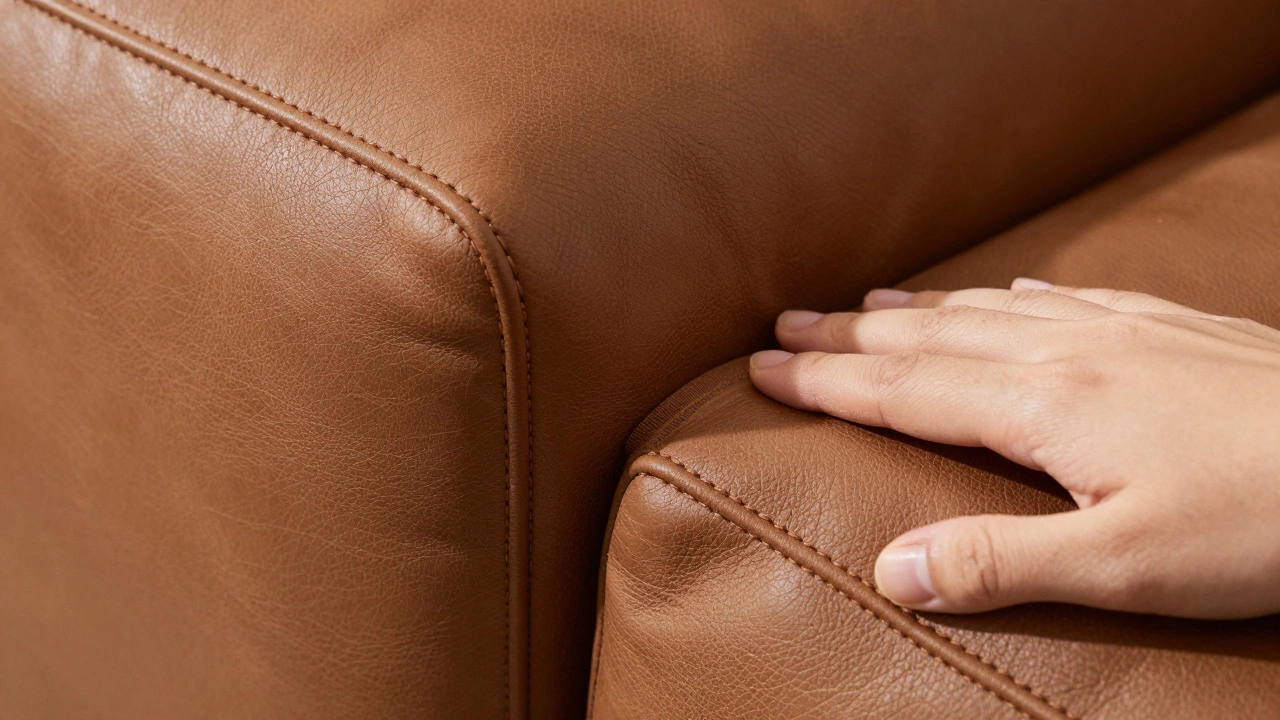
When it comes to leather, don't be fooled by "genuine leather." In the industry, that's often a marketing term for low-grade scraps glued together. You want Top-Grain Leather is the highest quality part of the hide, processed to remain durable and breathable. It's more expensive, but it develops a patina over time instead of peeling like faux-leather or "bonded" leather does.
Look at the seams. Are they straight? Is there any puckering? High-quality upholstery uses a technique called "double stitching" on high-stress areas. If you see loose threads or uneven gaps in the fabric, the assembly was rushed, and the seams will likely split within a few years.
The "Feel" Test: How to Audit a Sofa in Person
When you're at the store, stop sitting on the edge and actually commit to the piece. Here is a checklist of moves to determine if the piece is a lemon:
- The Lean: Lean back heavily. Does the frame creak? If you hear wood rubbing on wood, the joints aren't secure.
- The Push: Press your hand deep into the cushion. Does it spring back immediately? If it leaves a visible indent for several seconds, the foam density is too low.
- The Corner Squeeze: Reach under the bottom of the sofa (if there's a dust cover) and feel the frame. If it feels like cardboard or thin plywood, walk away.
- The Zip Check: Unzip the cushion. Look at the foam. Is it a single block of uniform color, or is it a patchwork of different foam scraps? A patchwork interior is a sign of a cheap build.
Common Pitfalls and Red Flags
One of the biggest traps is the "overstuffed" look. Many manufacturers hide a cheap, thin frame under massive amounts of polyester batting to make the sofa look luxury. This is called "over-stuffing." It makes the sofa look cozy, but once that batting compresses, you'll realize there's no actual support underneath.
Another red flag is an overly low price on a "solid wood" claim. Real hardwood is expensive. If a massive sectional is priced like a piece of flat-pack furniture but claims to be "solid oak," they are likely using a thin veneer of oak over particle board. Always ask for the specific type of wood used in the frame.
Is a heavier sofa always better?
Generally, yes. A heavier sofa usually indicates the use of solid hardwood rather than engineered woods or plastics. However, weight alone isn't a guarantee; some cheap sofas are heavy because they use low-quality, dense fillers or oversized frames that don't actually provide better support.
What is the difference between top-grain and bonded leather?
Top-grain leather is the outermost layer of the hide, making it breathable and durable. Bonded leather is made from shredded leather scraps glued together with polyurethane. Bonded leather looks similar at first but is prone to peeling and cracking within a few years, whereas top-grain leather lasts for decades.
How do I know if the fabric is "performance" fabric?
Performance fabrics are treated with a moisture-repellent finish or woven with synthetic fibers like acrylic or polyester that resist staining. Ask for the Martindale rub count; if it's over 20,000, it's suitable for a main living room. You can also test it by seeing if water beads on the surface rather than soaking in immediately.
Are sinuous springs actually bad?
Not necessarily. Sinuous springs are standard in most modern furniture and provide a good balance of support and cost. They only become a problem if the wire is too thin or if the sofa is designed for extremely heavy daily use, where eight-way hand-tied springs would be more durable.
Why is kiln-dried wood so important?
Kiln-drying removes the natural moisture from the wood in a controlled environment. This prevents the wood from warping or shrinking as it reacts to the humidity in your home. Without this process, the frame can shift, leading to structural failure or loud squeaking noises.
Next Steps for Your Search
If you're still unsure, try these three things: first, read the actual warranty-if the frame warranty is only one year, the manufacturer doesn't trust their build. Second, look for a "tear-down" or review video of that specific model to see the internal frame. Finally, if you're buying used, always flip the cushions and check for "crowns" (where the middle of the cushion has permanently dipped). A dipped cushion usually means the springs have failed, which is a nearly impossible fix.