How to Choose the Perfect Mirror for Your Room: A Practical Guide
Mirror Selector & Placement Guide
Room Details
Ideal Size
Calculate to see recommendations.
Frame & Shape
Pro Placement Tip
Wait for calculation...
Select your options and click "Get Recommendations"
This tool helps you avoid common mistakes like buying too-small mirrors or choosing clashing frames.
You walk into a furniture store or scroll through an online catalog, and suddenly you’re paralyzed. There are round ones, square ones, gold-framed monstrosities, and sleek frameless slabs. You know you want one because your room feels flat, but you have no idea which one will actually make it feel alive. It’s not just about reflection; it’s about light, space, and vibe. Choosing the right mirror is less about picking what looks pretty on a shelf and more about solving specific spatial problems in your home.
Think of a mirror as a piece of functional art that manipulates perception. Done wrong, it creates glare and clutter. Done right, it doubles your floor space and brightens a dark corner without turning on a lamp. So, how do you cut through the noise? Let’s break down exactly how to match a mirror to your room’s needs, starting with the biggest factor: size.
Size Matters More Than Style
Most people buy mirrors that are too small. They pop a tiny decorative piece above a large sofa, and it gets lost. The general rule of thumb? Go bigger than you think you need. If you’re placing a mirror above a console table or a bed, aim for at least two-thirds to three-quarters of the width of the furniture below it. This creates visual balance. If the mirror is narrower than the furniture, it looks like an afterthought. If it’s wider, it can overwhelm the wall.
For full-length functionality, height is critical. Standard adult visibility requires a minimum height of 150 cm (about 5 feet). Anything shorter forces you to bend or step back, which defeats the purpose. In smaller apartments, a tall, narrow mirror placed vertically can trick the eye into seeing higher ceilings. Conversely, a wide horizontal mirror above a headboard can make a narrow bedroom feel broader. Always measure your wall space first. Tape out the dimensions on the wall before you buy. It saves you from the heartbreak of realizing your new purchase doesn’t fit between the window and the door.
The Frame Dictates the Vibe
The frame is the jewelry of the mirror. It tells the room who’s boss. A frameless mirror offers a clean, modern look that disappears into the wall, letting the reflection do all the work. This is perfect for minimalist spaces or rooms where you don’t want extra visual noise. However, frameless mirrors can sometimes feel cold or clinical if not balanced with soft textures like rugs or curtains.
| Frame Type | Aesthetic Effect | Best Room Application |
|---|---|---|
| Gold/Brass | Warm, luxurious, vintage-inspired | Living rooms, entryways, glam bedrooms |
| Black Metal | Industrial, sharp, contemporary | Home offices, lofts, modern bathrooms |
| Wood (Oak/Walnut) | Natural, warm, organic | Scandinavian interiors, rustic cabins, cozy dens |
| Ornate Carved | Statement piece, traditional, bold | Dining rooms, classic foyers |
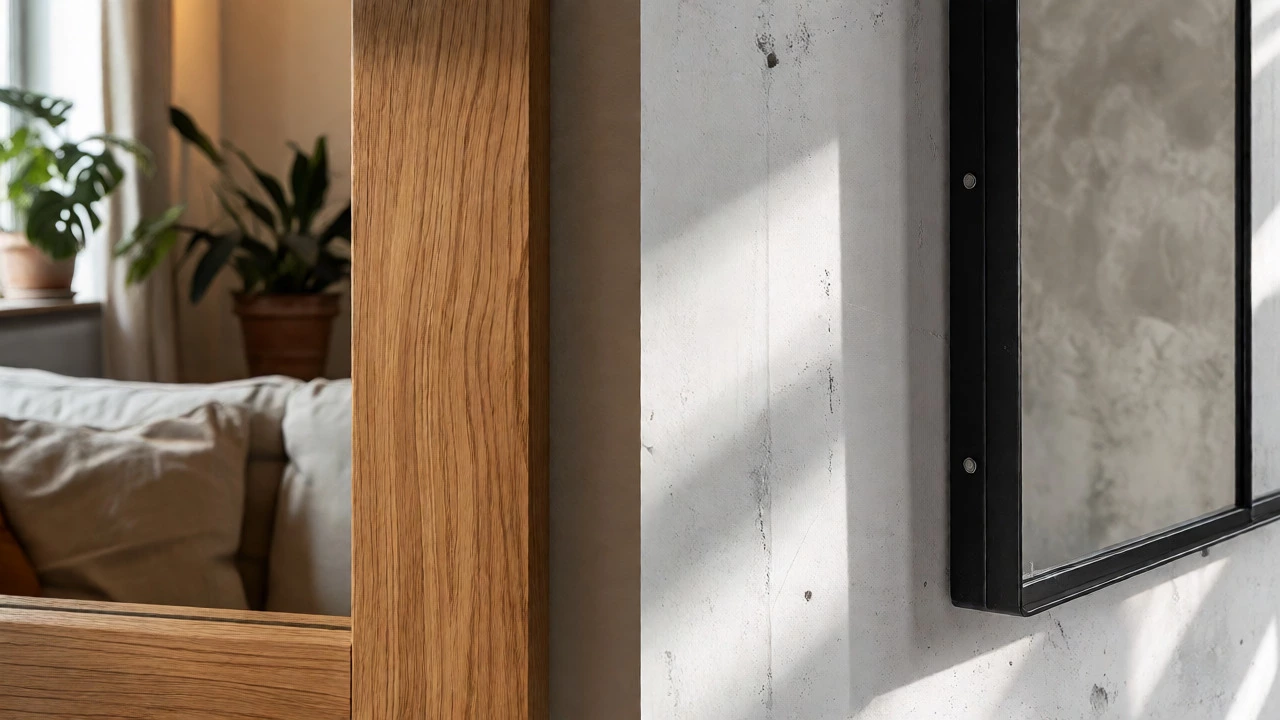
If you lean towards warmth, wood frames bring texture and nature indoors. An oak-framed mirror pairs beautifully with plants and linen sofas. For a sharper, edgier look, black metal frames add definition and contrast, especially against white walls. Gold tones reflect light warmly, making them ideal for dimly lit corners. But beware: overly ornate frames can clash with busy patterns. If your wallpaper is loud, keep the frame simple. If your walls are plain, let the frame shine.
Placement Is Everything
You’ve picked the mirror. Now, where does it go? The most common mistake is hanging it too high. Eye level is key. For vanity mirrors, the center should be at eye level for the primary user. For decorative mirrors, the bottom edge should sit about 15-20 cm above the furniture it hangs over. This creates a cohesive unit rather than two separate objects floating apart.
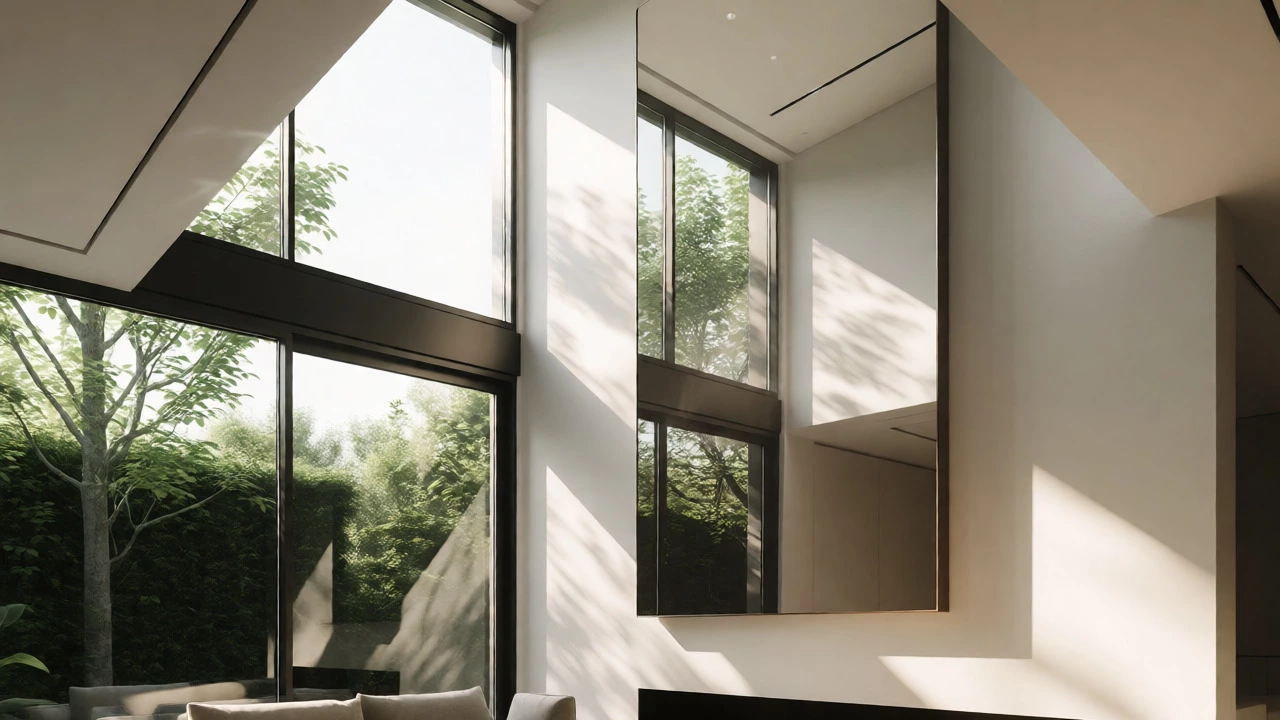
Light source matters immensely. Position your mirror opposite a window to bounce natural light deep into the room. This is the cheapest way to brighten a north-facing apartment. Just avoid placing it directly across from a harsh overhead light, which can create blinding glare. Instead, angle it slightly to catch ambient light. In dining rooms, a mirror opposite the table reflects candles and food, making the meal feel more abundant and intimate. In hallways, a well-placed mirror eliminates the tunnel effect, making long corridors feel like open spaces.
Shape Influences Perception
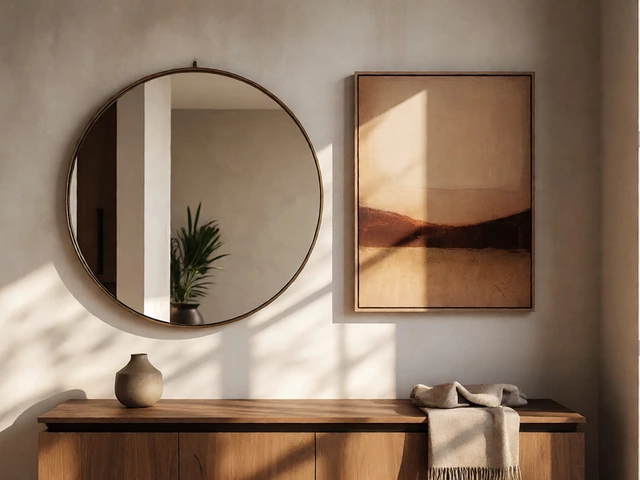
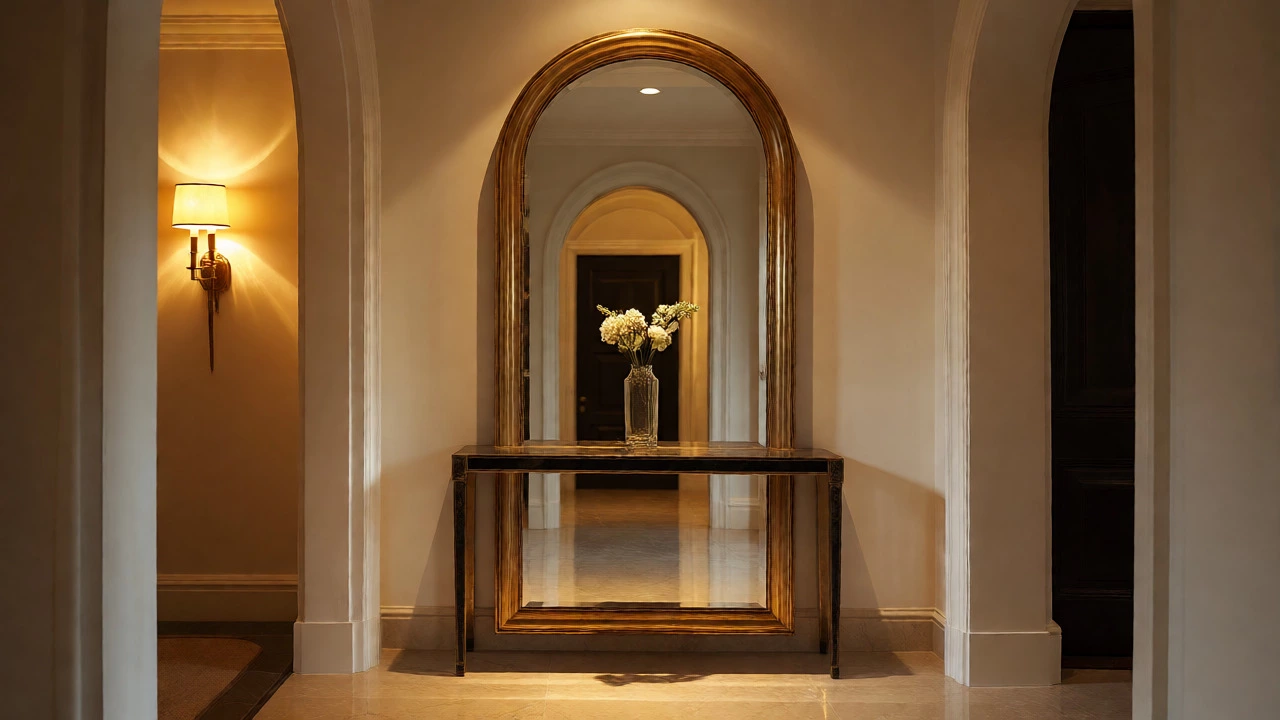
Round mirrors soften hard architectural lines. If your room has lots of rectangular windows, sharp-edged furniture, and boxy layouts, a circular or oval mirror introduces curves that calm the space. Arched mirrors are trending heavily right now because they blend the stability of straight sides with the softness of a curve. They fit well in both modern and traditional settings.
Square and rectangular mirrors reinforce structure. Use these when you want to emphasize order and symmetry. Asymmetrical shapes-like freeform or abstract blobs-are great for artistic flair but require careful balancing. Don’t put a weird-shaped mirror in a formal living room unless you’re aiming for an avant-garde statement. For most homes, sticking to circles, arches, or rectangles ensures longevity. Trends fade; basic geometry stays relevant.
Practical Considerations You Can’t Ignore
Beyond aesthetics, think about safety and maintenance. Heavy mirrors need proper anchors. Drywall alone won’t hold a large framed piece. Use studs or heavy-duty toggle bolts. If you live in an earthquake-prone area like Auckland, secure the top of the mirror to the wall with anti-tip straps. It’s a cheap insurance policy against disaster.
Cleaning is another factor. Frameless mirrors show every fingerprint and smudge. Ornate frames collect dust in their crevices. If you hate cleaning, choose a smooth, sealed frame and a glass type that resists spotting. Also, consider the glass quality. Cheap mirrors often have a green tint due to iron content, which distorts skin tones. Look for "low-iron" or "crystal clear" glass if you plan to use the mirror for grooming. It makes a noticeable difference in color accuracy.
Matching Mirrors to Specific Rooms
Each room has its own job description for a mirror. In the bedroom, prioritize function. A full-length mirror near the closet helps with outfit checks. Avoid placing a mirror directly facing the bed if you believe in Feng Shui principles, as some argue it disrupts sleep energy. If you don’t care about metaphysics, place it wherever it maximizes light.
In the bathroom, lighting integration is crucial. Backlit LED mirrors eliminate shadows on your face, perfect for makeup application. Ensure the IP rating (ingress protection) is suitable for humid environments to prevent corrosion. In the living room, the mirror acts as a focal point. Hang it above the fireplace or behind the sofa to anchor the seating area. In entryways, a mirror allows for last-minute appearance checks before leaving the house. It also reflects the front door, symbolically inviting positive energy in.
How high should I hang a mirror?
The center of the mirror should generally be at eye level, which is approximately 150-160 cm from the floor. If hanging above furniture, ensure there is only a 15-20 cm gap between the top of the furniture and the bottom of the mirror to create a unified look.
Can a mirror make a small room look bigger?
Yes. Placing a large mirror opposite a window reflects natural light and the view outside, creating an illusion of depth. Large, frameless mirrors are particularly effective because they remove visual boundaries, making the wall seem to recede.
What is the best shape for a living room mirror?
It depends on your existing decor. Round or arched mirrors soften angular rooms and add organic flow. Rectangular mirrors suit modern, structured interiors. For a dramatic statement, oversized geometric shapes work well in spacious living areas.
Do I need a special mirror for the bathroom?
While standard mirrors work, moisture-resistant options are better. Look for mirrors with sealed edges or those made specifically for wet areas to prevent silvering degradation. Backlit LED mirrors are popular for task lighting but must have appropriate electrical safety ratings for damp locations.
Is it okay to have multiple mirrors in one room?
Absolutely, but avoid direct reflections between mirrors, which can create an infinite tunnel effect that feels disorienting. Spread them out to reflect different parts of the room, such as one reflecting a plant and another reflecting a window, to maximize light distribution without chaos.