How Long Does a Cheap Couch Last? Real Lifespans & Tips

Budget Sofa Lifespan Estimator
Enter your details below to estimate how long your new budget sofa might last compared to the industry average.
Your Estimate
Fill out the form to see your results.
You just found a steal. A three-seater for $299? It looks decent in the showroom photos, and your wallet is practically singing. But then that nagging thought hits you: how long does a cheap couch last? Is this a smart financial move, or are you just renting furniture until it collapses under the weight of your Tuesday night pizza binge?
The short answer is uncomfortable: usually between two and five years. But that range is dangerously wide. Why does one $300 sofa survive a toddler’s trampoline phase while another falls apart after six months? It comes down to what you’re actually paying for-and what the manufacturer cut to hit that low price tag. Let’s break down the anatomy of budget seating so you can decide if the savings are worth the eventual headache.
The Hard Truth About Budget Furniture Lifespans
When we talk about "cheap," we’re generally referring to sofas priced under $500-$600. In this tier, manufacturers aren’t trying to build heirlooms; they’re building products that look good on Instagram and ship flat-packed. The industry standard for these items is surprisingly specific. Most direct-to-consumer brands and big-box retailers design their entry-level models to last through a warranty period-often one year-and maybe a bit longer.
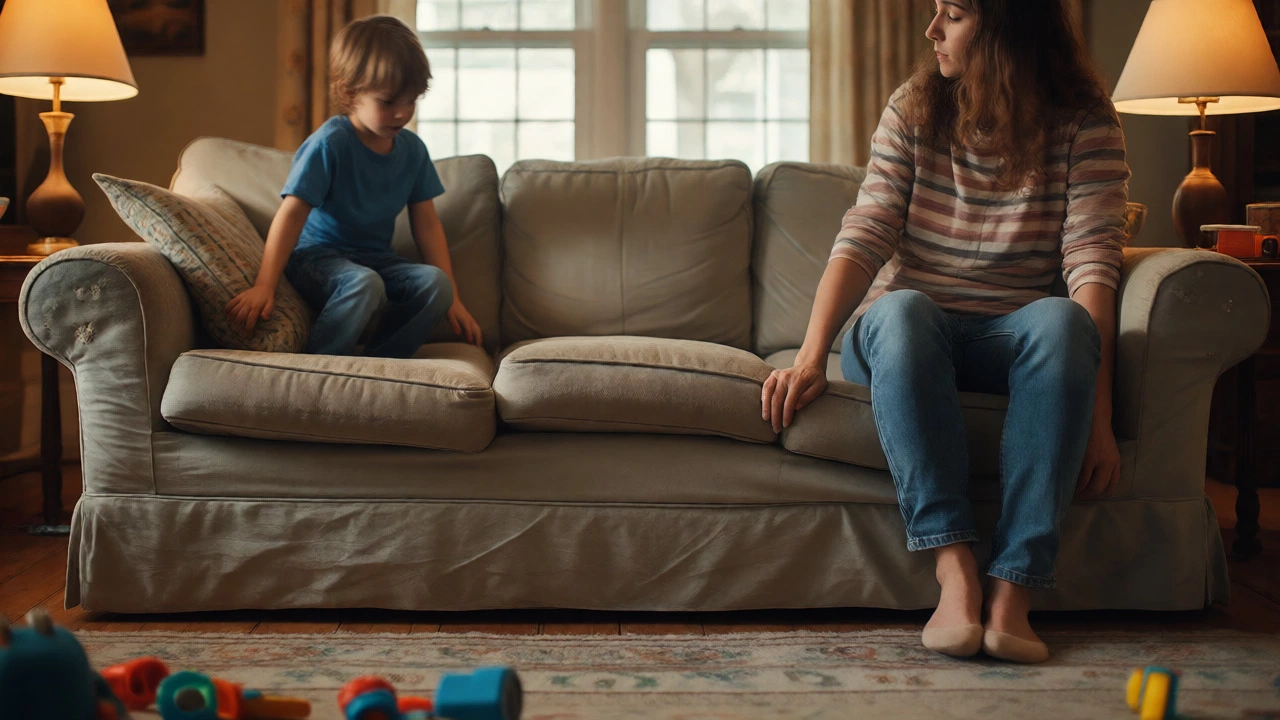
However, real-world usage varies wildly. If you live alone and treat your furniture like glass, a $400 sofa might stretch to seven years. If you have two large dogs and kids who use the armrests as launch pads, you might see sagging within 18 months. The average lifespan for a budget sofa used daily by a family of four is roughly 3.5 years. Compare that to mid-range ($1,000-$2,000) sofas, which typically last 7-10 years, and high-end custom pieces that can go 15+ years. You’re essentially trading longevity for upfront cash flow.
| Price Tier | Average Lifespan | Common Failure Point | Best For |
|---|---|---|---|
| Budget (<$600) | 2-5 Years | Cushion sagging, frame joint loosening | Students, temporary housing, guest rooms |
| Mid-Range ($600-$1,500) | 7-10 Years | Fabric wear, minor spring failure | Primary living room, families with pets |
| High-End ($1,500+) | 15+ Years | Reupholstering needed | Long-term homeowners, heavy daily use |
Why Do They Break So Fast? Anatomy of a Cheap Sofa
To understand why your new couch feels flimsy, you have to look inside. Manufacturers save money in three critical areas: the frame, the suspension, and the cushioning. Each shortcut contributes to a shorter lifespan.
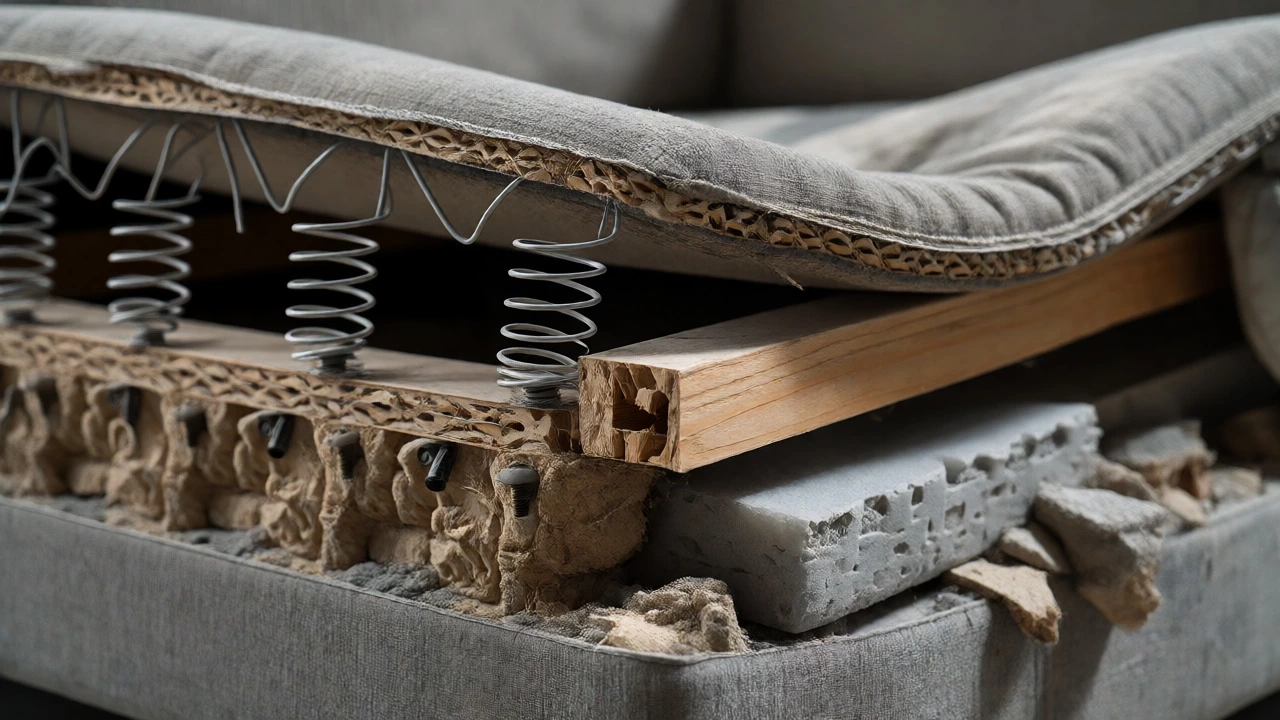
The Frame is the skeleton. High-quality sofas use kiln-dried hardwood (like oak or maple) joined with dowels and screws. Cheap sofas often use particleboard, plywood, or softwoods like pine. Particleboard is essentially compressed sawdust and glue. It’s strong enough for a bookshelf but terrible at handling dynamic stress. When someone jumps onto a particleboard frame, the joints loosen. Screws pull out because there’s no solid wood to grip them. Within two years, the frame can develop a wobble that no amount of tightening will fix.
Next is Suspension. This is what keeps you from hitting the floor when you sit. Premium sofas use eight-way hand-tied springs. Budget sofas? They use sinuous springs (zigzag metal wires) or, worse, webbing (elastic straps). Sinuous springs are okay if made of thick gauge steel, but cheap versions use thin wire that loses tension quickly. Webbing is the lowest cost option. It stretches over time, leading to that dreaded "hammock" effect where the seat dips in the middle.
Finally, there’s Cushioning. Foam density is the secret metric here. High-density foam lasts. Low-density foam breaks down into crumbs and dust within a year. Many budget sofas use a thin layer of high-density foam wrapped around a core of lower-density material, or even polyester fiberfill. Fiberfill clumps and flattens fast. Once the cushion loses its resilience, the sofa isn’t just ugly-it’s uncomfortable, prompting early replacement regardless of the frame’s condition.
Signs Your Cheap Couch Is Nearing Its End
You don’t need an engineer to tell you your sofa is dying. Your body knows first. Pay attention to these red flags:
- The Hammock Effect: If you slide toward the center every time you sit, the suspension has failed. This is usually irreversible without replacing the entire seat deck.
- Frame Wobble: Grab the arms and rock the sofa. If the back legs lift off the ground or the structure twists, the joinery is compromised. On particleboard frames, this means the screw holes have stripped.
- Cushion Flattening: Press your palm into the seat. If it doesn’t bounce back immediately, the foam density was too low. If you feel hard lumps, the internal support bars are poking through.
- Fabric Abrasion: Cheap fabrics (often low rub-count polyesters) pill or tear at high-friction points like the elbows and thighs. Once the fabric rips, the stuffing spills out, accelerating decay.
Can You Make a Cheap Sofa Last Longer?
Yes, but only up to a point. You can’t turn a particleboard frame into hardwood, but you can mitigate damage. Here’s how to squeeze extra life out of your budget buy:
- Rotate Cushions Weekly: If your cushions are reversible, flip them. If not, rotate left to right. This ensures even wear on the foam.
- Add Support Boards: If the seat starts dipping, place a piece of plywood under the cushions (between the cushions and the base). This redistributes weight and stops the hammock effect temporarily.
- Tighten Hardware Monthly: Cheap screws loosen due to vibration and movement. Keep a screwdriver handy. Tightening bolts before they strip can add months to the frame’s life.
- Use Slipcovers: A thick slipcover protects the fabric from oils, dirt, and abrasion. It also adds a layer of padding that can mask early cushion degradation.
- No Jumping: Seriously. Dynamic loads kill budget frames. Treat the sofa as a sitting surface, not a play structure.
When Is Buying Cheap Actually Smart?
Despite the flaws, cheap sofas aren’t always a mistake. They make sense in specific scenarios where longevity isn’t the primary goal.
Temporary Housing: If you’re in a rental for less than three years, a $400 sofa is perfect. You’ll get full use out of it, and moving costs won’t outweigh the purchase price.
Student Living: College dorms and shared apartments are brutal on furniture. Spills, parties, and transient roommates mean your sofa will likely be discarded anyway. Don’t invest in quality you’ll lose to a roommate’s dog.
Guest Rooms: If the sofa sits unused 90% of the time, it will last decades. Wear and tear come from use, not age. A cheap sofa in a formal living room rarely used can outlive a mid-range sofa in a busy den.
Staging Homes: If you’re selling a house, a neutral, inexpensive sofa helps buyers visualize the space. You’re not keeping it, so durability doesn’t matter.
The Cost Per Year Reality Check
Let’s do the math. A $1,500 sofa that lasts 10 years costs you $150 per year. A $400 sofa that lasts 3 years costs you $133 per year. Surprisingly, the cheap option can be cheaper annually-if it actually lasts three years. But if it fails in 18 months, that same $400 sofa costs you $266 per year. Now you’re paying more for less comfort.
This calculation changes based on maintenance. If you spend $50 on protective sprays and covers, your cheap sofa’s annual cost rises slightly, but its lifespan might extend by a year. Conversely, neglecting a mid-range sofa can shorten its life to match a cheap one. The key variable isn’t just price; it’s care.
What to Look For If You Must Buy Cheap
If your budget is fixed, don’t just pick the cheapest color. Inspect the construction. Even in budget tiers, some brands offer better value.
- Check the Weight: Heavier usually means denser materials. Lift a corner. If it’s feather-light, it’s likely hollow particleboard and thin foam.
- Ask About Foam Density: Look for specs mentioning "high-resilience" or density above 1.8 lbs/cubic foot. Anything lower is marketing fluff.
- Inspect the Legs: Solid wood legs are a good sign. Plastic caps on wooden legs suggest hidden particleboard cores. Metal legs are durable but can scratch floors.
- Read Return Policies: Since cheap sofas fail unpredictably, ensure you have a generous return window. Some online retailers offer 100-day trials specifically because they know the product is risky.
Ultimately, buying a cheap couch is a gamble. You’re betting that your lifestyle is gentle enough to preserve fragile materials. For many, that bet pays off. For others, it leads to a wobbly, sagging reminder that sometimes, you really do get what you pay for.
Does a more expensive sofa always last longer?
Generally, yes, but not always linearly. A $2,000 sofa isn't necessarily twice as durable as a $1,000 one. However, crossing certain price thresholds (usually around $800-$1,000) guarantees better materials like hardwood frames and higher-density foam, which significantly extend lifespan compared to sub-$500 models.
Can I replace the cushions on a cheap sofa?
Often, no. Many budget sofas have sewn-in cushions or non-standard sizes that make replacement difficult. If the cushions are removable, you can buy custom foam inserts from upholstery suppliers. This is a cost-effective way to refresh a sofa whose frame is still intact but whose comfort has degraded.
Is leather or fabric better for cheap sofas?
For cheap sofas, synthetic fabric (microfiber/polyester) is usually better. "Bonded leather" (real leather scraps glued together) tends to peel and crack within 2-3 years on budget frames. Microfiber resists stains and abrasion better and doesn't degrade as visibly as cheap leather alternatives.
How does pet ownership affect a cheap couch's lifespan?
Pets drastically reduce lifespan. Claws tear cheap fabrics easily, and urine can soak into low-density foam, causing permanent odor and structural breakdown. If you have pets, expect a cheap sofa to last half as long as it would in a pet-free home, unless you use rigorous protective measures like slipcovers.
Should I buy a sectional or a regular sofa if I'm on a budget?
Regular sofas are safer bets. Sectionals have more joints, connectors, and individual modules, creating more potential failure points. A cheap sectional is prone to separating at the corners or having uneven cushion heights between sections. A simple 3-seater has fewer components to break.