Which Type of Sofa Is Best for Your Home?
Sofa Selector Tool
Find Your Perfect Sofa
Answer a few questions about your lifestyle, space, and priorities to get a personalized sofa recommendation.
Your Lifestyle
Your Space
Your Priorities
Choosing the right sofa isn’t just about color or style-it’s about how you live. A sofa that looks perfect in a magazine might sag after three months if it’s not built for real life. Whether you’re raising kids, hosting movie nights, or just crash-landing after work, the best sofa for you depends on your habits, space, and what you’re willing to maintain.
What Makes a Sofa "Best"?
There’s no single "best" sofa. The word "best" changes depending on your needs. For some, it’s durability. For others, it’s comfort, ease of cleaning, or how well it fits in a small apartment. The key is matching the sofa’s design to your daily life.
Think about this: if you have pets, a velvet sofa might look luxurious, but cat claws and fur will make it a nightmare. If you entertain often, a deep, sink-in sectional might be inviting-but not if you need to move it through a narrow hallway. The best sofa doesn’t win awards; it wins in your home.
Frame: The Hidden Foundation
Most people focus on fabric and shape, but the frame is what lasts. A weak frame means your sofa will wobble, squeak, or collapse long before the cushion wears out.
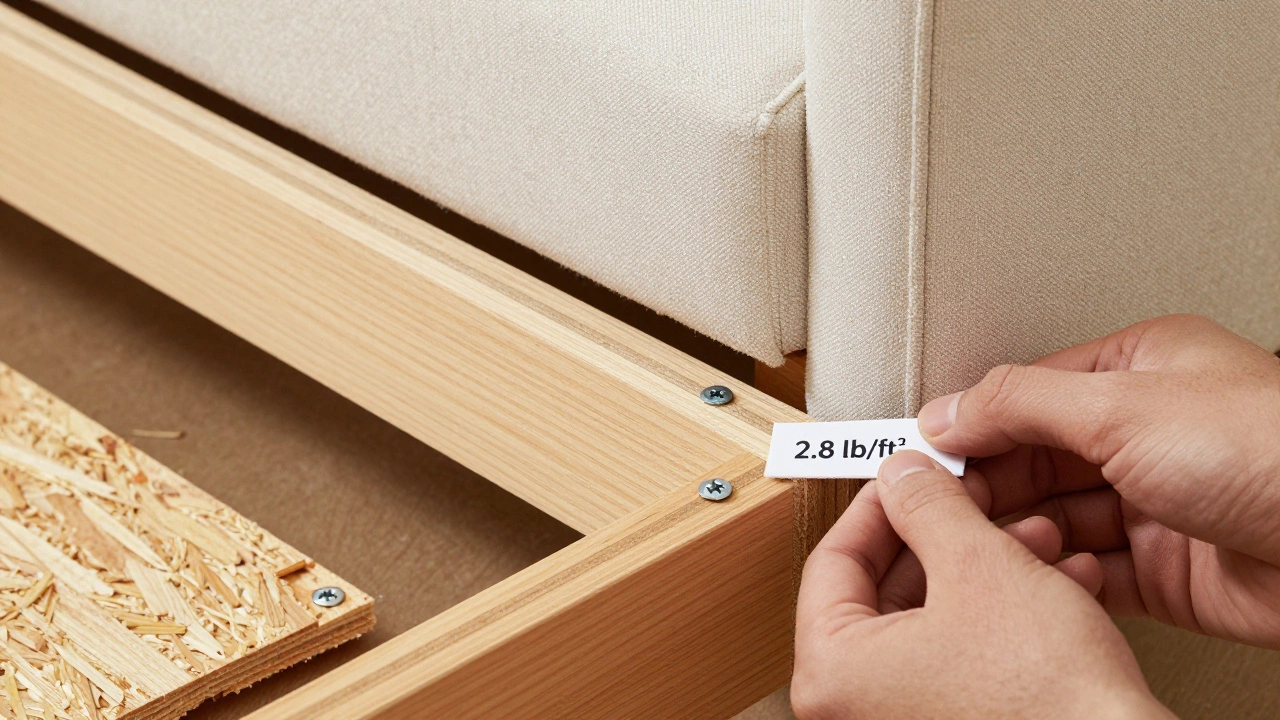
Hardwood frames-like kiln-dried oak, maple, or beech-are the gold standard. They’re dense, stable, and resist warping. Avoid particleboard or plywood unless it’s labeled "high-density" and reinforced with corner blocks. You can test this by lifting one corner of the sofa. If it flexes or feels hollow, skip it.
Also check the joints. The best sofas use double dowels, screws, and glue-not just staples. You won’t see this when you sit down, but it’s what keeps the sofa standing after years of use.
Cushion Fill: Comfort That Lasts
Cushions are where comfort lives. But not all cushion fills are created equal.
- High-resiliency foam is firm, supportive, and holds its shape for 5-10 years. Look for foam with a density of at least 2.5 lb/ft³. Lower density (like 1.8 lb) flattens fast.
- Down and feather blends feel soft and luxurious, but they need fluffing every week. If you hate maintenance, avoid these unless they’re mixed with foam.
- Memory foam hugs your body, great for side sleepers or people with back pain. But it can trap heat and feels slow to bounce back.
- Hybrid fills (foam + down) offer balance. They’re plush but don’t collapse. These are the sweet spot for most homes.
Ask for the foam density spec. If the salesperson can’t give it, they’re likely selling low-end cushions.
Style: What Fits Your Space?
Style isn’t just about looks-it’s about function too.
- Sectionals are ideal for families and large rooms. They create cozy corners and can double as guest beds. But they’re hard to move and need a wide doorway.
- Love seats work for small spaces, studios, or second rooms. They’re not for lounging with three people, but they fit where bigger sofas won’t.
- Mid-century modern sofas have slim legs and low backs. They feel airy in small rooms but offer little back support if you’re tall.
- Traditional Chesterfields have deep button tufting and rolled arms. They’re sturdy and classic, but they take up more space and aren’t great for napping.
- Modular sofas let you rearrange pieces. Great if your layout changes often, or you want to reconfigure for guests.
Measure your space twice. A sofa that looks great in the store might block your TV, your window, or your walkway. Leave at least 18 inches between the sofa and coffee table, and 30 inches for walking paths.
Fabric: Durability vs. Aesthetics
Fabric choice can make or break your sofa’s lifespan.
- Performance fabrics (like Crypton, Sunbrella, or Revolution) are stain-resistant, pet-friendly, and easy to clean. They’re the smart choice for households with kids or pets. They come in dozens of colors and textures now-no more ugly "performance" look.
- Microfiber is soft, affordable, and hides dirt well. It’s not as breathable as cotton, but it’s one of the most durable options for high-traffic areas.
- Cotton and linen feel natural and breathable, but they stain easily and fade in sunlight. Only choose these if you’re willing to vacuum weekly and keep curtains closed.
- Velvet is gorgeous and tactile, but it shows footprints, attracts lint, and is hard to clean. Best for formal living rooms with no pets or toddlers.
- Leather lasts decades if cared for. Full-grain leather develops a patina and gets softer over time. Avoid bonded leather-it’s just plastic and glue over scraps. Real leather should smell rich and feel uneven (not perfectly smooth).
Ask for a fabric sample. Rub it hard between your fingers. If it pills or threads pull out, it won’t last.
Size and Scale: Don’t Guess
Too many people buy sofas that are too big or too small. A sofa that’s 90 inches long in a 12x12 room looks like a wall. A 60-inch sofa in a large open-plan space looks lost.
Use this rule: your sofa should take up about 60% of the longest wall in your living area. For a standard living room (14x18 feet), a 72-84 inch sofa works. For small spaces, go 60 inches or less. If you’re unsure, lay out a rug or use painter’s tape on the floor to mark the outline. Sit on it for 10 minutes. Does it feel right?
Also consider height. If you’re tall, low sofas (under 18 inches) make it hard to stand up. If you’re shorter, deep seats (over 24 inches) can swallow you. Test the seat depth by sitting down. Your knees should bend at 90 degrees, and your back should rest naturally against the backrest.
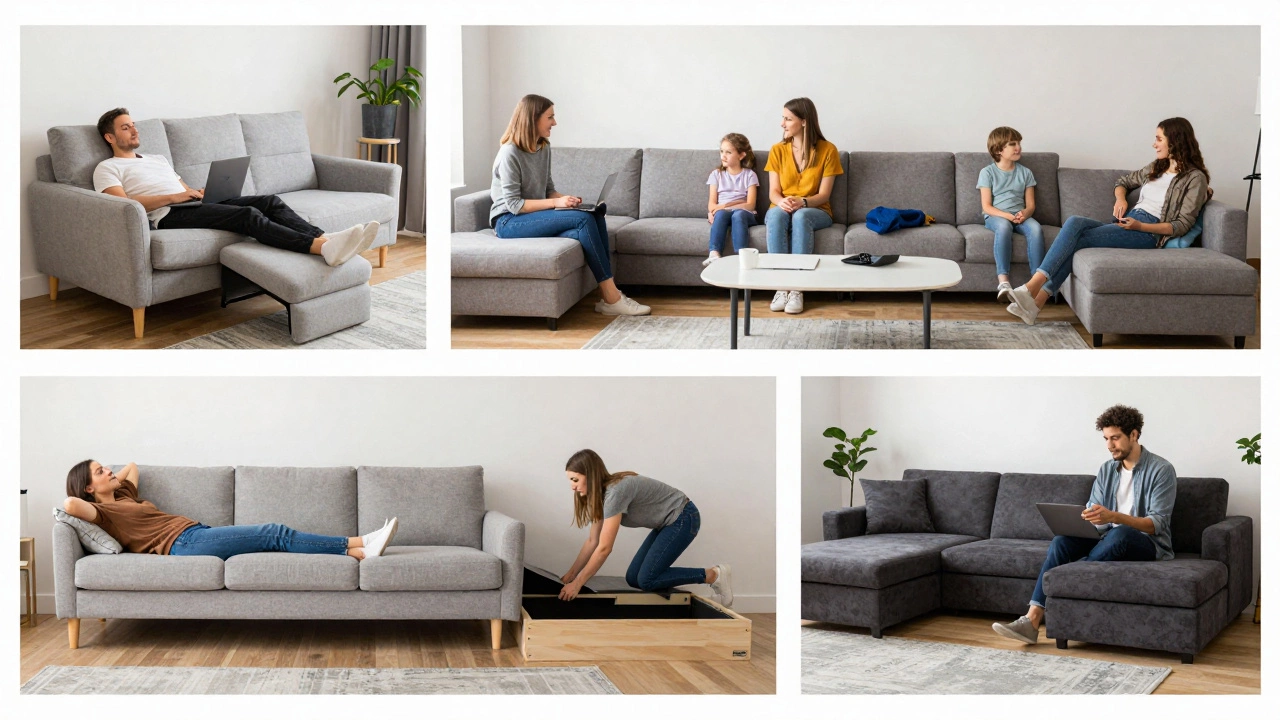
Real-World Scenarios
Here’s what works in real homes:
- Family with two kids and a dog: Performance fabric sectional with removable, machine-washable covers. High-density foam cushions. No arms or low arms so kids can climb over.
- Apartment dweller with no storage: A sofa with hidden storage underneath. Choose a compact design (66 inches) with firm foam. Avoid loose cushions-they’re hard to clean.
- Remote worker who naps daily: A reclining sofa or a deep, low-back loveseat with memory foam. Add a footrest. Avoid stiff, upright designs.
- Entertainer who hosts weekly dinners: A modular sofa that can expand into a long seating line. Choose a dark, stain-resistant fabric. Add accent pillows for color.
There’s no magic formula, but these examples show how purpose drives choice.
What to Avoid
- Buying online without testing. You can’t feel cushion firmness or fabric texture from a photo.
- Choosing based on a trend. That neon green velvet sofa? It’ll be outdated in two years.
- Ignoring the warranty. A good sofa comes with at least a 5-year frame warranty. If it’s less, walk away.
- Buying the cheapest option. A $300 sofa will cost you more in replacements than a $1,200 one that lasts 10 years.
Final Tip: Test Before You Buy
Don’t just sit on the sofa. Test it like you live in it.
- Sit in it for at least 5 minutes. Does your back feel supported? Do your feet touch the floor?
- Lean back. Does the backrest give too much? Or is it too rigid?
- Stand up. Can you rise easily? Or do you need to push off the arms?
- Press into the cushions. Do they bounce back quickly? Or do they stay flat?
- Run your hand over the fabric. Does it feel cheap or dense?
If it passes all five tests, it’s worth the investment.
What’s the most durable sofa material?
Performance fabrics like Crypton or Sunbrella are the most durable. They resist stains, pet claws, spills, and fading. Real leather is a close second-it lasts decades with proper care. Avoid cotton, linen, and velvet in high-traffic areas unless you’re prepared for constant cleaning.
Is a sectional right for a small living room?
Only if it’s designed for small spaces. Look for a low-profile, two-seater sectional with a chaise that doesn’t extend too far. Avoid deep, bulky sections. A 72-inch sectional with a 30-inch chaise can work in a 10x12 room if you leave walking space. Always measure your door and hallway first.
How long should a sofa last?
A well-built sofa with a hardwood frame and high-density foam lasts 8-12 years. Cheaper models with particleboard frames and low-density foam may start sagging in 2-3 years. If you use it daily, plan to replace it every 7-10 years. But with good care, leather and performance fabric sofas can last 15+ years.
Should I buy a sofa with removable covers?
Yes-if you have kids, pets, or allergies. Removable covers let you wash stains, swap colors, or replace worn fabric. Look for zippers, not Velcro. Velcro wears out and pulls threads. Machine-washable covers are ideal. Avoid sofas with glued-on covers unless you’re okay with never changing them.
Are reclining sofas worth it?
If you watch TV, read, or nap often, yes. Recliners add comfort without taking up more space. Choose manual over power if you want reliability-electric parts can break. Look for recliners with adjustable headrests and footrests that don’t dig into your calves. Avoid models with too many moving parts-they’re harder to repair.