What to Avoid When Buying a Sofa: 7 Common Mistakes That Cost You Money and Comfort

Sofa Quality Checker
This tool evaluates your potential sofa purchase against 7 critical factors from expert guidelines. Select options to see risk assessments for each component.
Frame Quality
Cushion & Support
Fabric & Lifestyle
Warranty & Value
Delivery Check
Quality Assessment
Buying a sofa feels simple until you realize you’ve spent $2,000 on something that squeaks after two weeks, sinks in the middle, and looks terrible in natural light. You’re not alone. Most people focus on color and style - but skip the details that actually matter. A sofa lasts 7 to 15 years. If you get it wrong, you’re stuck with it. Here’s what to avoid when buying a sofa - based on real experiences, not showroom tricks.
Don’t Trust the Showroom Cushion
Showrooms are designed to make sofas look perfect. Cushions are fluffed, springs are new, and the lighting is warm and forgiving. Sit on it for five seconds, and you’ll think it’s heaven. But that’s not how you live. Sit like you actually do - slouched, legs crossed, feet up. Press down hard. Does it feel like it’s going to collapse? Does your back sink too far? A good sofa should support your spine, not swallow you.Look for cushions filled with high-density foam (at least 2.5 lb/ft³) wrapped in down or polyester fiber. If it’s just cheap foam or loose polyester, it’ll flatten in months. You’ll know when you’re sitting on it six months later - your hips are touching the frame, and you’re leaning forward just to stay upright.
Ignore the Frame - and You’ll Regret It
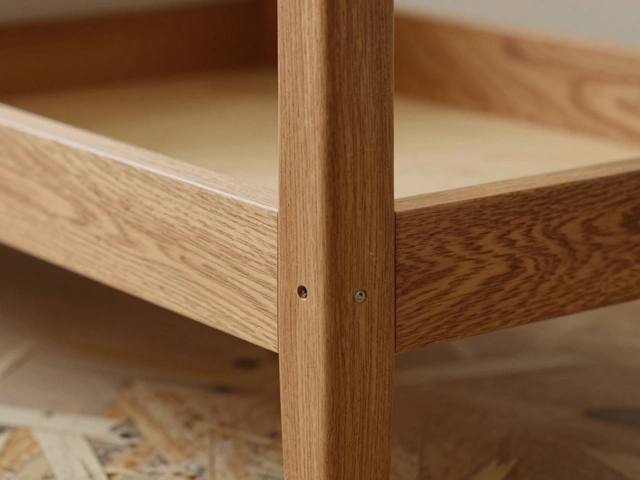
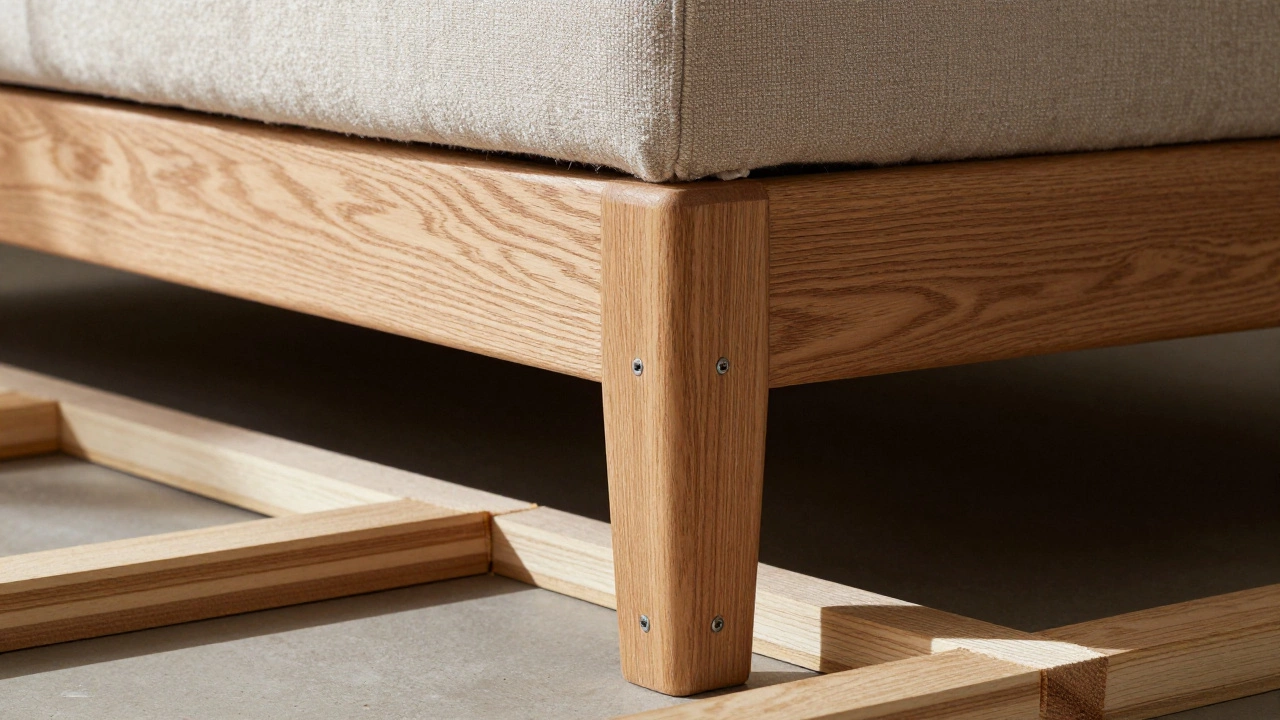
The frame is the skeleton. Most people never check it. But if the frame is weak, nothing else matters. Avoid sofas with particleboard, plywood, or glued joints. These warp, crack, or come apart under normal use.Look for kiln-dried hardwood frames - like oak, maple, or beech. Ask the salesperson: "Is the frame kiln-dried?" If they hesitate, walk away. Check the joints: they should be screwed and glued, not just stapled or nailed. You can often peek under the sofa or ask to flip it over. If you see staples holding the frame together, that’s a red flag.
Also, avoid sofas with metal frames unless they’re heavy-duty commercial-grade. Most consumer metal frames flex and rattle over time. You’ll hear it every time you shift your weight.
Buying the Wrong Size for Your Space
A sofa that looks perfect in the store might dominate your living room. Or worse - it’s too small and looks lost. Measure your space before you even step into a showroom.Write down: the width of the room, the door width, the hallway turns, and the space between windows and walls. Don’t forget to measure the diagonal of your doorway - sometimes a sofa fits width-wise but won’t turn the corner. Use painter’s tape to mark out the sofa’s dimensions on your floor. Sit in the space. Can you walk around it? Can you open a door without hitting it? Can you fit a coffee table in front without crowding?
In Auckland apartments, 2-seaters or small 3-seaters (under 80 inches wide) often work better than oversized sectionals. Bigger isn’t always better. A sofa that’s too big makes a room feel cramped and hard to clean around.
Choosing the Wrong Fabric for Your Life
You love that velvet in navy blue. But if you have kids, pets, or spill coffee every morning, it’s a disaster waiting to happen. Velvet shows every dent, stain, and pet hair. Linen wrinkles like crazy. Silk? Don’t even think about it.For most households, performance fabrics are the smart choice. Look for materials labeled "crypton," "solution-dyed acrylic," or "microfiber with stain resistance." These repel liquids, resist fading, and clean easily. Brands like Sunbrella, Revolution, and Crypton are used in high-traffic homes and hotels.
Test it yourself. Ask for a fabric swatch. Pour a little water on it. Rub with a spoon. See how it holds up. If the stain doesn’t wipe off, it’s not for you. And avoid light colors unless you’re ready to vacuum daily.
Overpaying for Brand Names, Underpaying for Quality
A $4,000 sofa from a "luxury" brand isn’t always better than a $1,800 one from a smaller maker. Many big brands mark up prices 300% just because of the logo. What you’re paying for is marketing, not materials.Compare construction: Is the frame hardwood? Are the springs eight-way hand-tied? Is the cushion foam density above 2.5 lb/ft³? If the answer is yes - and the price is under $2,500 - you’re getting real value. Brands like Floyd, Article, and Burrow offer transparent specs and direct pricing. They cut out the middleman.
Don’t assume higher price = better quality. Many cheap sofas from big retailers use the same frame suppliers as premium brands - but with thinner fabric and lower-density foam. Ask for the manufacturer’s name. Do a quick search. You’ll often find the same sofa sold under different labels at wildly different prices.

Skipping the Warranty - or Not Reading It
Most sofas come with a warranty. But many are useless. Some cover only the frame for 1 year. Others say "lifetime warranty" but exclude cushions, fabric, or labor. That’s not a warranty - it’s a marketing slogan.Look for a warranty that covers:
- Frame for at least 5 years
- Spring system for 5-10 years
- Cushion foam for 3-5 years (with density specified)
- Fabric for 2-5 years (against fading or pilling)
If the warranty doesn’t list these details, it’s not worth the paper it’s printed on. Also, check if labor is included. Reupholstering a sofa costs $800-$1,500. If the warranty doesn’t cover labor, you’re on the hook for the full cost if something fails.
Buying Without Testing the Delivery Process
You pick the perfect sofa. You pay. Then you find out it can’t fit in your elevator. Or the delivery team won’t bring it upstairs. Or they charge $200 extra for assembly. Or they won’t remove your old one.Ask these questions before you buy:
- Can the sofa be disassembled for tight spaces?
- Is white-glove delivery included, or is it extra?
- Do they remove your old sofa? (Some charge $50-$100.)
- What’s the delivery timeline? (Avoid places with 8-12 week waits unless you’re planning ahead.)
- Is there a restocking fee if you return it? (Some charge 20% or more.)
In Auckland, many homes have narrow staircases, heritage buildings, or lifts with weight limits. Don’t assume delivery will be easy. A $1,500 sofa isn’t worth it if you can’t get it inside.
Final Tip: Wait for the Right One
There’s no rush. If you’re unsure, walk away. A sofa you’re not 100% confident in will haunt you for years. Wait for sales - January and August are the best months for discounts in New Zealand. Visit showrooms multiple times. Sit on different models. Compare fabrics side by side. Bring a measuring tape. Take photos of your space.The right sofa doesn’t scream for attention. It just feels right - every time you sit down.