
What is a Word for Kitchenware? The Ultimate Guide to Culinary Terms
Kitchenware Category Classifier
Select Items
Classification Result
Select items on the left to classify them.
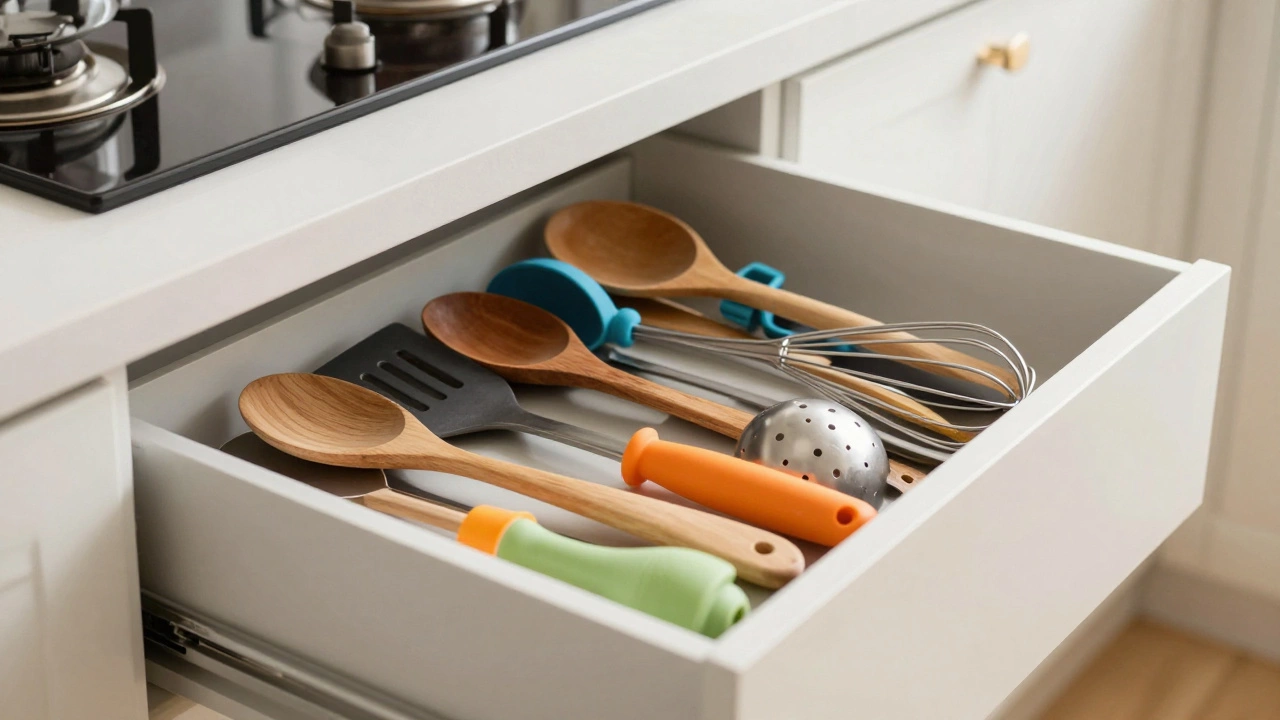
You’re standing in the kitchen, staring at a drawer full of spatulas, ladles, and whisks. You want to describe them all in one go, but the word "things" feels too lazy. What is a word for kitchenware that actually sounds precise? It’s a common frustration. We often grab generic terms when we mean something specific, leading to confusion between what you cook with and what you eat off.
The short answer is that there isn’t just one word. There are several, each carrying a distinct meaning based on function, material, and usage context. Understanding these distinctions helps you shop smarter, organize better, and communicate more clearly-whether you’re reading a recipe or furnishing a new home.
Quick Summary: Key Takeaways
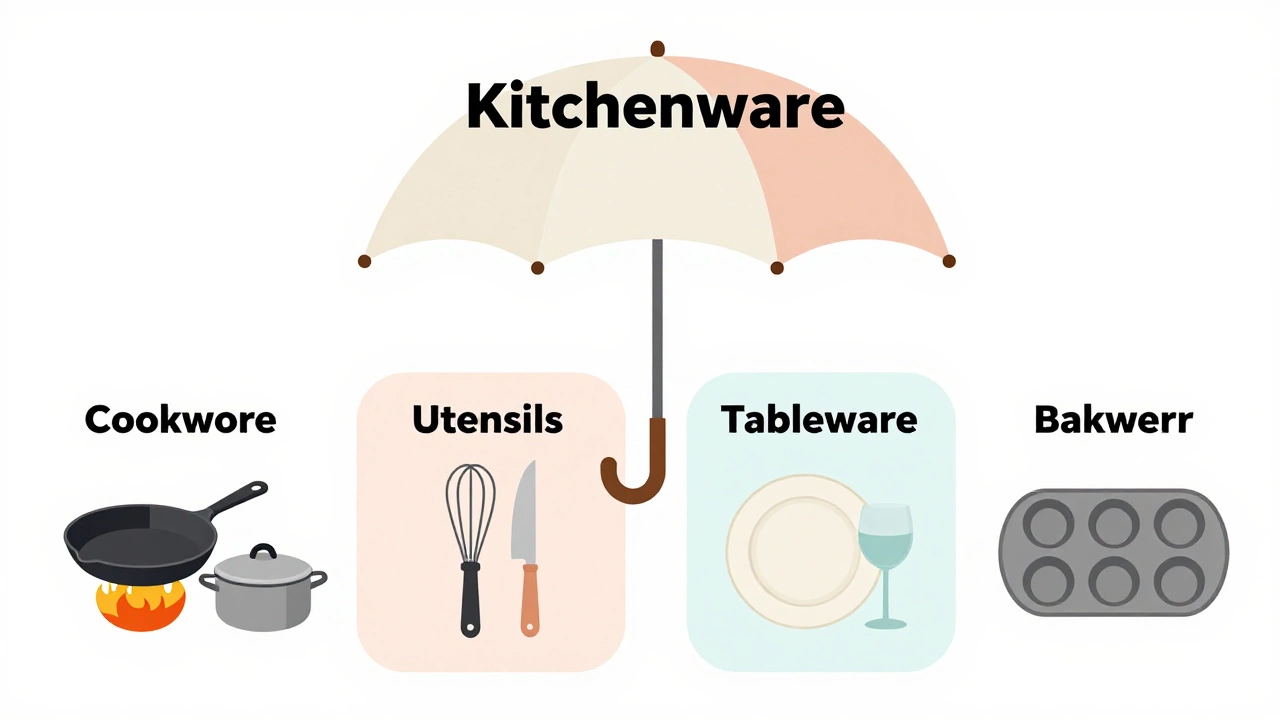
- Kitchenware is the broadest umbrella term covering everything used in a kitchen, from pots to sponges.
- Cookware specifically refers to vessels used for cooking food on heat sources (pots, pans, skillets).
- Tableware covers items used for serving and eating meals (plates, glasses, cutlery).
- Utensils are handheld tools used for preparation and cooking (spatulas, knives, peelers).
- Crockery and China refer specifically to ceramic dinnerware, while Hollowware describes metal serving dishes.
The Umbrella Term: Kitchenware Defined
When people ask, "what is a word for kitchenware," they are usually looking for the master category. Kitchenware is the collective term for all equipment, appliances, and tools found in a kitchen environment. It is the parent entity that encompasses every other sub-category. If you buy a set of kitchenware, you might get a blender, a cutting board, a set of pots, and some measuring cups.
This term is functional rather than aesthetic. It doesn’t imply luxury or fragility; it implies utility. In retail contexts, kitchenware departments often stock everything from non-stick frying pans to dish soap dispensers. The key attribute of kitchenware is its location and purpose: it belongs in the kitchen and serves a role in food preparation, cooking, or cleanup.
However, using "kitchenware" as a catch-all can be imprecise. If you tell someone you need new kitchenware, they won’t know if you need a replacement toaster or a new set of wine glasses. This ambiguity is why specialized terms exist.
Cookware: The Heat-Resistant Essentials
If your focus is strictly on the act of cooking over heat, the correct term is Cookware. This refers to vessels designed to withstand high temperatures for preparing food. Cookware includes items like saucepans, casseroles, woks, and baking sheets.
The defining characteristic of cookware is its interaction with heat sources. These items are made from materials capable of conducting heat efficiently, such as stainless steel, cast iron, copper, or aluminum. A chef’s pan is cookware. A Dutch oven is cookware. Even a silicone baking mat, which goes into an oven, falls under this category because it facilitates the cooking process.
Common types of cookware include:
- Frying Pans/Skillets: Shallow pans with low sides, used for searing and frying.
- Saucepans: Deep pans with high sides, ideal for boiling liquids or making sauces.
- Rimmed Baking Sheets: Flat trays with raised edges, used for roasting vegetables or baking cookies.
- Dutch Ovens: Heavy pots with tight-fitting lids, used for slow-cooking stews and breads.
Confusion often arises here because some items blur the line. Is a griddle cookware? Yes, because it sits on a heat source. Is a colander cookware? No, despite being used in food prep, it does not withstand direct heat for cooking.
Utensils: The Handheld Tools
While cookware holds the food, Utensils are handheld implements used to manipulate, prepare, or serve food. This category is vast and includes both kitchen tools and dining instruments. In the context of "kitchenware," we usually refer to kitchen utensils rather than dining utensils.
Kitchen utensils are typically made from wood, silicone, plastic, or metal. They do not hold food themselves but interact with it directly. Examples include:
- Mixing Tools: Whisks, spoons, and spatulas.
- Cutting Tools: Chef’s knives, paring knives, and mandolines.
- Measuring Tools: Measuring cups and spoons.
- Specialty Tools: Garlic presses, can openers, and vegetable peelers.
A key distinction is that utensils are rarely heated directly. You wouldn’t put a wooden spoon in the oven. You would use it to stir the pot that is on the stove. This functional separation is crucial for organization. Many cooks keep their utensils in drawers or hanging racks, separate from their heavy cookware.
Tableware: Serving and Eating
Once the food is cooked, it moves from the kitchen to the table. The items used during this phase are called Tableware, also known as flatware or dinnerware. This category includes plates, bowls, glasses, and cutlery.
Tableware is defined by its role in consumption and presentation. Unlike cookware, tableware is generally not exposed to direct heat (except perhaps in microwave-safe scenarios). Its primary attributes are aesthetics, durability, and hygiene.
Sub-categories within tableware include:
- Crockery: Ceramic items like plates, bowls, and mugs.
- China: Fine porcelain or bone china, often reserved for formal occasions.
- Glassware: Drinking vessels like wine glasses, beer steins, and water goblets.
- Cutlery/Cutleries: Knives, forks, and spoons used for eating.
In many households, the line between kitchenware and tableware blurs. For example, a large ceramic bowl might be used to mix salad ingredients (kitchen function) and then placed on the table for serving (table function). However, for inventory and shopping purposes, keeping these categories distinct prevents buying fragile crystal for everyday chopping tasks.
Specialized Terminology: Hollowware and Bakeware
To achieve true precision, you need to understand two more niche terms: Hollowware and Bakeware.
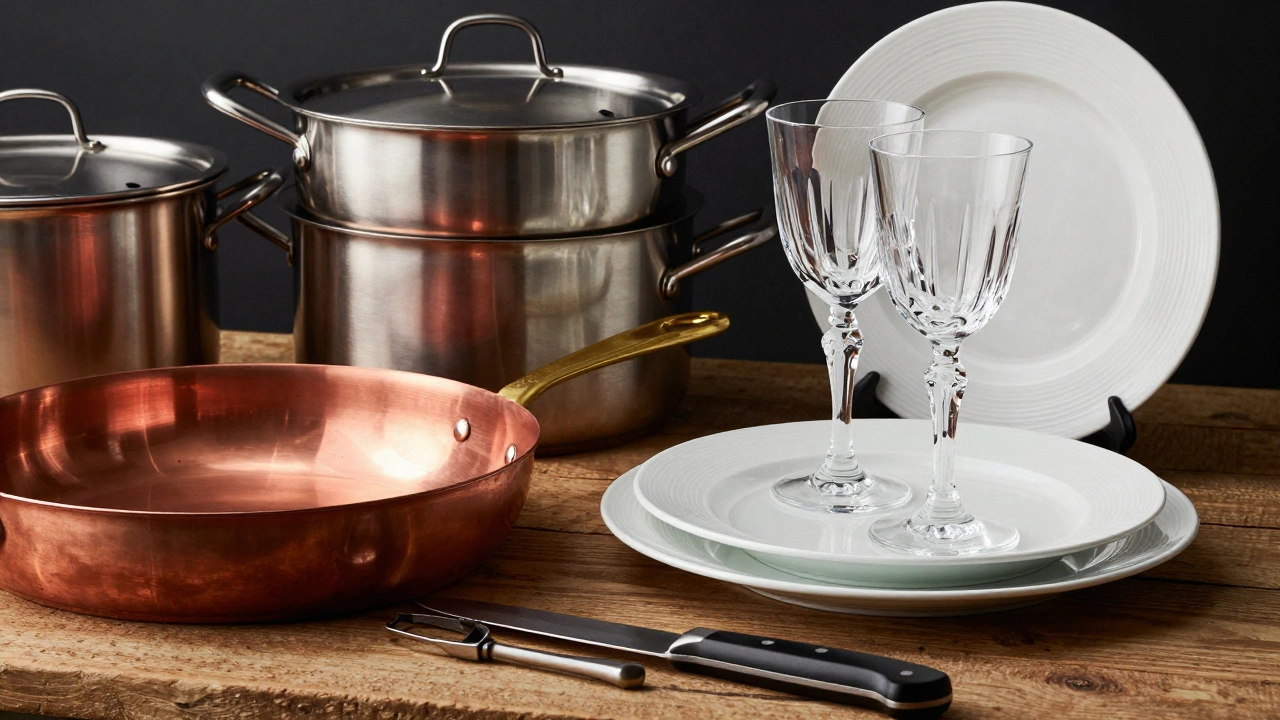
Hollowware refers to metal serving dishes that are hollow, such as tureens, gravy boats, and chafing dishes. Historically, this term was used in silverware manufacturing to distinguish these items from flatware (cutlery). Today, it’s less common but still useful when describing high-end serving sets.
Bakeware is a subset of cookware specifically designed for oven use. It includes cake pans, muffin tins, loaf pans, and pie dishes. While technically cookware, bakeware is often categorized separately because it requires different materials (like glass or non-reactive metals) and care instructions than stovetop pans.
Comparison Table: Choosing the Right Word
| Term | Primary Function | Typical Materials | Examples |
|---|---|---|---|
| Kitchenware | All-inclusive | Various | Everything in the kitchen |
| Cookware | Cooking on heat | Steel, Iron, Copper | Pots, Pans, Woks |
| Utensils | Preparation & Handling | Wood, Silicone, Metal | Sporks, Knives, Spatulas |
| Tableware | Serving & Eating | Ceramic, Glass, Silver | Plates, Glasses, Cutlery |
| Bakeware | Oven Cooking | Glass, Aluminum, Steel | Cake Pans, Muffin Tins |
Why Precision Matters
Using the correct terminology isn’t just about sounding smart. It affects how you maintain and replace your items. For instance, knowing that cast iron belongs to cookware tells you it needs seasoning and cannot go in the dishwasher. Knowing that a whisk is a utensil tells you it should be stored dry to prevent rust.
When shopping online, using specific terms yields better results. Searching for "kitchenware" might return cleaning supplies. Searching for "cookware" will lead you to pots and pans. Searching for "tableware" will show you dinner sets. This clarity saves time and money.
Furthermore, understanding these categories helps in decluttering. If you have too much "kitchenware," break it down. Do you have excess cookware? Or is it really just duplicate utensils? Identifying the specific type of clutter allows for targeted solutions.
Is cutlery considered kitchenware?
Yes, broadly speaking. Cutlery (knives, forks, spoons) is a type of kitchenware because it is used in the kitchen environment. However, it is more precisely classified as tableware or flatware when used for eating, and as kitchen utensils when used for preparation (like a paring knife).
What is the difference between crockery and cookware?
Crockery refers to ceramic items used for serving and eating, such as plates and bowls. Cookware refers to metal or heat-resistant vessels used for cooking food on a stove or in an oven. Crockery is generally not suitable for direct heat cooking, while cookware is designed for it.
Can I use the word 'china' interchangeably with 'kitchenware'?
No. China is a specific type of fine porcelain tableware. Using it to describe all kitchenware is inaccurate and misleading. China is fragile and decorative, whereas kitchenware includes durable, functional items like pots and blenders.
What does 'hollowware' mean in modern contexts?
Hollowware traditionally refers to metal serving dishes like tureens and gravy boats. In modern contexts, it is rarely used by consumers but may appear in antique shops or high-end restaurant supply catalogs to describe ornate metal serving pieces.
Are small appliances considered kitchenware?
Yes. Small appliances like blenders, toasters, and coffee makers fall under the broad umbrella of kitchenware. They are distinct from cookware and utensils because they are powered devices rather than passive tools or vessels.