What Is a Trick Mirror? The Science Behind Optical Illusions
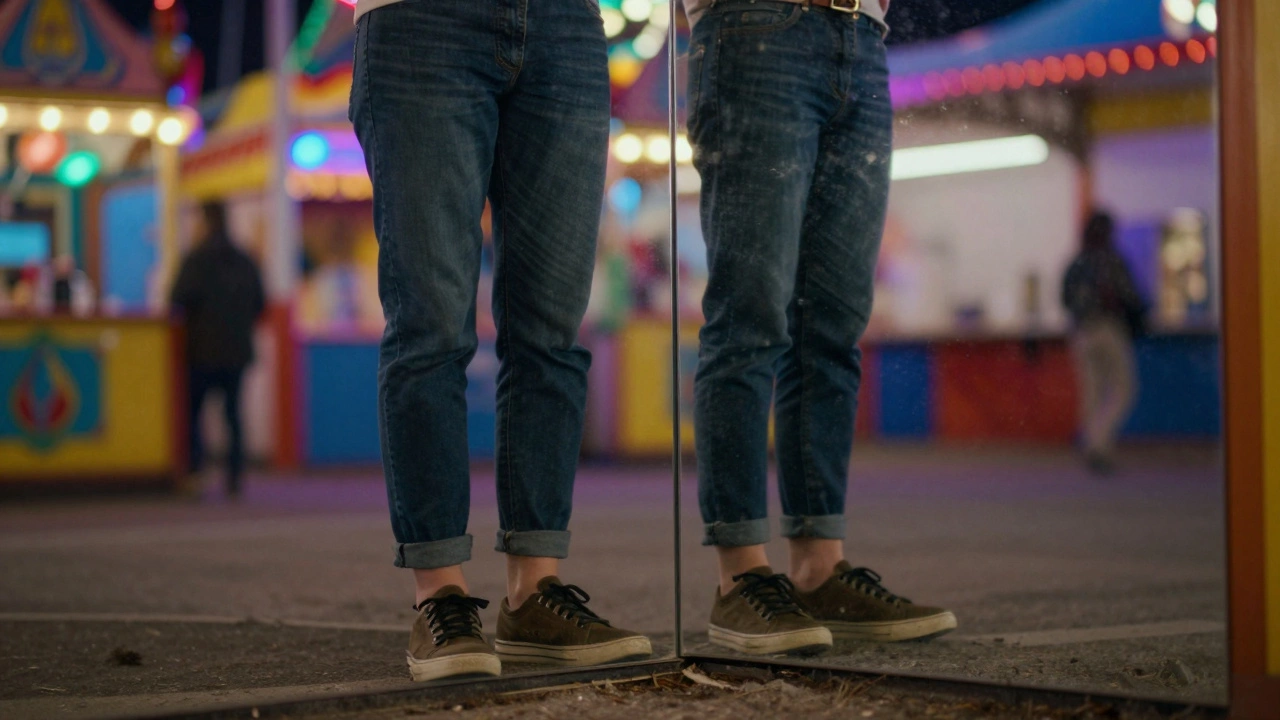
Interactive Trick Mirror Simulator
*Visual representation of optical distortion
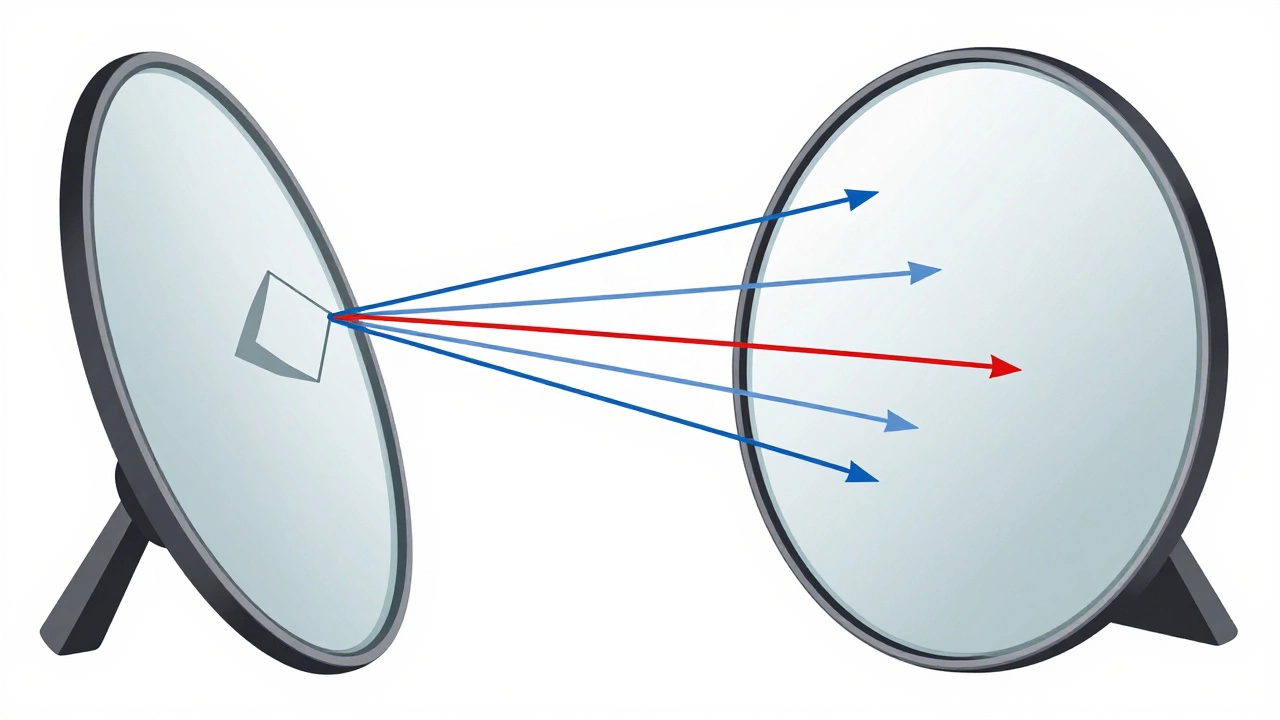
Flat Mirror
True-to-LifeLight rays bounce back parallel to each other. The image is the same size as you and appears behind the glass. This is predictable and accurate.
Have you ever walked into a carnival or a theme park attraction and seen yourself stretched like taffy or squashed flat like a pancake? It’s funny, sure, but it can also be a little disorienting. You look down at your feet, then up at your head, and nothing matches reality. That’s the power of a trick mirror, which is a specially shaped reflective surface designed to distort the viewer's reflection for entertainment purposes. While they are staples of amusement parks, these mirrors are actually fascinating demonstrations of physics that have been around for centuries.
We often think of mirrors as simple tools for checking our appearance. A standard bathroom mirror gives us a true-to-life image. But when we change the shape of that glass, we change how light bounces off it. This article breaks down exactly what trick mirrors are, how they work using basic optics, and why they remain such a popular form of entertainment today.
The Physics of Distortion: How Light Bends
To understand a trick mirror, you first need to understand how a normal mirror works. In a flat mirror, light rays bounce off your face and hit the glass at the same angle they came in. This creates a virtual image that is the same size as you and appears to be behind the glass. It’s predictable and accurate.
Trick mirrors break this rule by curving the surface. When the surface is curved, the light rays don’t bounce back parallel to each other. Instead, they converge or diverge, changing the size and shape of the image you see. There are two main types of curves used in these mirrors:
- Concave Mirrors: These curve inward, like the inside of a spoon. If you stand close to one, your reflection looks upside down and smaller. If you stand further away, it might look upright but magnified. In a funhouse setting, a vertically elongated concave mirror will stretch your body out, making you look tall and thin.
- Convex Mirrors: These curve outward, like the back of a spoon. They spread light rays apart. This makes objects appear smaller and wider. A horizontally compressed convex mirror will make you look short and wide, creating that classic "squashed" effect.
Most trick mirrors aren't just purely concave or convex. They are complex combinations of both. A mirror might be concave at the top to stretch your head, but convex in the middle to squeeze your torso. This creates the chaotic, wavy distortions that make people laugh.
A Brief History of Funhouse Mirrors
You might assume trick mirrors are a modern invention, born from plastic manufacturing and digital design. Surprisingly, the roots go back much further. The concept of distorted reflections dates back to ancient Greece and Rome, where polished metal bowls were used to create inverted images. However, these were mostly scientific curiosities rather than entertainment.
The modern funhouse mirror really took off in the late 19th century during the Victorian era. As glass manufacturing improved, it became cheaper and easier to create large, warped sheets of glass. Circus sideshows began incorporating them as attractions. By the early 20th century, with the rise of theme parks and boardwalks, the "House of Mirrors" became a standard ticketed experience.
Interestingly, the psychology behind their popularity hasn't changed. Humans have an innate desire to see themselves differently. We are obsessed with our self-image. Seeing ourselves distorted challenges our perception of reality in a safe, controlled environment. It’s a playful way to mess with the brain’s visual processing system.
Making a Trick Mirror: Materials and Methods
If you’ve ever wondered how these things are made, it’s not as simple as bending a sheet of glass. Glass is brittle; if you try to bend it cold, it shatters. So, manufacturers use heat and gravity.
The process usually starts with flat sheets of high-quality float glass. To create a curve, the glass is heated until it becomes soft and pliable. Then, it is placed over a mold or suspended between frames that force it into a specific shape. As it cools, it retains that curve. This requires precise temperature control. If the glass cools too quickly, it develops stress points and can crack later.
Another method involves layering. Some trick mirrors are made by sandwiching layers of glass with different curvatures or using acrylic (plexiglass) instead of glass. Acrylic is lighter and safer, which is why many modern indoor attractions prefer it. If someone runs into an acrylic mirror, it won’t shatter into dangerous shards like glass would.
The backing is also crucial. Standard mirrors have a silver nitrate coating on the back. For trick mirrors, the coating must be applied evenly despite the curves. Any unevenness in the reflective layer can cause additional, unintended distortions or dark spots in the reflection.
Where Else Do We See Trick Mirrors?
While funhouses are the most obvious place to find trick mirrors, the technology has applications elsewhere. You’ve likely interacted with convex mirrors without realizing it.
| Application | Mirror Type | Purpose |
|---|---|---|
| Rearview Car Mirrors | Convex | Wider field of view to reduce blind spots |
| Security Corners | Convex | Allowing staff to see around corners in stores or warehouses |
| Telescopes | Concave | Focusing light to magnify distant stars |
| Dental Tools | Concave | Magnifying teeth for better visibility |
| Solar Cookers | Concave | Concentrating sunlight to generate heat |
In cars, the passenger-side rearview mirror is slightly convex. That’s why it says, "Objects in mirror are closer than they appear." It sacrifices accurate distance perception for a wider view. Similarly, security mirrors in supermarkets use strong convex curves to let one person monitor a large area. These are practical applications of the same distortion principles used in funhouses, just optimized for utility rather than comedy.
Psychological Impact and Perception
Why do we find trick mirrors amusing? Psychologists suggest it relates to cognitive dissonance. Your brain expects your reflection to match your proprioception (your sense of body position). When the mirror shows you as six feet tall and skinny, but your brain knows you’re five-foot-seven and average build, there’s a momentary conflict. Resolving this conflict-realizing it’s just a trick-releases a small burst of dopamine. It’s a harmless puzzle solved.
For some people, however, trick mirrors can be unsettling. Body dysmorphia sufferers may find distorted reflections triggering rather than funny. Because of this, many modern family-friendly attractions are moving away from extreme distortions toward more subtle, artistic warping. The goal is still surprise, but less humiliation.
DIY Trick Mirrors: Can You Make One?
If you’re feeling crafty, you can create mild trick mirror effects at home without expensive glassblowing equipment. The key is manipulating the reflective surface indirectly.
- Water Ripple Method: Place a regular mirror under a shallow tray of water. Stir the water gently. The ripples act as tiny lenses, distorting the reflection above. This creates a fluid, shifting distortion.
- Cellophane Wrap: Cover a flat mirror with several layers of clear cellophane tape or cling film. Crumple it slightly before smoothing it out. The uneven tension creates minor warping.
- Balloon Stretch: Stretch a balloon over the frame of a broken mirror (carefully, avoiding shards). The curved rubber surface distorts the light passing through to the glass below.
These DIY methods won’t give you the crisp, dramatic stretches of a professional funhouse mirror, but they demonstrate the principle clearly. Light doesn’t care if it’s bouncing off glass, water, or plastic-it reacts to the shape of the surface every time.
Safety Considerations
When dealing with trick mirrors, especially in public spaces, safety is paramount. Traditional glass mirrors pose a risk of shattering. Modern installations almost exclusively use tempered glass or acrylic. Tempered glass is treated to be stronger and breaks into small, dull chunks rather than sharp shards. Acrylic is virtually unbreakable under normal conditions.
Lighting is another factor. Trick mirrors rely on good illumination. If the room is too dark, the distortions are hard to see. If it’s too bright, glare can wash out the image. Professional funhouses use diffused lighting to ensure the reflections are clear and the distortions are visible from multiple angles.
Finally, consider the physical space. People often get distracted by their funny reflections and bump into walls or other visitors. Clear pathways and non-slip flooring are essential in any installation featuring trick mirrors.
Are trick mirrors real or just digital effects?
Traditional trick mirrors are entirely physical. They rely on the curvature of the glass or acrylic surface to bend light. No digital screens or software are involved in classic funhouse mirrors. However, some modern interactive art installations combine physical mirrors with projection mapping to enhance the illusion.
Why do I look taller in some trick mirrors?
You look taller because the mirror is likely concave vertically. A concave surface curves inward, which magnifies the image along that axis. If the curve is stronger vertically than horizontally, your reflection gets stretched upward while remaining narrow.
Can you make a trick mirror at home safely?
Yes, but avoid bending actual glass. Use acrylic sheets which can be warmed with a hairdryer and gently bent, or use the water ripple method described above. Never attempt to heat-bend glass without proper kilns and safety gear, as it can explode.
Do trick mirrors affect your actual height?
No, trick mirrors only affect the light reflecting off you. Your physical body remains unchanged. The distortion is purely optical, similar to how a straw looks bent in a glass of water.
What is the difference between a funhouse mirror and a security mirror?
Both use curved surfaces, but with different goals. Funhouse mirrors use complex, irregular curves to create humorous distortions. Security mirrors use uniform convex curves to provide a wide-angle view of a space, sacrificing detail for coverage.