
The Two Laws of Mirrors: Understanding Reflection and Light
Law of Reflection Simulator
Control Panel
The angle of incidence is always equal to the angle of reflection.
θi = θr
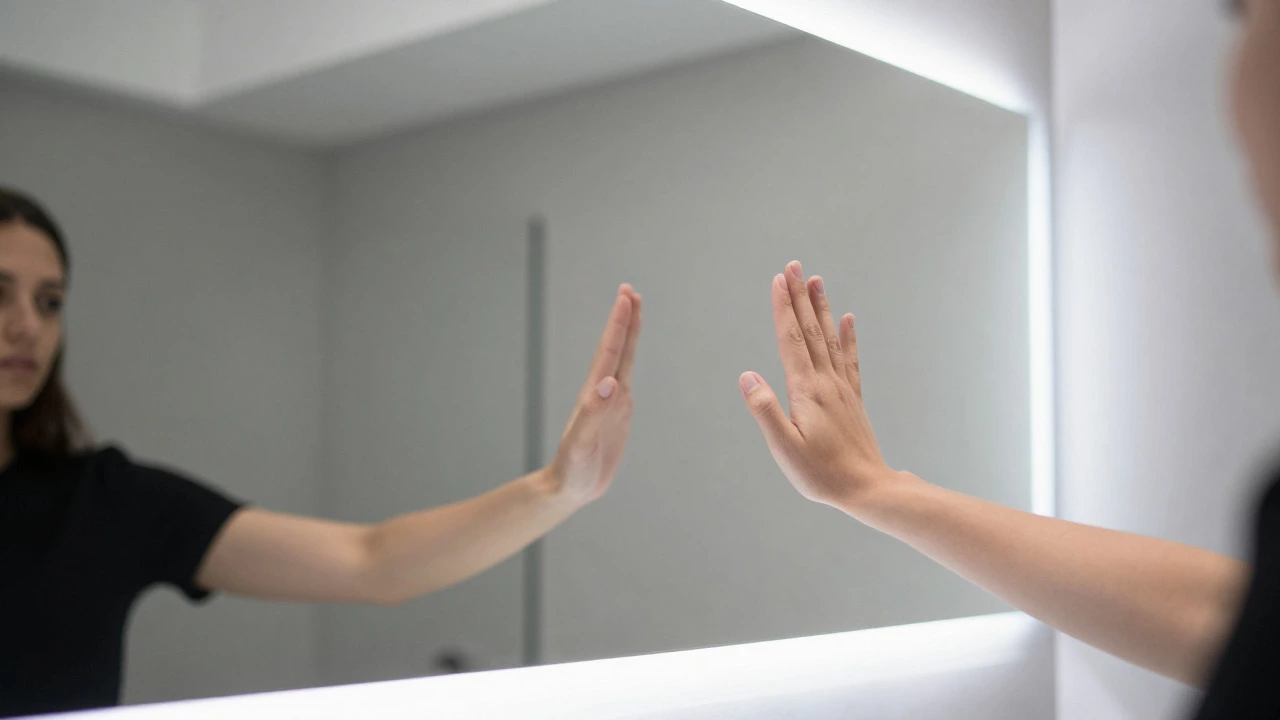
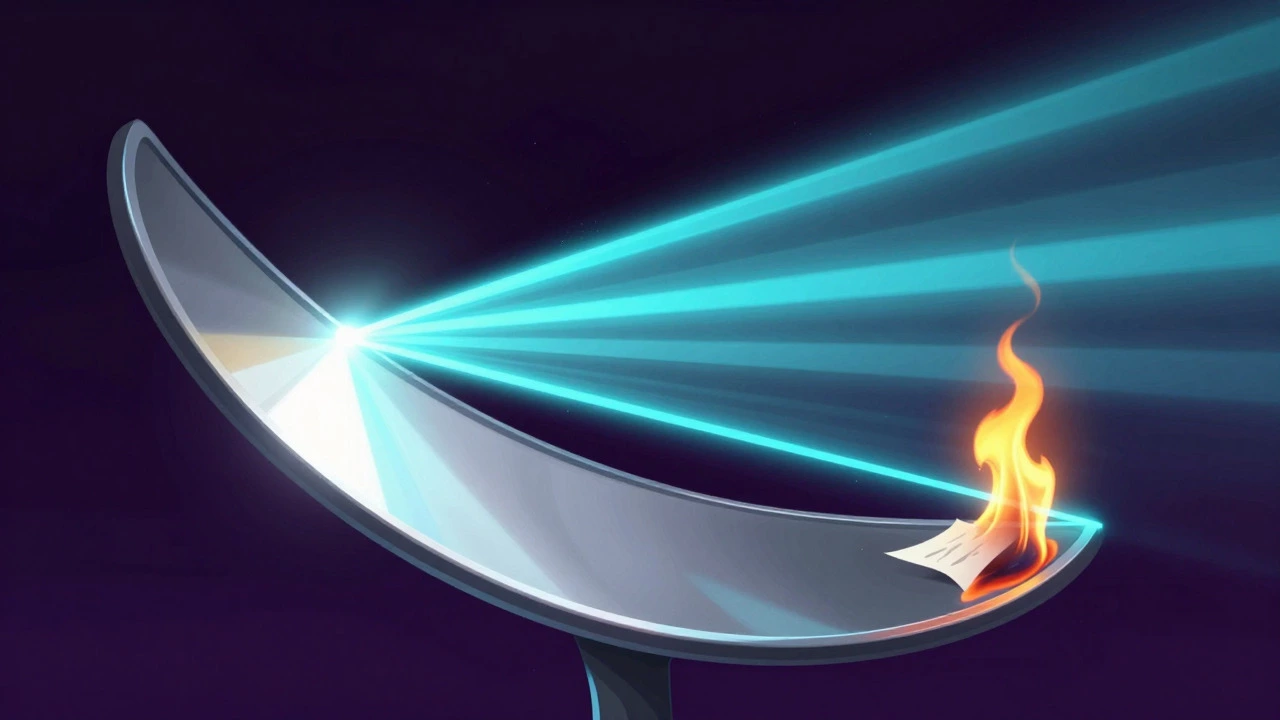
Have you ever wondered why your reflection in a bathroom mirror looks exactly like you, just flipped left-to-right? Or why a concave mirror can focus sunlight to burn a piece of paper? These aren't magic tricks; they are the result of strict physical rules governing how light behaves when it hits a reflective surface. When people ask about the laws of mirrors, they are usually referring to two fundamental principles in optics that explain every reflection you see.
These laws describe the path of light rays as they bounce off a surface. Whether you are an interior designer trying to place a mirror to make a small room look bigger, or a student studying physics, understanding these two rules helps you predict exactly where an image will form and how large it will appear. Let's break down what these laws actually say and how they work in real life.
The First Law: The Angle of Incidence Equals the Angle of Reflection
The first law is the most basic rule of geometric optics. It states that when a ray of light hits a flat, shiny surface, the angle at which it arrives (the angle of incidence) is exactly equal to the angle at which it bounces off (the angle of reflection).
To understand this, you need to know about the "normal." The normal is an imaginary line drawn perpendicular (at a 90-degree angle) to the mirror's surface at the exact point where the light hits. If a light ray comes in at 30 degrees from this normal line, it will bounce off at 30 degrees on the other side. It doesn't matter if the mirror is tilted or straight; as long as the surface is smooth, this equality holds true.
This law explains why we can see each other in a mirror. Light from my face hits the mirror, reflects at the same angle, and travels into your eyes. Your brain assumes light travels in a straight line, so it traces that reflected light back behind the mirror, creating the illusion of an image existing there. Without this precise angular relationship, our reflections would be scattered randomly, and we wouldn't see a clear picture at all.
The Second Law: Coplanarity of Rays
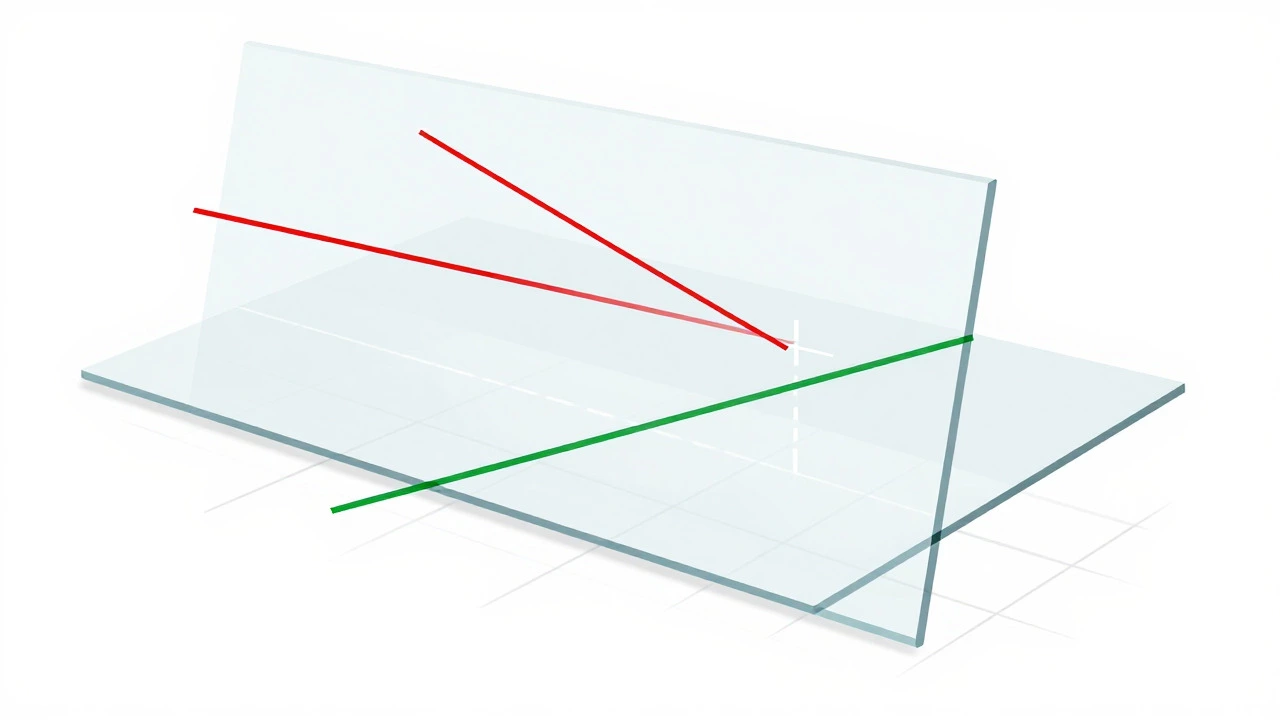
The second law is often overlooked but is just as critical. It states that the incident ray, the reflected ray, and the normal line all lie in the same plane. In simpler terms, the light doesn't jump out of the page or twist into a different dimension; it stays flat on a single 2D sheet relative to the surface.
Imagine drawing a line on a piece of paper representing the mirror. The light comes in, hits the spot, and bounces off. All three lines-the incoming light, the outgoing light, and the perpendicular normal-exist on that same piece of paper. They don't curve up or down out of the plane. This ensures that reflections are predictable and consistent across the entire surface of the mirror, not just in one specific spot.
Together, these two laws define specular reflection, which is the type of reflection you get from smooth surfaces like glass mirrors, polished metal, or still water. This is distinct from diffuse reflection, which happens on rough surfaces like walls or paper, where the micro-scratches cause light to scatter in many directions, breaking the simple angle rules locally.
How These Laws Create Virtual Images
When you look into a flat mirror, the image you see is called a virtual image. It appears to be behind the mirror, but no light actually passes through the glass to that space. The light only exists in front of the mirror, bouncing off the silvered backing.
Because of the two laws, the virtual image has specific properties:
- Distance: The image appears to be as far behind the mirror as you are in front of it. If you stand 1 meter away, your reflection looks like it is 1 meter away behind the glass.
- Size: The image is the same size as you. Flat mirrors do not magnify or shrink objects.
- Orientation: The image is upright but laterally inverted. This means left becomes right and vice versa. This is why text on a T-shirt looks backward in a mirror.
These properties are direct mathematical results of the angles being equal and the rays staying in the same plane. If you move closer to the mirror, the angle changes, but the ratio remains constant, keeping the image size relative to your distance unchanged.
Real vs. Virtual Images: A Comparison
While flat mirrors always produce virtual images, curved mirrors (concave and convex) can produce both. The laws of reflection still apply to every single point on the curved surface, but because the normal line changes direction at each point, the overall effect is different.
| Mirror Type | Image Type | Orientation | Size Relative to Object | Common Use Case |
|---|---|---|---|---|
| Flat Mirror | Virtual | Upright, Laterally Inverted | Same Size | Bathroom mirrors, rearview mirrors |
| Concave Mirror | Real or Virtual | Inverted (Real) / Upright (Virtual) | Varies (Can Magnify) | Telescopes, shaving mirrors, headlights |
| Convex Mirror | Virtual | Upright | Smaller | Sideways car mirrors, security mirrors |
Notice how the underlying physics remains the same. Even in a concave mirror used in a telescope, every photon obeys the rule that the angle in equals the angle out. The curvature simply directs those reflected rays to converge at a focal point, allowing us to capture distant stars.
Practical Applications in Daily Life
You interact with these laws constantly without thinking about them. Here are a few examples where understanding the mechanics helps:
- Driving Safety: Side-view mirrors on cars are often slightly convex. This bends the light rays so they diverge, giving you a wider field of view. However, because the image is smaller, objects appear farther away than they really are. That's why signs warn "Objects in mirror are closer than they appear."
- Optical Instruments: Periscopes use two flat mirrors set at 45-degree angles. By applying the two laws twice, light from above is redirected down to your eye, allowing you to see over obstacles.
- Architecture and Design: Interior designers use mirrored surfaces to bounce natural light into dark corners of a room. By calculating the angle of incidence from a window, they can position a mirror to reflect that light onto a specific wall or artwork.
If you are installing a mirror in your home, remember that the quality of the glass matters. Imperfections in the surface can distort the normal line, causing wavy or blurred reflections. High-quality optical glass maintains the precise geometry required for the laws to work perfectly, ensuring a crisp, undistorted image.
Common Misconceptions About Mirror Reflections
One of the biggest myths is that mirrors flip left and right but not top and bottom. Actually, mirrors flip front and back. If you raise your right hand, the mirror image raises the hand on its right side (which corresponds to your left). But if you turn around and face the mirror, the image also turns around. The mirror isn't choosing sides; it's reflecting depth. The axis of inversion is perpendicular to the mirror surface, not horizontal or vertical.
Another misconception is that mirrors change the color of light. While some low-quality mirrors might have a slight green tint due to the iron content in the glass, the laws of reflection themselves do not alter wavelength. The frequency of the light remains the same before and after reflection, meaning the color stays identical unless filtered by the material itself.
Frequently Asked Questions
What are the two main laws of reflection?
The two laws are: 1) The angle of incidence is equal to the angle of reflection. 2) The incident ray, the reflected ray, and the normal to the surface all lie in the same plane.
Do the laws of mirrors apply to curved mirrors?
Yes, the laws apply to every point on any reflective surface, including curved ones. For curved mirrors, the normal line is drawn perpendicular to the tangent at the specific point of impact, changing the direction of the reflected ray accordingly.
Why does my reflection look reversed left-to-right?
It is actually a front-to-back reversal. The mirror reflects the depth axis. Because you are facing the mirror, your left side reflects to the left side of the image from your perspective, which creates the perception of a lateral flip.
What is the difference between a real and a virtual image?
A virtual image cannot be projected onto a screen because light rays do not actually converge there; they only appear to come from that location. A real image is formed where light rays physically intersect and can be captured on a screen or sensor.
How do I calculate the position of an image in a flat mirror?
The image distance is equal to the object distance. If an object is 2 meters in front of a flat mirror, the virtual image will appear 2 meters behind the mirror. The total distance between the object and the image is twice the object distance.