Should Your Curtains Match Your Sofa? The Interior Design Rules That Actually Work
Curtain & Sofa Coordination Planner
Select a coordination strategy below to see visual examples and expert recommendations for pairing your curtains with your sofa.
Neutral Anchor
Let sofa be the star
Low RiskTone-on-Tone
Same family, different texture
Medium RiskAccent Pull
Match accessories
Medium RiskExact Match
Identical colors
High RiskStrategy Details
Click on any strategy above to see detailed recommendations and visual examples.
You’ve just bought that dream sofa is the centerpiece of your living room, often upholstered in fabric or leather.. It’s the perfect shade of navy blue. You love it. But now you’re staring at your bare windows, wondering if you should buy curtains in the exact same hue. The old rulebook says yes. Modern design whispers something different. So, should your curtains match your sofa?
The short answer is: usually no. Matching them exactly can make a room feel flat, boxed-in, and unintentionally uniform, like a hotel lobby from the early 2000s. However, coordinating them creates depth, interest, and a space that feels curated rather than cataloged. The goal isn’t to ignore your sofa; it’s to build a relationship with it.
The Problem with Exact Matches
When we say "match," most people think of buying the same fabric swatch for both pieces. This approach, known as monochromatic styling, has its place, but it carries risks. If your living room is a multi-functional space for relaxation and socializing. relies on visual layers to feel cozy, an exact match removes those layers. Imagine wearing a suit where the jacket, trousers, and shirt are all the same material and color. It looks clean, sure, but it lacks personality. In a room, this lack of contrast can make furniture blend into the background, losing its definition.
Furthermore, exact matches limit your flexibility. Fabric wears out. Sunlight fades colors. If your curtains and sofa are identical, when one needs replacing, you’ll likely need to replace the other to maintain that seamless look. By choosing distinct but complementary fabrics, you give yourself the freedom to update one element without overhauling the entire room.
Three Better Ways to Coordinate
Instead of matching, aim for harmony. Here are three proven strategies to pair your curtains with your sofa so they look intentional and stylish.
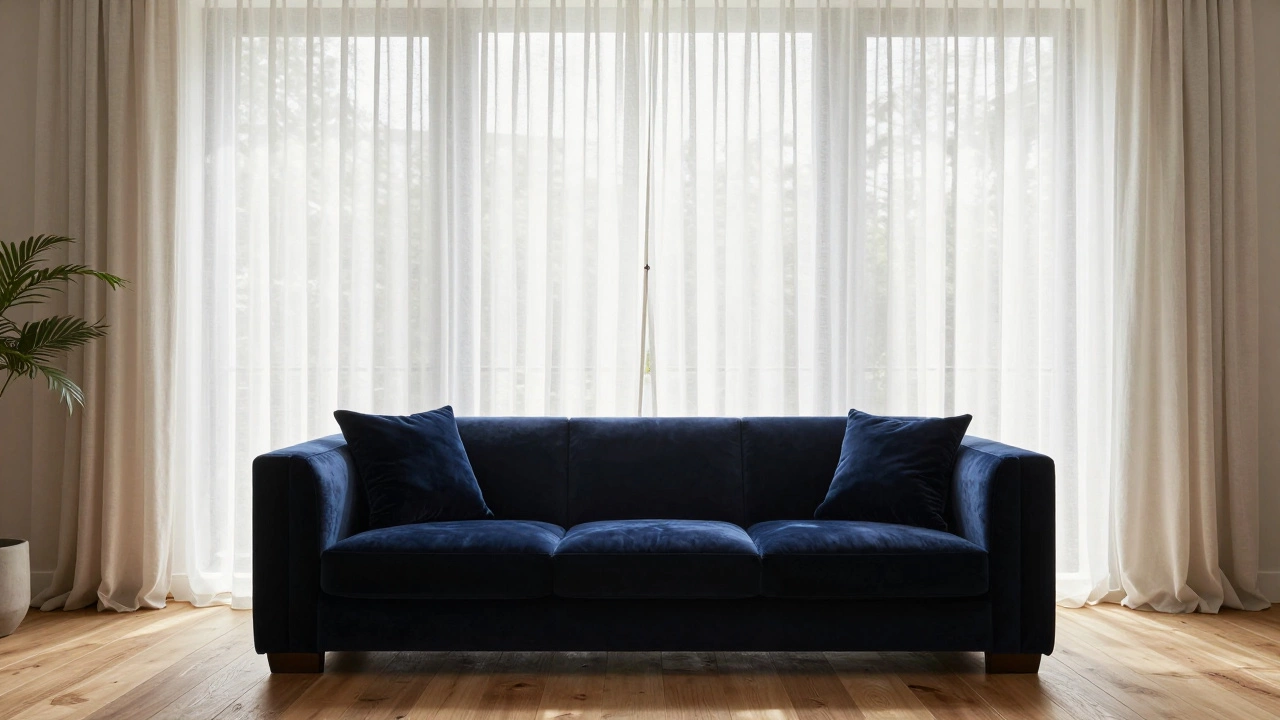
- The Neutral Anchor: Keep your curtains neutral-think crisp white, warm beige, or soft gray-and let the sofa be the star. This works especially well if your sofa is bold or patterned. A neutral curtain acts as a frame, drawing the eye toward the seating area without competing for attention. For example, a deep emerald green velvet sofa pops beautifully against sheer white linen curtains.
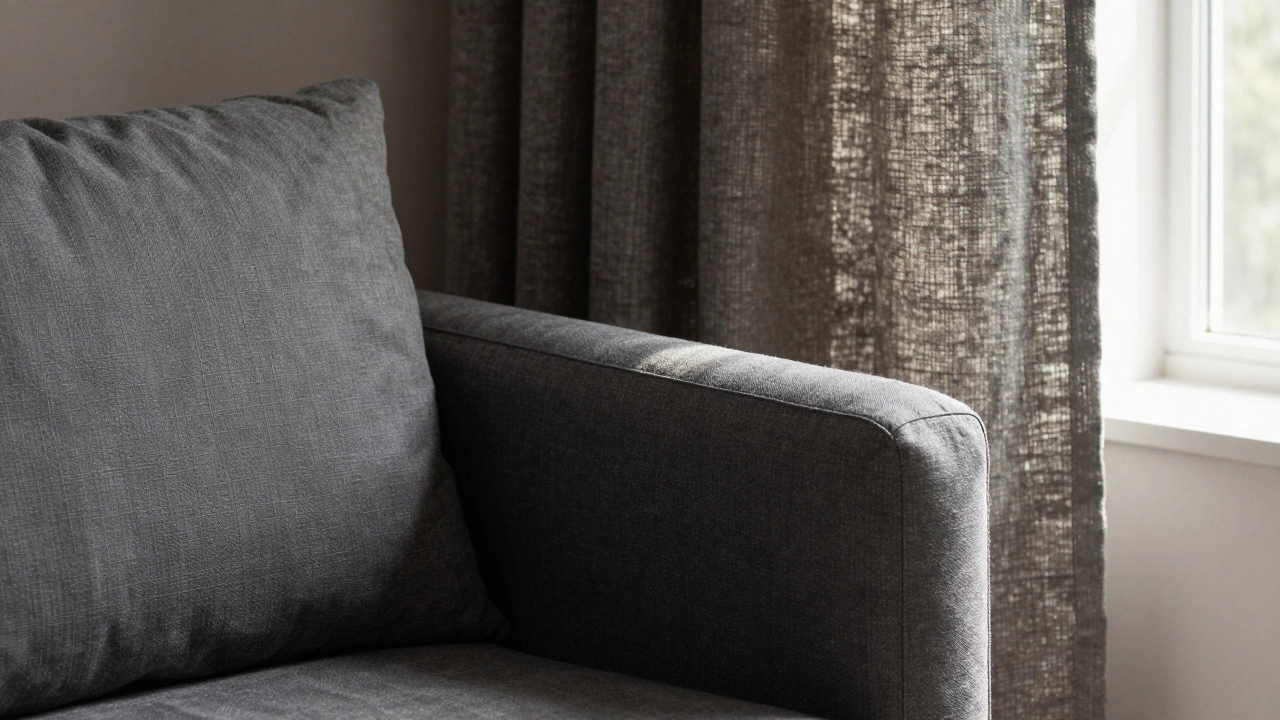
- The Tone-on-Tone Approach: Choose curtains in the same color family as your sofa but with a different texture or value (lightness/darkness). If your sofa is charcoal gray, try curtains in a lighter heather gray or a darker slate. The key here is texture. Pairing a smooth cotton sofa with rough-hewn linen curtains adds tactile interest even if the colors are similar.
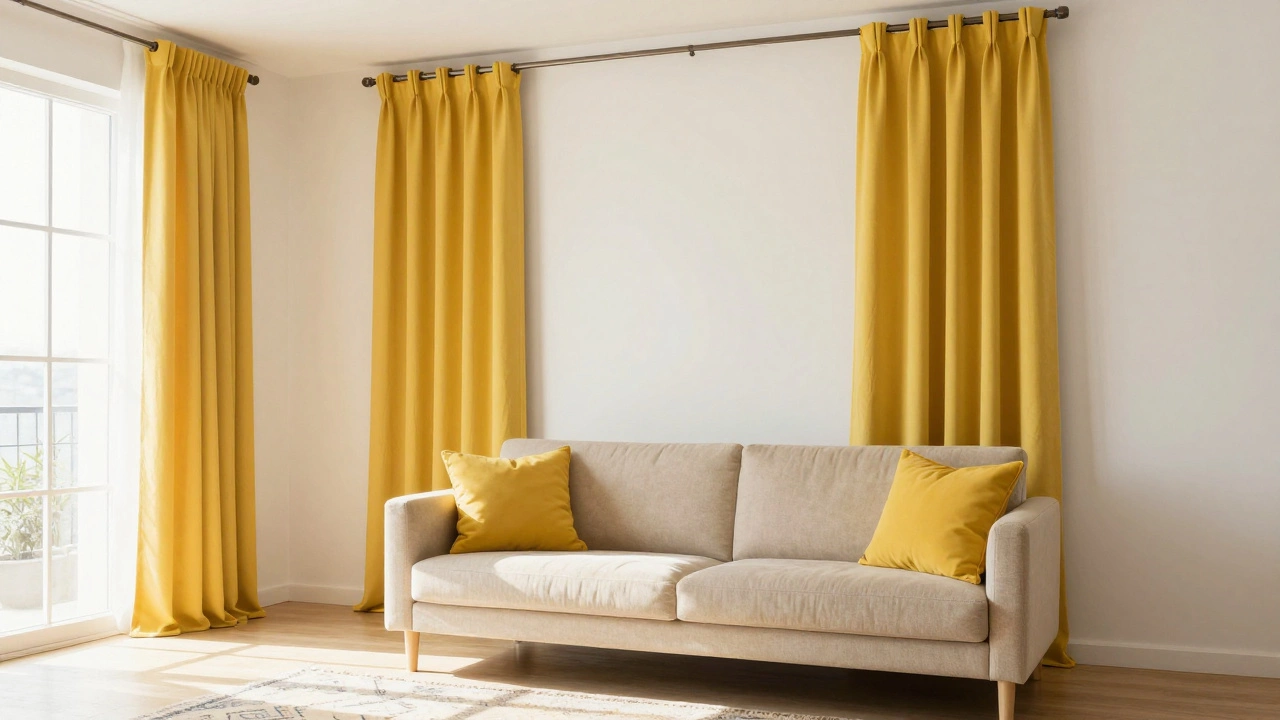
- The Accent Pull: Look at your sofa’s throw pillows, rug, or artwork. Pick up a secondary color from these accessories and use it for your curtains. If you have a beige sofa with mustard yellow cushions, mustard curtains will tie the whole room together. This method creates a cohesive loop, connecting the floor (rug), the middle (sofa), and the vertical plane (windows).
Understanding Color Theory in Small Spaces
Color theory isn’t just for art students; it’s practical physics for your home. Warm colors advance, making walls feel closer, while cool colors recede, making spaces feel larger. If you have a small living room with a bulky sofa, avoid heavy, dark curtains that match a dark sofa. Instead, opt for light, airy curtains that float above the floor. This draws the eye upward, emphasizing height over width.
Consider the undertones. Many whites aren’t truly white; they lean pink, blue, or yellow. A sofa with warm, reddish undertones will clash with cool, blue-toned white curtains. Hold your fabric swatches next to each other in natural light before buying. If they vibrate against each other, they don’t harmonize. If they settle together, you’ve found your pair.
Texture Over Color: The Secret Weapon
In modern interior design, texture often matters more than color. A room with a neutral palette can still feel rich and dynamic if the materials vary. Think about the weight and drape of your fabrics. Heavy velvet curtains add drama and sound dampening, perfect for a formal living room with a structured leather sofa. Light linen or cotton blends bring a casual, breezy vibe, ideal for a relaxed sectional in a sunroom.
Mixing textures prevents the "flat" look mentioned earlier. Even if you choose curtains that are close in color to your sofa, ensure the weave, sheen, or thickness is different. A matte fabric paired with a slightly glossy one creates subtle contrast. This layering technique makes the room feel designed, not accidental.
| Strategy | Best For | Risk Level | Visual Effect |
|---|---|---|---|
| Exact Match | Minimalist studios, temporary rentals | High (can look dated) | Uniform, flat, seamless |
| Neutral Anchor | Bold sofas, small rooms | Low | Clean, spacious, focused |
| Tone-on-Tone | Monochromatic palettes, luxury vibes | Medium | Sophisticated, layered, calm |
| Accent Pull | Eclectic styles, colorful homes | Medium | Cohesive, playful, connected |
Hanging Height Matters More Than You Think
Even the best-coordinated curtains will fail if hung incorrectly. The height at which you hang your curtain rod affects how your sofa and windows relate. Always hang rods high-within 4-6 inches of the ceiling or the top of the window frame. This elongates the wall, making the room feel taller and grander.
If your sofa sits directly under the window, consider floating the curtains wide enough to clear the arms of the sofa when open. This ensures maximum light entry and prevents the fabric from bunching around your seating area. When closed, the curtains should stack neatly beside the window, not cover the sofa’s backrest. This maintains the integrity of both elements.
When Matching Actually Works
There are exceptions to every rule. Matching curtains and sofas can work in specific scenarios. First, in very large, open-plan spaces, a unified color block can help define zones without creating visual clutter. Second, if you’re going for a highly minimalist, Scandinavian aesthetic, a tonal look with slight textural differences can feel serene and uncluttered. Third, in rental properties where you want to minimize decision fatigue, matching sets simplify shopping. But even then, prioritize texture variation to keep it interesting.
Practical Tips for Buying
Before you order custom curtains, take photos of your sofa in different lighting conditions. Morning light, afternoon sun, and evening lamp glow all change how colors appear. Bring these photos to the store. Also, measure twice. Curtain width should be 2 to 3 times the width of the window for proper fullness. Skimping on width makes cheap-looking curtains, regardless of how well they match your sofa.
Don’t forget lining. Lined curtains provide better insulation and privacy, and they hold their shape better than unlined ones. For a living room, half-lined options offer a balance between light filtration and structure. Unlined sheer curtains are great for daytime privacy but may look flimsy against a substantial sofa.
Can I mix patterns on my curtains and sofa?
Yes, but follow the scale rule. If your sofa has a large-scale pattern, choose curtains with a smaller, subtler print or a solid color that picks up one of the sofa’s hues. Conversely, if your sofa is solid, you can go bolder with patterned curtains. Avoid mixing two loud, large-scale patterns unless you’re experienced with high-contrast design.
What if my sofa is white?
A white sofa is incredibly versatile. You can pair it with almost any curtain color. For a fresh, airy look, stick with light neutrals like cream, pale gray, or soft blues. For drama, try deep jewel tones like emerald, sapphire, or burgundy. White acts as a blank canvas, letting your curtains set the mood.
Should curtains touch the floor?
Ideally, yes. Curtains should either just kiss the floor or break slightly (half an inch) onto it. Hemming them too short makes the room look unfinished. Too long, and they drag in dirt. For a modern, sleek look, hanging them exactly at the floor line is preferred over pooling fabric, which can look messy and collect dust.
How do I coordinate curtains with a leather sofa?
Leather has a natural sheen and warmth. Balance this with matte, textured fabrics like linen, wool, or heavy cotton. Avoid shiny synthetic curtains that compete with the leather’s gloss. Earth tones, warm grays, and muted greens complement brown or tan leather well. Black or dark brown leather pairs nicely with crisp whites or bold contrasts.
Is it okay to have different colored curtains in the same room?
Absolutely. Mixing curtain colors can add character, especially in eclectic or bohemian styles. Just ensure there’s a unifying element, such as a consistent trim, hardware, or a shared color palette across the room’s other decor. Random mismatches look chaotic; intentional mixes look curated.