How Much Storage Do You Need for a 5-Bedroom House? The Ultimate Guide
5-Bedroom House Storage Calculator
Enter Your Home Details
Walking into a five-bedroom house often feels like walking into a promise of space. But if you’ve ever tried to pack up a family of four or five, you know that square footage doesn’t equal storage capacity. In fact, larger homes often accumulate more clutter because there are so many places for things to hide until they become overwhelming.
If you are buying, building, or renovating a large family home, the question isn't just about how many rooms you have-it's about where your stuff lives. Getting this wrong leads to 'overflow zones' in hallways and living rooms. Getting it right means a home that stays tidy with minimal effort.
The Math Behind the Mess: Estimating Your Needs
There is no single magic number for storage volume, but there is a reliable rule of thumb used by interior designers and organizers. For a comfortable, clutter-free lifestyle, you should aim for 15% to 20% of your total livable floor area dedicated to built-in storage.
Let’s break that down. If your five-bedroom house has 3,000 square feet (approx. 280 square meters) of living space, you need between 450 and 600 square feet of actual storage volume. This includes closets, pantries, garages, and attic/basement spaces designated for storage.
Why does this percentage matter? Because storage needs scale non-linearly. A two-bedroom apartment might get by with 10% storage because residents own fewer items. A five-bedroom house usually houses multiple adults, children, sports equipment, seasonal decor, and hobby gear. Without that 15-20% buffer, your beautiful open-plan kitchen will quickly become a dumping ground for mail, shoes, and toys.
| Household Type | Recommended Storage % | Key Focus Areas |
|---|---|---|
| Couple (No Kids) | 10-12% | Walk-in closets, linen cupboards |
| Family (2-3 Kids) | 15-18% | Mudrooms, toy storage, pantry |
| Large Family (4+ Kids) | 18-22% | Dedicated playroom storage, bulk laundry |
| Multi-Generational | 20%+ | Separate utility zones, accessible storage |
Zone-by-Zone Breakdown: Where Storage Actually Goes
Knowing the total percentage is helpful, but it doesn't tell you *where* to build those cabinets. In a five-bedroom home, storage must be distributed strategically. Centralized storage fails because people don't want to walk across the entire house to put away their winter coats.
The Primary Bedroom Suite
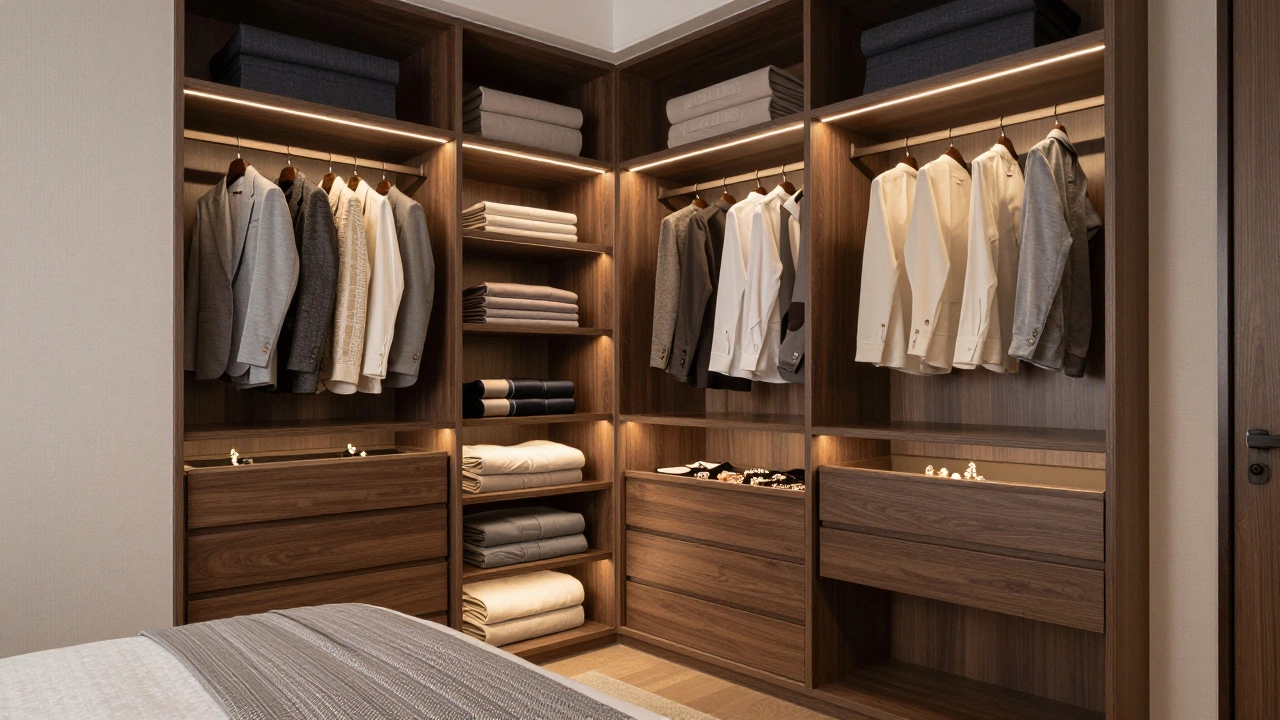
In a large home, the master suite is not just a sleeping room; it’s a personal sanctuary. You need a walk-in closet that functions as a small dressing room. Aim for at least 50-70 square feet of closet space per adult. This should include hanging rods for long garments, shelves for folded items, and drawers for accessories. Don't forget jewelry and watch storage-these small items create massive visual noise if left on counters.
Kitchen and Pantry
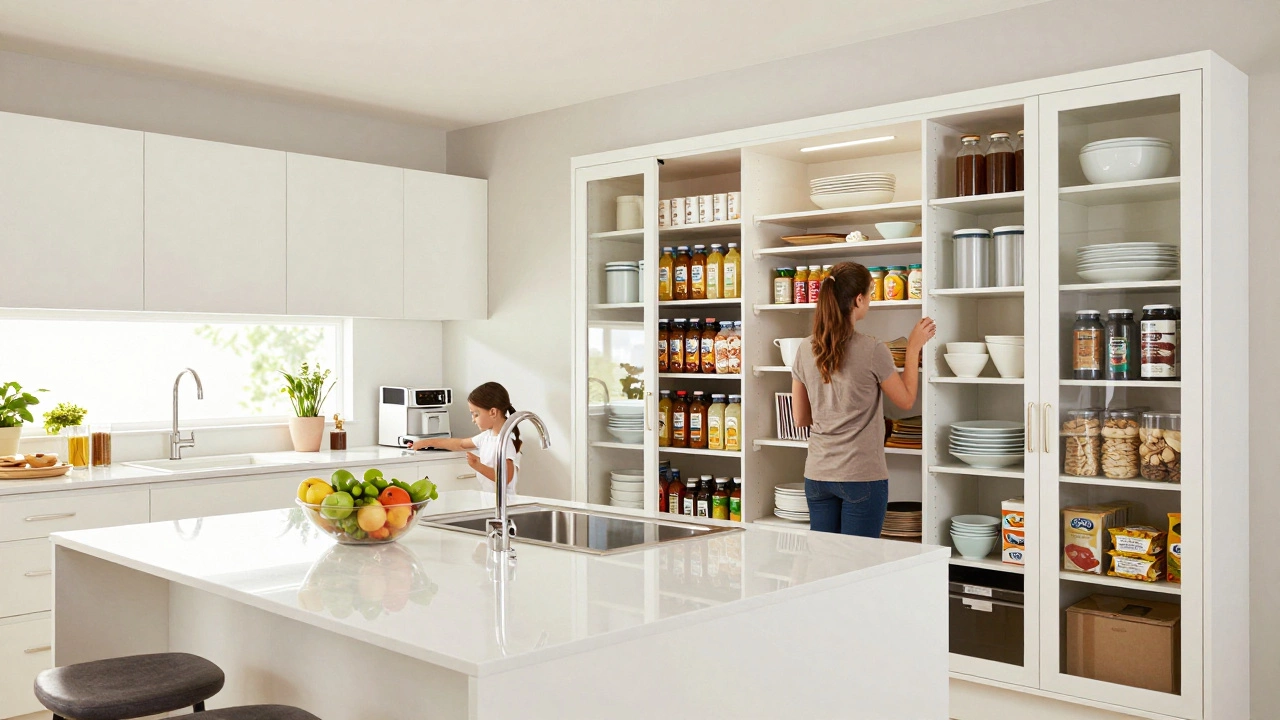
The kitchen is the engine room. For a five-bedroom house, assume you are cooking for six to eight people regularly. A standard kitchen cabinet setup is rarely enough. You need a butler’s pantry or a deep walk-in pantry. This space should hold bulk food items, small appliances (blenders, slow cookers), and serving ware. If you don't have a separate pantry, ensure your kitchen cabinets have pull-out organizers rather than deep, dark corners where food goes to die.
The Mudroom and Entryway
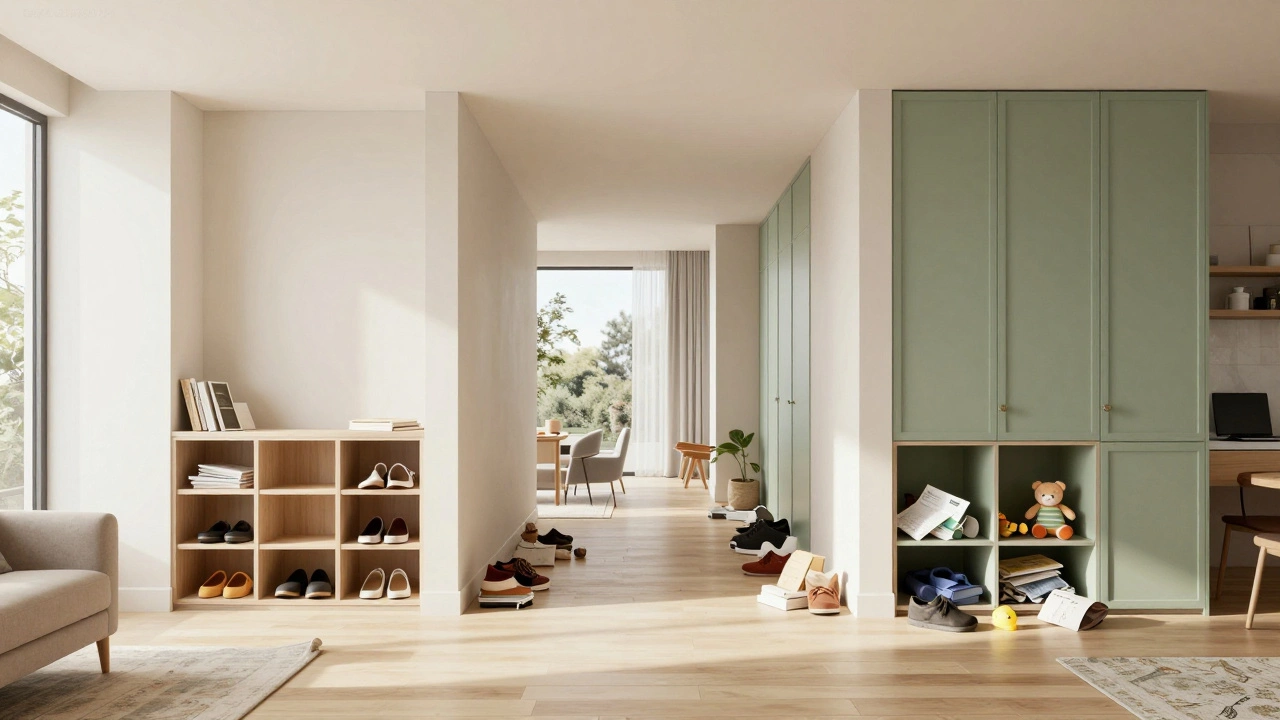
This is the most critical zone for keeping the rest of the house clean. A five-bedroom house likely has multiple entry points. The main entry needs a dedicated mudroom with bench seating, hooks for coats, and cubbies for shoes and bags. If you live in a climate with distinct seasons (like Auckland’s wet winters or cold southern regions), add a section for boots and umbrellas. Without this 'decompression zone,' dirt and clutter track directly into your living areas.
Laundry and Utility
With five bedrooms, you’re doing laundry constantly. A simple stacked washer-dryer unit in a cupboard is insufficient. You need a full-sized laundry room with:
- A folding table (never fold on top of the dryer-it’s too high and unstable).
- Hanging ironing space.
- Cabinets for cleaning supplies (bleach, detergents, tools).
- A hamper system for sorting colors immediately.
Hidden Storage Opportunities You’re Missing
Built-ins are great, but clever design uses dead space. Here are three areas often overlooked in large homes:
- Staircase Storage: If you have stairs, consider adding shallow drawers underneath the steps. These are perfect for shoes, board games, or seasonal decorations.
- Window Seats: In bedrooms or sunrooms, window seats with lift-up lids provide excellent storage for books, blankets, and pillows without taking up floor space.
- Under-Bed Space: Even in a large house, under-bed storage remains useful for off-season clothing. Use rolling bins to make access easy.
Future-Proofing: Planning for Life Changes
A five-bedroom house is often bought with the intention of staying long-term. That means your storage needs will change. Children grow out of clothes and toys. Hobbies change from soccer to photography to woodworking.
To future-proof your home, prioritize flexible storage. Instead of fixed shelves, use adjustable shelving systems in closets and pantries. This allows you to reconfigure spaces as your needs shift. For example, when kids leave for university, their large toy boxes can be converted into wine storage or extra linen space.
Also, consider the garage. It shouldn't just be for cars. Dedicate one wall to tool storage and another to seasonal items like bikes, ladders, and garden furniture. Keep the driveway clear by storing bulky items inside the garage properly.
Common Mistakes to Avoid
Even with the best intentions, homeowners make storage errors. Avoid these pitfalls:
- Too Many Drawers: Drawers are expensive to build and hard to organize internally. Use them only for small items (socks, cutlery). For larger items, use open shelves or hanging rods.
- Ignoring Vertical Space: Go all the way to the ceiling. Top shelves are perfect for items you rarely use, like holiday decor or spare bedding.
- Poor Lighting: Dark closets lead to forgotten items. Install motion-sensor LED lights in every major storage area. If you can’t see it, you won’t use it efficiently.
Decluttering Before You Store
No amount of storage solves the problem of owning too much stuff. Before you install new cabinets, take a weekend to audit your belongings. Ask yourself: "When did I last use this?" If it’s been over a year, donate or sell it. A five-bedroom house can still feel cramped if every corner is filled with unused items.
Start with one category-like books or clothes-and work through it systematically. Once you’ve reduced your inventory, measure what remains. This gives you a realistic baseline for designing your storage solutions.
How many square feet of closet space do I need per person?
Aim for at least 8-10 square feet of linear closet space per adult. For children, 4-6 square feet is sufficient. This ensures everyone has enough room for hanging clothes, shoes, and accessories without overcrowding.
Is a walk-in pantry necessary for a large family?
While not strictly necessary, a walk-in pantry is highly recommended for families of five or more. It keeps the kitchen counters clear, allows for bulk shopping (which saves money), and provides dedicated space for small appliances and serving dishes.
Where should I store seasonal items like Christmas decorations?
Store seasonal items in high, hard-to-reach places like the top shelves of a garage, attic, or basement. Label boxes clearly with contents and dates. Using vacuum-sealed bags for soft items like ornaments can save significant space.
How can I maximize storage in a small bedroom?
Use vertical space with tall wardrobes or bookshelves that reach the ceiling. Install under-bed storage bins for off-season clothing. Consider a bed frame with built-in drawers. Finally, keep surfaces clear by using decorative baskets for miscellaneous items.
What is the best type of storage for shoes?
Shoe racks or cubbies are ideal for everyday shoes, keeping them visible and accessible. For seasonal or formal shoes, use clear plastic boxes stacked on shelves. This protects them from dust while allowing you to see what’s inside without opening each box.