How Big of a Mirror Should I Get? The Ultimate Size Guide for Every Room
Interactive Mirror Size Calculator
Recommended Dimensions
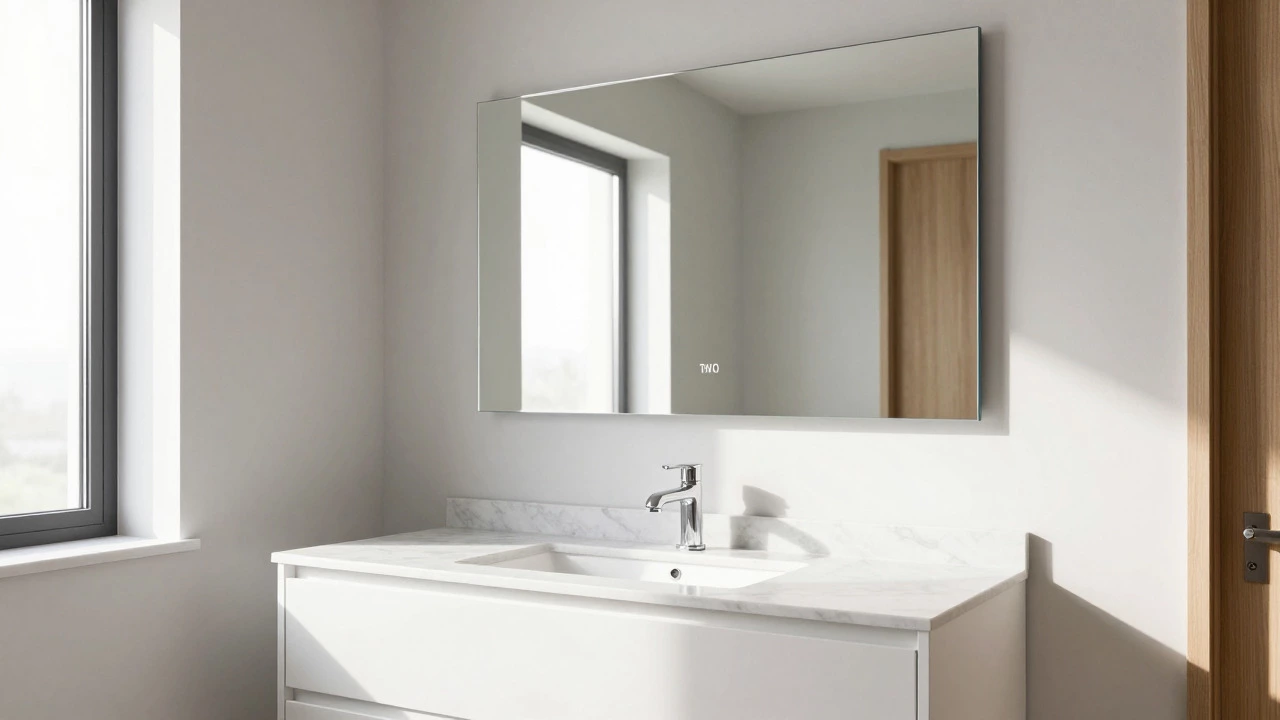
For a single vanity, aim for 2/3 to 3/4 of the cabinet width. This creates a balanced look without overwhelming the sink area.
Picture this: you’ve just bought that stunning, frameless mirror online. It arrives, you hang it up, and suddenly your beautiful wall looks like it’s wearing a postage stamp. Or worse, the mirror is so massive it swallows the room whole, making your cozy living space feel like an industrial warehouse. Getting the size wrong doesn’t just look bad; it messes with your light, your proportions, and your sanity.
You don’t need to be an interior designer to get this right. You just need a tape measure and a few simple rules of thumb. Whether you are looking for a bathroom mirror or a floor-to-ceiling statement piece, the goal is balance. Here is exactly how to figure out the perfect dimensions for every room in your house.
The Golden Rule: Proportion Over Perfection
Before you rush to the hardware store, understand one core concept: mirrors should relate to the object they sit above or the wall they occupy. A common mistake is buying a mirror based solely on its own aesthetic appeal without considering its surroundings. If you have a small console table in your entryway, a huge oval mirror will look top-heavy and awkward. Conversely, a tiny square mirror over a large sofa will look lost.
Aim for the mirror to take up about two-thirds to three-quarters of the width of the furniture piece below it. This creates a visual anchor. If there is no furniture, think about the wall space. The mirror should leave enough "breathing room" around the edges so it doesn't feel cramped, but not so much empty space that it feels insignificant.
Bathroom Mirrors: Function Meets Form
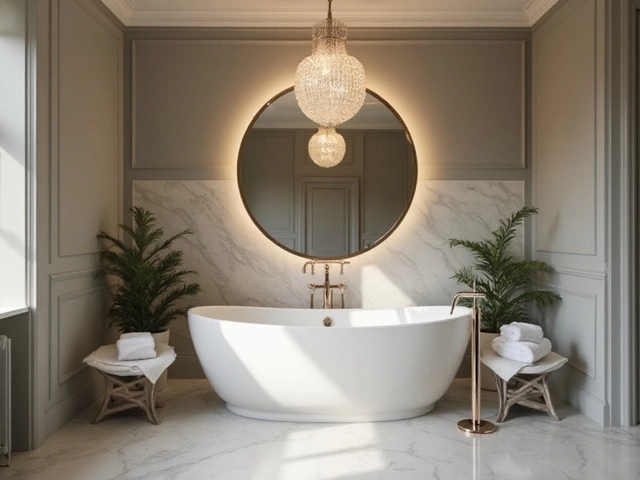
Your bathroom mirror has a job to do. It needs to show your face clearly while you brush your teeth, apply makeup, or shave. Because of this, the size is dictated by your vanity unit (the sink cabinet).
- Single Vanity: Measure the width of your cabinet. If it’s 60cm wide, a mirror between 40cm and 50cm wide works best. If you have a round mirror, aim for a diameter that is roughly half the width of the vanity.
- Double Vanity: You have two choices here. You can go with one large rectangular mirror that spans both sinks, leaving a gap of about 10-15cm between the basins. Alternatively, use two individual mirrors, centered over each sink. These should be slightly narrower than the basin itself to avoid touching when you open taps.
- Height Matters: Don’t forget vertical space. The bottom edge of the mirror should be at least 10-15cm above the countertop to prevent water splashes from hitting the glass. The top edge should end below any upper cabinets if you have them, or align with the eye level of the tallest person in the household for optimal usability.
If you have a small powder room with limited wall space, consider a medicine cabinet mirror. It saves space by combining storage with reflection, effectively doubling the utility of that square footage.
Bedroom Mirrors: Style and Light
In the bedroom, mirrors are less about utility and more about ambiance. They bounce natural light around the room, making dark corners feel airy. The most common placement is above the dresser or chest of drawers.
Stick to the two-thirds rule mentioned earlier. If your dresser is 120cm wide, look for a mirror that is 80cm to 90cm wide. This keeps the composition balanced. If you want a bold look, you can go wider, but ensure the mirror doesn’t touch the sides of the dresser visually-it needs that negative space to frame the furniture.
For smaller bedrooms where wall space is premium, a tall, narrow vertical mirror placed beside the bed can elongate the ceiling line, making the room feel taller. Just ensure it’s securely mounted; nobody wants a heavy glass panel falling during the night.
Living Room and Hallway: Making Spaces Feel Bigger
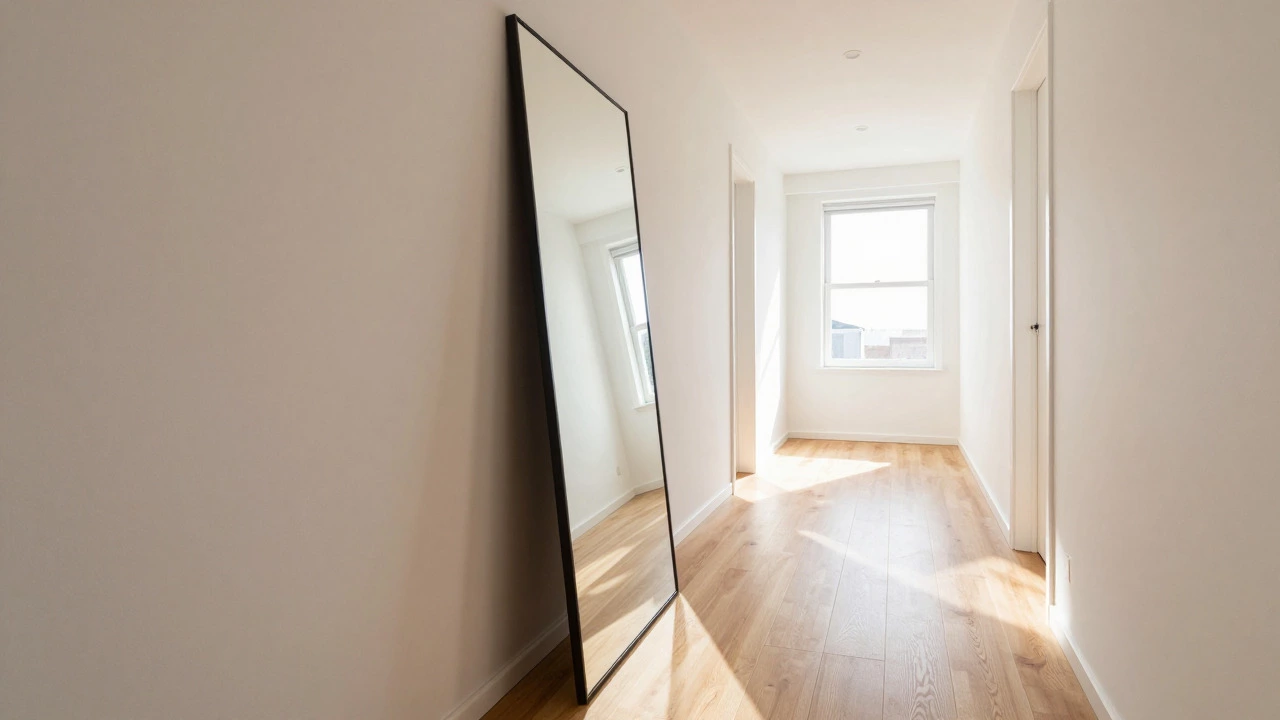
Hallways are often long, narrow, and dark. A well-placed mirror here is a game-changer. Instead of a small decorative piece, opt for a large, floor-standing mirror or a substantial wall-mounted one. Place it opposite a window if possible. This reflects the outdoor light down the corridor, eliminating the need for extra lighting fixtures during the day.
In the living room, mirrors work best when they reflect something interesting. Avoid placing a mirror directly across from another mirror-that creates an infinite tunnel effect that can be disorienting. Instead, position it to catch the view of a bookshelf, a piece of art, or the garden outside. For living rooms, oversized mirrors (150cm+ wide) act as focal points. If your wall is bare and large, a massive mirror can serve as the primary decor element, requiring little else nearby.
Full-Length Mirrors: The Fitting Room Test
Getting a full-length mirror right is tricky because perspective plays a huge role. To see your entire body from head to toe, the mirror does not actually need to be your full height. Optics tell us that a mirror only needs to be half your height to reflect your whole body, provided it is hung at the correct angle and distance. However, for practical purposes and ease of use, you want more than the minimum.
Here is the practical breakdown:
- Height: Aim for a mirror that is at least 140cm to 150cm tall. This ensures that even if you step back slightly, your shoes are visible.
- Width: A width of 45cm to 60cm is standard. Anything narrower might cut off your shoulders if you stand slightly angled.
- Placement: Hang the top of the mirror at eye level or slightly higher. If you mount it too low, you’ll be staring at your forehead instead of your eyes. If you use a leaning floor mirror, ensure the base is weighted or secured to prevent tipping, especially in homes with pets or kids.
If you have a closet door, an adhesive or suction-cup full-length mirror is a great space-saver. But remember, these often distort your shape slightly due to curvature. For accurate fitting, invest in a flat-glass mirror mounted rigidly to the wall.
Measuring Like a Pro: Tools and Techniques
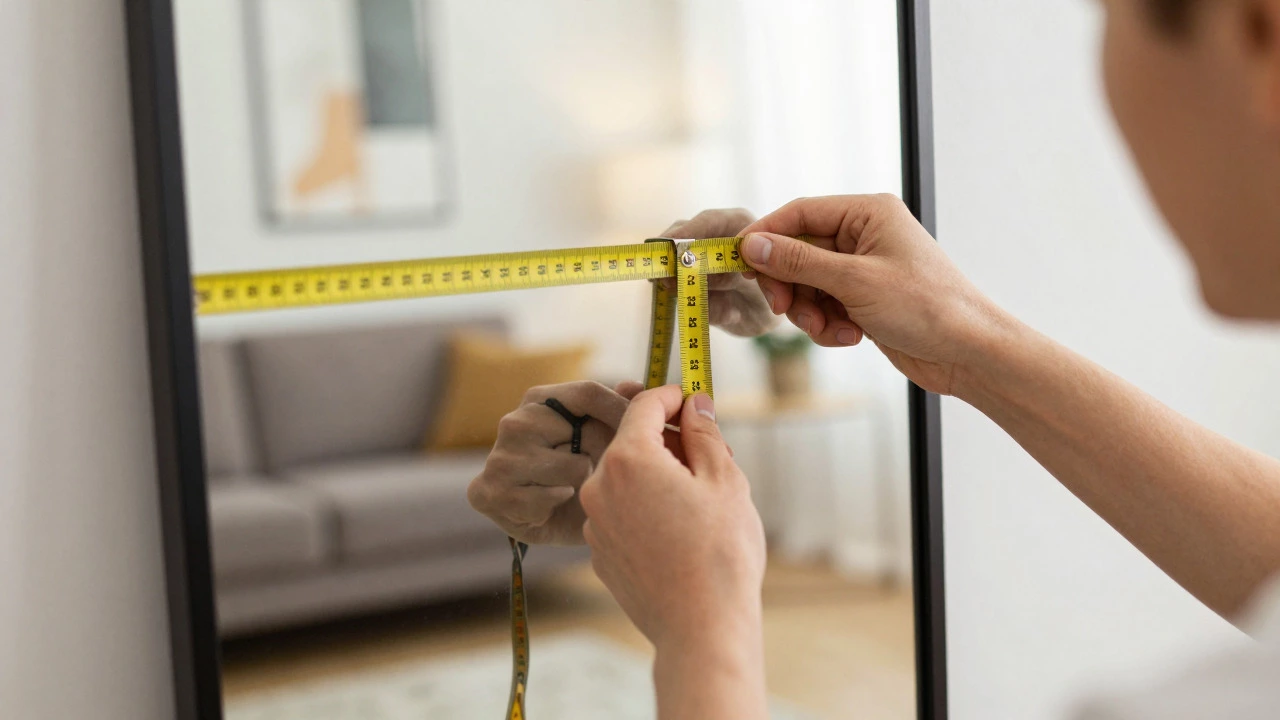
Don’t guess. Grab a measuring tape. Here is a quick checklist before you buy:
- Measure the Wall Space: Determine the maximum width and height available. Remember to account for skirting boards, radiators, or switches that might obstruct the view or mounting.
- Check Sightlines: Stand in the spot where you’ll use the mirror. Look at what you want to see. Is there a messy corner behind you? Move the mirror or rearrange the room. A mirror reflects everything, including clutter.
- Consider the Frame: A thick wooden frame adds bulk. If you choose a framed mirror, subtract the frame width from the glass size when calculating proportions. A 50cm framed mirror might only have 40cm of reflective surface.
Common Mistakes to Avoid
One of the biggest errors people make is ignoring the weight. Large mirrors are heavy. Drywall anchors alone won’t hold a 100kg slab of glass. Always find the studs in your wall or use specialized heavy-duty fixings rated for the specific weight of your mirror. Check the manufacturer’s guidelines for load-bearing capacity.
Another pitfall is lighting. A mirror without proper lighting is useless. Ensure you have sconces on either side of bathroom or vanity mirrors. Top-down lighting casts shadows under your eyes and nose, making it hard to see details. Side lighting provides even illumination, which is why professional makeup artists prefer ring lights or dual-side lamps.
Finally, don’t overlook safety. In households with young children, consider shatter-resistant film applied to the back of the glass. It’s a thin layer that holds shards together if the mirror breaks, preventing dangerous injuries. It’s a small investment for peace of mind.
| Room Type | Typical Width Range | Key Consideration |
|---|---|---|
| Bathroom (Single) | 40cm - 60cm | Match vanity width; splash zone clearance |
| Bathroom (Double) | 100cm - 140cm | Span both sinks or two separate units |
| Bedroom Dresser | 60cm - 100cm | Two-thirds of dresser width |
| Hallway | 60cm - 90cm | Maximize light reflection; vertical emphasis |
| Full Length | 45cm - 60cm wide / 150cm+ tall | Eye-level hanging; secure mounting |
Frequently Asked Questions
How high should a bathroom mirror be?
The bottom of the mirror should be at least 10-15cm above the countertop to avoid water damage. The center of the mirror should ideally be at eye level for the average user, which is typically around 150cm to 160cm from the floor. Adjust this based on the height of the people who use the bathroom most frequently.
Can I put a mirror above my TV?
It is generally not recommended. Mirrors reflect light and glare, which can interfere with the visibility of the TV screen. Additionally, the contrast between the dark screen and the bright reflection can be visually distracting. If you must, place the mirror far enough away or angle it so it does not reflect the screen directly.
What is the best shape for a small room?
Round or oval mirrors are excellent for small rooms because their soft curves soften the angularity of walls and furniture. They also tend to draw the eye upward, creating a sense of height. Rectangular mirrors can work too, but ensure they are proportionate to the wall to avoid making the space feel boxy.
Do mirrors really make a room look bigger?
Yes, but only if placed correctly. A mirror placed opposite a window doubles the perceived depth of the room by reflecting the outdoors. Placing a large mirror on a solid wall with nothing interesting to reflect may not have the same effect. The key is reflecting light and views, not just empty space.
How do I clean a large mirror without streaks?
Use a squeegee for large surfaces. Spray a vinegar-water solution (equal parts) onto the glass, then wipe with a microfiber cloth in an S-pattern. Finish with a dry squeegee from top to bottom. Avoid newspaper unless you want ink stains; modern microfibers are superior for lint-free cleaning.