Curtain Width Guide: How Far to Extend Your Rods Past the Window

Curtain Rod & Fabric Calculator
Your Custom Dimensions
| Component | Calculation | Result |
|---|---|---|
| Extension | 2 x -" | -" |
| Rod Hardware | Window + Ext + Finials | -" |
| Fabric | Rod Width x - | -" |
Enter your window details and click calculate to generate your shopping list.
Quick Measurements Guide
- Minimum extension: 3 to 6 inches (8-15 cm) per side.
- Standard design goal: 6 to 10 inches (15-25 cm) per side.
- Maximum/Dramatic look: 12+ inches (30+ cm) per side.
Why Extension Width Actually Matters
Why not just line the rod up with the window trim? First, there is the issue of light leakage. If your curtains only cover the glass, the sun will peak around the edges, creating a glare on your TV or waking you up at 5 AM. When you push the rod further out, the fabric clears the glass entirely, allowing you to pull the curtains completely back during the day. This maximizes the natural light entering the room.
Beyond the light, there is the psychological effect of scale. A window that is barely framed looks cramped. By extending the rod, you are essentially creating a fake architectural boundary that makes the window appear grander. It's a classic designer trick: if you have a small window in a large room, extending the rod by 12 inches on each side can make that window feel like a focal point rather than a hole in the wall.
Choosing the Right Width for Your Window Type
Not every window requires the same approach. Your choice depends heavily on the window frame and the available wall space. If you have a massive bay window, you might only need a few inches of extension because the scale is already huge. However, if you're dealing with a narrow bedroom window, going wider is almost always better.
Consider the placement of your furniture. If your window is tucked between two walls (a recessed window), you are limited by the physical space. In this case, you should aim for the maximum width possible within that nook. If the window is on a large, flat wall, you have the freedom to go as wide as 15 inches on each side to create a dramatic, luxurious feel.
| Goal | Extension per Side | Visual Effect | Best For |
|---|---|---|---|
| Basic Coverage | 3-5 Inches | Functional, minimal | Small rooms, tight budgets |
| Balanced Look | 6-10 Inches | Professional, airy | Living rooms, bedrooms |
| Dramatic Scale | 12+ Inches | Grand, opulent | Large walls, high ceilings |
How to Calculate Your Total Rod Length
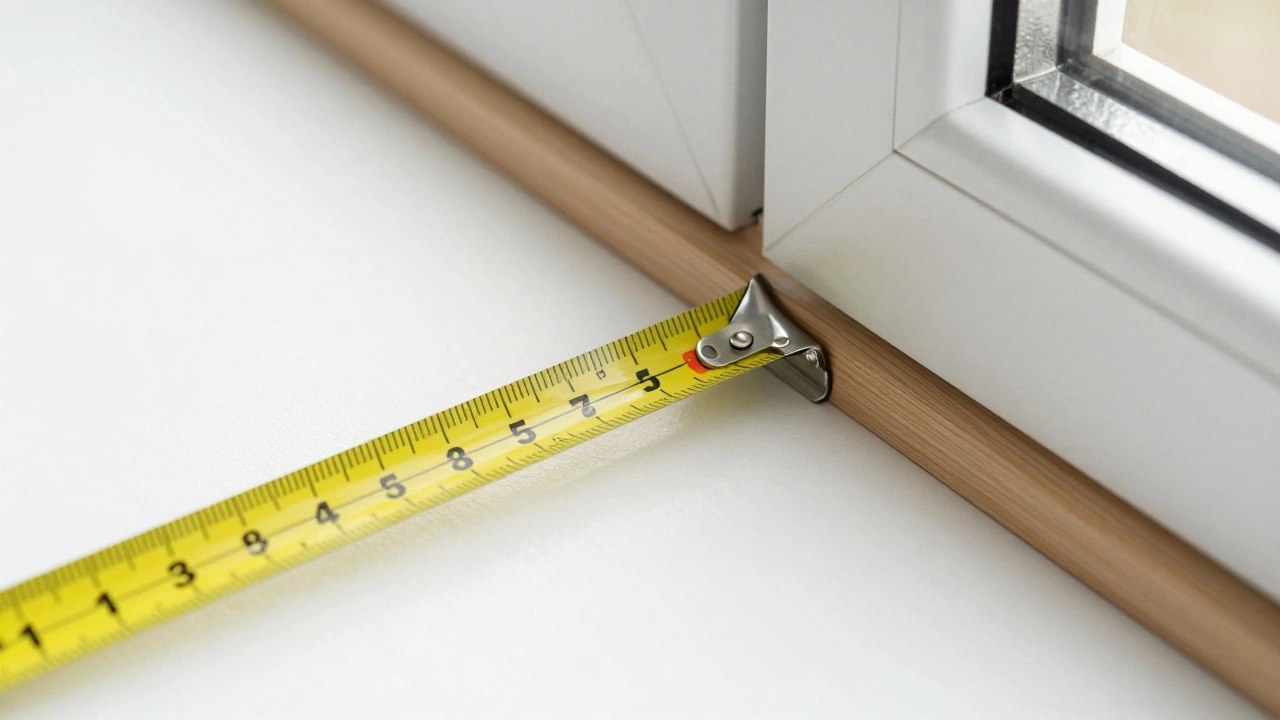
To get your total rod length, you can't just measure the window. You need a simple formula to ensure you buy the right hardware. Start with the width of the window casing (the outer trim). Add your desired extension for both the left and right sides. Finally, add a few extra inches for the curtain rod finials-those decorative end caps that keep the fabric from sliding off.
For example, if your window is 36 inches wide and you want a balanced 8-inch extension on each side, your calculation is 36 + 8 + 8 = 52 inches. If your finials add another 2 inches each, you'll need a rod that can extend to at least 56 inches. If you buy a rod that is too short, your curtains will bunch up and cover the glass even when open, which defeats the purpose of the extension.
Matching Fabric Fullness to Your Extension
If you extend your rod by 10 inches on each side, you've just added 20 inches to the total width of your window treatment. If you keep the same narrow panels you had before, they will look like thin strips of fabric stretched across a wide gap. This is where fabric fullness comes into play.
To avoid the "shower curtain look," your total fabric width should be 2 to 2.5 times the width of the rod. If your rod is now 52 inches wide, you want about 104 to 130 inches of fabric. This ensures that when the curtains are closed, they have beautiful, deep folds and don't look like they're struggling to reach the edges. Using grommet curtains or pinch pleats helps maintain this structure, as they naturally hold their shape better than simple rod-pocket styles.
Common Mistakes to Avoid
One of the biggest blunders is ignoring the wall architecture. Before you drill holes, check for light switches, thermostats, or air vents. There is nothing more frustrating than realizing your ideal 10-inch extension puts the rod directly on top of a light switch. If you hit an obstacle, it's better to go asymmetrical or slightly narrower than to block a functional part of your home.
Another mistake is hanging the rod too low. While we are talking about width, the height works in tandem with the extension. To truly make a room feel larger, hang the rod high-about 4 to 6 inches above the frame or close to the ceiling. When you combine a high hang with a wide extension, you create a "frame" around the window that elevates the entire room's aesthetic.

Pro Tips for Specific Scenarios
If you have blackout curtains, the extension width is even more critical. Because blackout fabric is denser, it tends to trap light more effectively, but it also creates a more obvious gap if the rod is too narrow. I recommend going at least 8 inches past the frame. This allows the fabric to "wrap" around the edge of the window, effectively sealing the room from outside light.
For those with very narrow walls, try the "wall-to-wall" approach. Instead of worrying about a specific inch measurement, run the rod from one wall to the other. This creates a seamless look that makes a small room feel like a high-end hotel suite. It removes the need for calculations and guarantees the maximum possible light control.
Will extending the rod make my window look too big?
Actually, it does the opposite. Extending the rod makes the window feel more proportional to the wall. Unless you have a tiny window on a massive wall and go ridiculously wide (like 3 feet per side), a standard 6-10 inch extension usually looks natural and intentional.
Do I need wider panels if I extend my rod?
Yes. If you increase the rod width but keep narrow panels, the curtains will look skimpy when closed and won't provide full coverage. Aim for a fabric width that is roughly 2x the total width of the rod to maintain those professional-looking folds.
What if I have a window right against a corner?
In this case, go as far as the wall allows. If you only have 2 inches of space on one side, it's okay if the rod is asymmetrical. Just make sure the other side is extended as much as possible to keep the look balanced.
How do I stop light from leaking through the top?
Extension width handles the sides, but for the top, you need to hang the rod higher. Placing the rod 4-6 inches above the frame allows the fabric to overlap the wall, blocking the light that usually spills over the top of the window casing.
Can I use a tension rod for this?
Tension rods only work inside the window frame. Since our goal here is to extend past the frame, you'll need a wall-mounted rod with brackets to support the extra width.
Next Steps for Your Project
If you're ready to upgrade your look, start by measuring your window casing and identifying any wall obstacles. If you find that your current panels are too narrow for a wider rod, you might consider adding a second set of panels to the same rod to increase the fullness. For those in colder climates, combining these wide extensions with a thermal liner can help keep heat from escaping through those gaps in the winter.