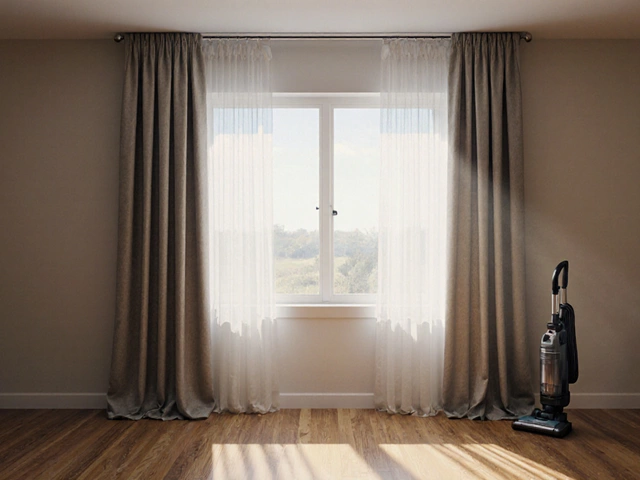
Can Curtains Hang Above Baseboards? The Right Way to Mount Them
Curtain Height Calculator & Visualizer
Room Dimensions
Configuration
Calculated Placement
Picture this: you’ve just hung your beautiful new drapes. They look great from the front. But then you step back and notice something awkward. The bottom of the fabric is hovering right over the trim at the floor. It looks like a mistake. Or worse, it looks cheap. You might be asking yourself, "Can curtains hang above baseboards?" The short answer is no. Not if you want that polished, high-end look.
Hanging curtains directly above baseboards, which are the wooden or composite moldings protecting your walls near the floor, creates visual clutter. It breaks the vertical line of the room. Instead, your goal should be to create a seamless flow from the ceiling down to the floor. Let’s break down exactly where to place your rods and how to avoid common installation traps.
Why the Gap Matters More Than You Think
Interior design isn’t just about aesthetics; it’s about perception. When you hang curtains too low, specifically so they rest on or hover just above the baseboard, you shrink the room. Your eyes follow the horizontal line of the baseboard up to the curtain hem, stopping there. This cuts off the height of your windows.
Think of your wall as a canvas. A continuous vertical line draws the eye upward, making ceilings feel higher and rooms feel more spacious. If your curtains stop at the baseboard, you’re essentially putting a belt around your walls. It’s a subtle error, but one that makes a space feel cramped and unfinished. Professional designers almost always aim for a "floor kiss" or a slight "puddle" effect, completely ignoring the baseboard in the final visual hierarchy.
The Golden Rule: Measure From the Floor Up
Most people make the mistake of measuring from the top of the window frame down. Don’t do this. Start with the floor. Here is the simple formula for getting the length right:
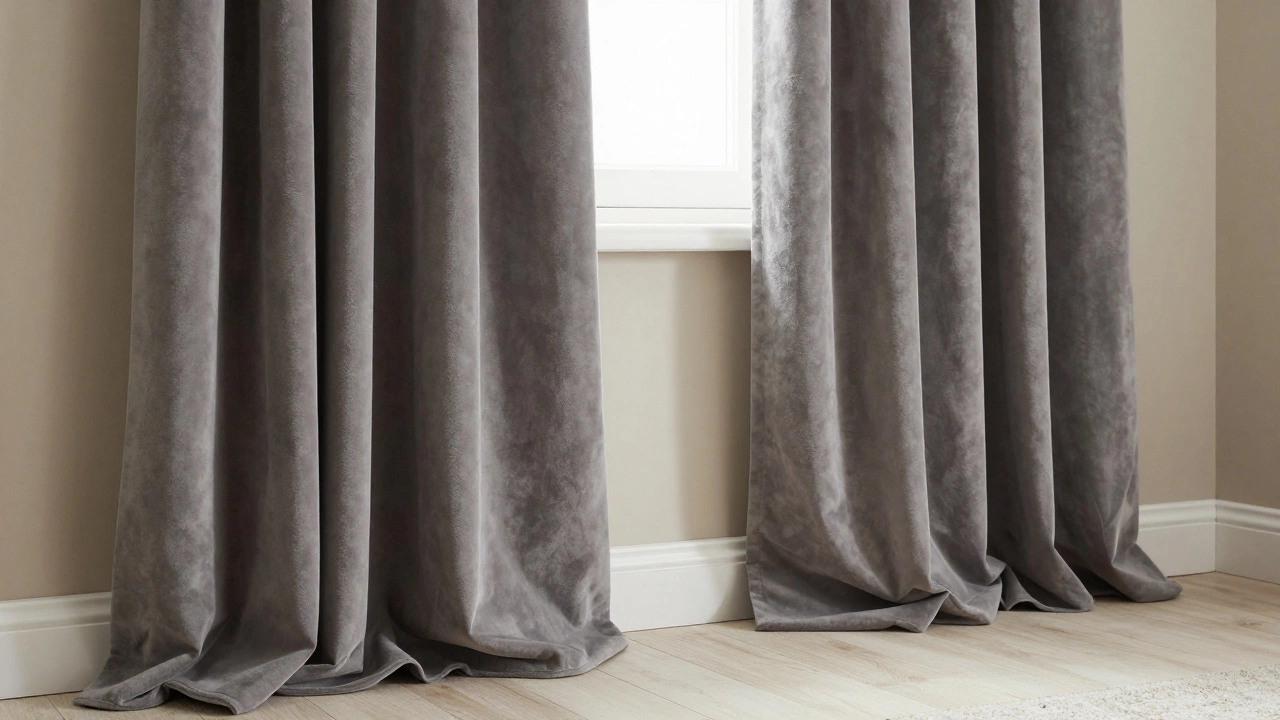
- Determine the desired hemline: Decide if you want the curtains to touch the floor (cleanest look), float half an inch above (practical for cleaning), or puddle slightly (luxurious look).
- Add the stack-back allowance: When you open the curtains, they bunch up against the side of the window. This "stack-back" adds width to the closed position. For standard panels, add about 10-15 inches to your measurement depending on the fabric thickness.
- Calculate the rod height: Add the length of the curtain panel (including the header casing) to the distance from the floor to where you want the hem. This tells you exactly where the bottom of the rod needs to sit.
For example, if you have 96-inch long curtains and you want them to touch the floor, your rod needs to be mounted 96 inches from the floor. If your baseboard is 4 inches high, the curtains will clear it by a comfortable margin. The key is ensuring the fabric never touches the wood trim.
Where Should the Rod Actually Go?
Now that we know the bottom placement, let’s talk about the top. Where does the rod go relative to the window frame and the ceiling?
To maximize height, mount the rod as close to the ceiling as possible. A good rule of thumb is to place the rod 4 to 6 inches above the window frame. If your ceiling is high (9 feet or more), you can go even higher, perhaps 8 to 10 inches above the frame. This extra space between the rod and the window frame creates an illusion of taller windows.
However, there is a limit. Never mount the rod so high that the curtains look disconnected from the window. There should be a visual relationship between the two. Also, consider the hardware. If you’re using decorative finials, ensure they don’t hit the ceiling or look squished. Standard curtain rods usually come in lengths of 48, 63, and 84 inches, but many are adjustable. Make sure your chosen rod extends at least 3 to 6 inches beyond the window frame on each side. This allows light to enter when the curtains are closed and prevents the fabric from blocking the glass entirely.
Handling Different Curtain Styles
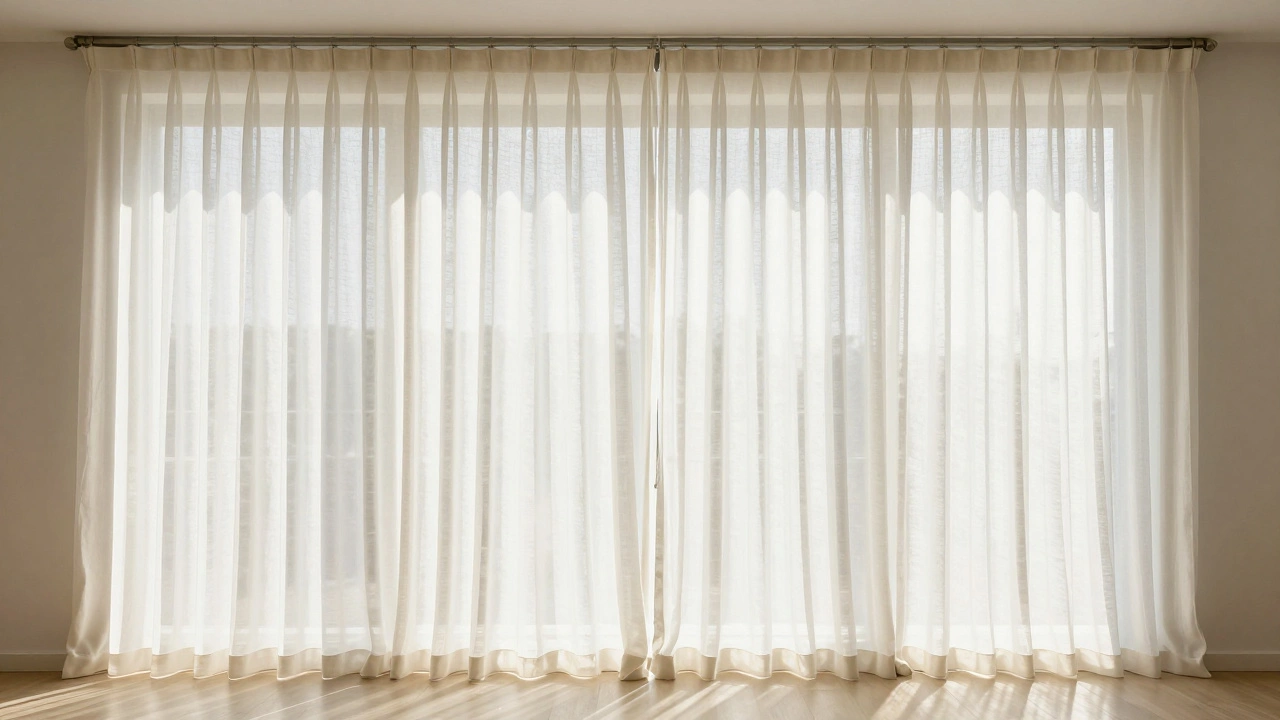
Not all curtains behave the same way. The weight and drape of the fabric affect how they interact with the floor and baseboards.
| Style | Best Hem Position | Baseboard Interaction |
|---|---|---|
| Floating | 1/2 inch above floor | Cleans easily, avoids dust accumulation on baseboard |
| Floor Kiss | Touches floor lightly | Cleanest modern look, requires precise measuring |
| Puddled | 2-4 inches on floor | Luxurious, but can drag dirt onto baseboard over time |
| French Hem | Variable (usually floor) | Heavy bottom edge helps curtain hang straight away from baseboard |
If you choose a "puddled" look, be aware that the excess fabric will eventually collect dust and debris. This can rub against your baseboards, potentially scratching the finish or leaving dark marks. In high-traffic areas, a "floating" or "floor kiss" style is much more practical. It keeps the fabric clean and protects your trim.
Common Installation Mistakes to Avoid
I see these errors constantly in DIY projects. Avoiding them will save you time and frustration.
- Ignoring the stack-back: As mentioned, curtains take up space when open. If you measure only for the closed position, your curtains might block the window sill or radiators when drawn. Always account for the full width of the gathered fabric.
- Mounting on drywall alone: Curtains, especially heavy velvet or blackout fabrics, weigh a lot. Drywall anchors often fail under this stress. Always locate studs or use toggle bolts for secure mounting. If you must mount between studs, use heavy-duty molly bolts designed for drywall.
- Using the wrong bracket type: Some brackets are designed for inside mounts, others for outside mounts. Outside mounts (where the rod covers the window frame) generally work better for hiding baseboard issues because they create a wider, taller appearance. Inside mounts can sometimes make the window look smaller if not measured perfectly.
- Forgetting about radiators: If you have a radiator below the window, you need enough clearance for heat to circulate. Hanging curtains too low can block the heat, making your room colder and increasing energy bills. Aim for at least 2 inches of clearance between the curtain hem and the radiator top.
What If Your Windows Are Short?
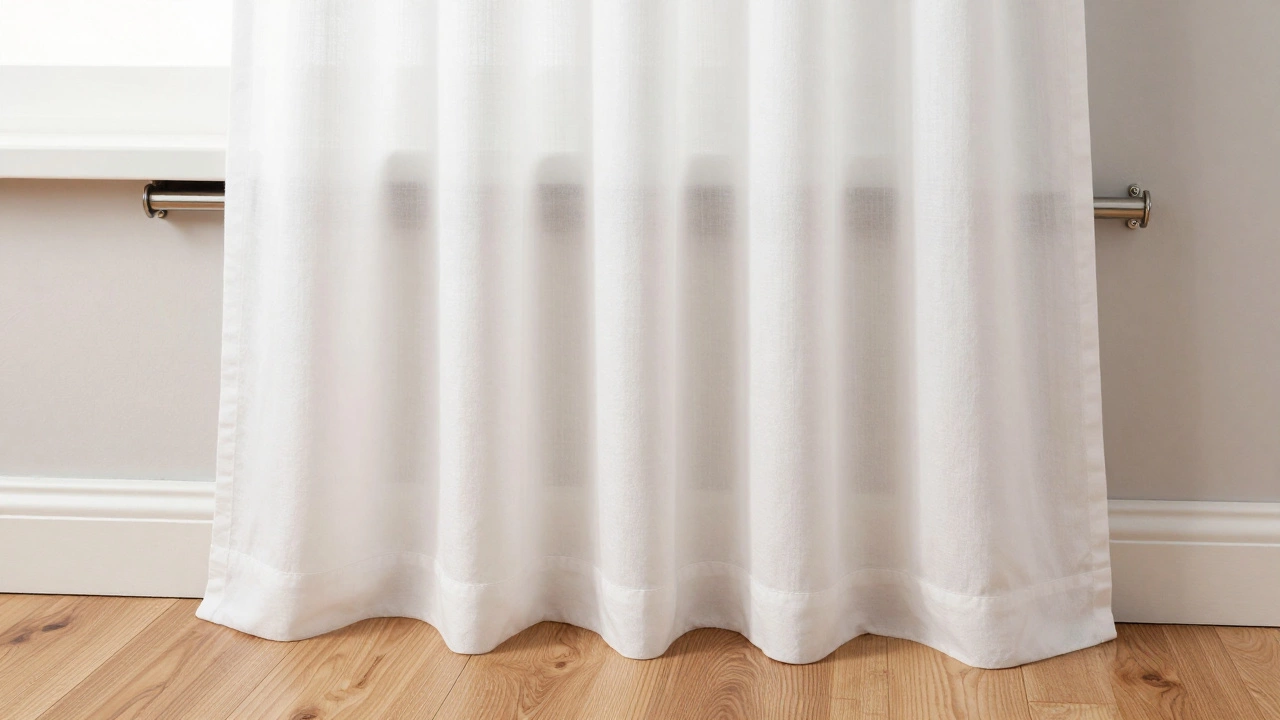
Some older homes have windows that end very close to the floor, leaving little room between the sill and the baseboard. In these cases, you might feel forced to hang the curtains lower. Resist this urge. Even with short windows, you should still mount the rod high and let the curtains fall past the window frame. Yes, this means the curtains will cover part of the wall below the window. This is actually a desirable effect. It elongates the wall and hides any awkward proportions. Just ensure the hem clears the baseboard by at least half an inch to prevent tripping hazards and keep the fabric clean.
Final Thoughts on Execution
Getting the height right is half the battle. The other half is proper ironing. Wrinkled curtains look messy regardless of where they hang. Steam or iron your panels before hanging them. Use clips or hooks evenly spaced to ensure a smooth drape. Check the level of your rod brackets with a spirit level. A crooked rod is immediately noticeable and detracts from the entire effort.
Remember, the goal is elegance and function. By keeping your curtains clear of the baseboards, you protect your home’s finishes and create a visually larger, more inviting space. It’s a small detail that makes a big difference.
How far above the baseboard should curtains hang?
Ideally, curtains should not hang "above" the baseboard in a way that highlights it. Instead, they should either touch the floor (floor kiss), float 1/2 inch above the floor, or puddle slightly. The critical factor is that the fabric clears the baseboard trim entirely to avoid dragging dirt and to maintain a clean vertical line. Never let the curtain hem rest on the baseboard itself.
Should curtains cover the baseboard?
No, curtains should not cover the baseboard. Covering the baseboard can trap moisture, leading to mold or warping of the wood. It also makes vacuuming difficult and causes the fabric to become dirty quickly. Aim for a small gap between the hem and the floor/baseboard area.
What is the best height to mount a curtain rod?
The best height depends on your ceiling height and window size. Generally, mount the rod 4 to 6 inches above the window frame. For a more dramatic effect, mount it closer to the ceiling, leaving 2 to 3 inches of space between the rod and the ceiling. This maximizes the perceived height of the room.
Do I need to remove baseboards to install curtains?
In most cases, no. You mount the curtain rod brackets into the wall above the window frame. The baseboards remain untouched. However, if you are doing a major renovation or installing custom blinds that require specific mounting channels near the floor, you might need to adjust trim work, but this is rare for standard curtain installations.
How do I stop curtains from touching the floor?
To achieve a "floating" look, measure from the floor up 1/2 inch, then subtract the length of your curtain panel (including the header) to find the rod height. Alternatively, you can hem the curtains shorter after purchasing them. Many tailors offer this service, or you can do it yourself with an iron-on hem tape for a quick fix.