
Can Christians Use Prayer Rugs? A Simple Guide for Believers
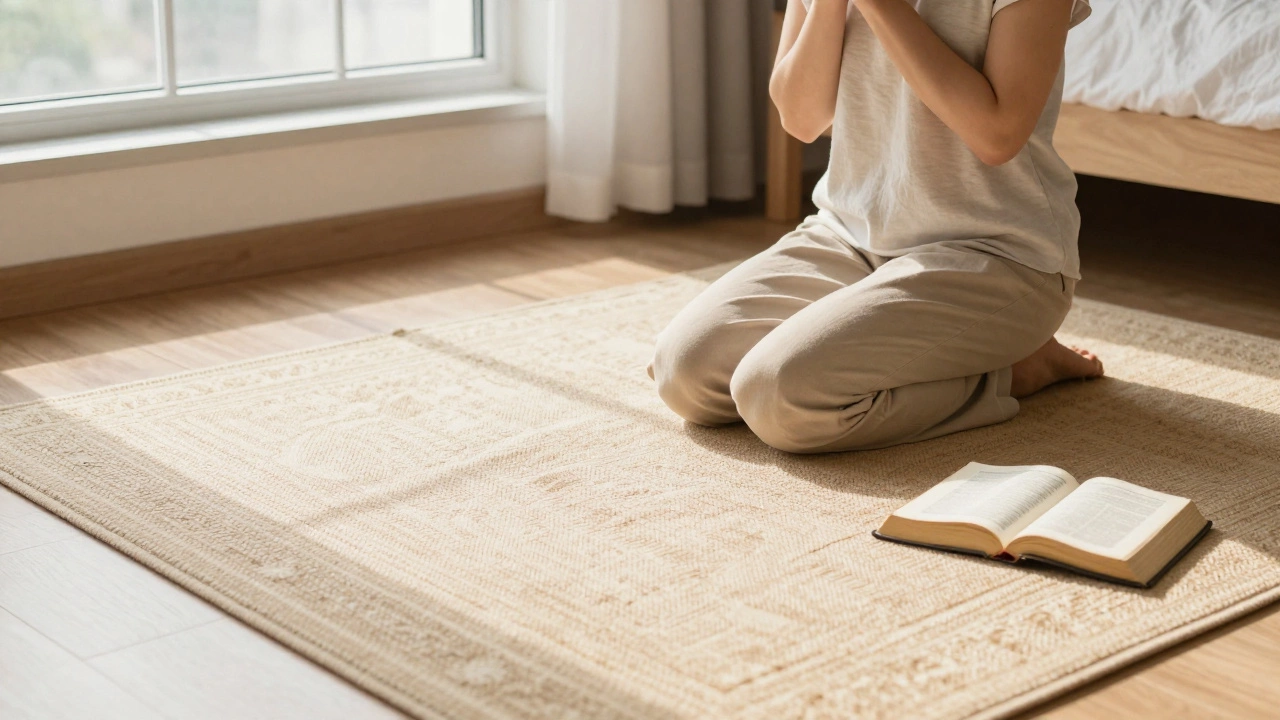
Many Christians wonder if it’s okay to use a prayer rug. After all, these soft, often beautifully patterned mats are commonly linked to Islamic worship. But does that mean they’re off-limits for people of other faiths? The short answer: yes, Christians can use prayer rugs - and many already do.
What Is a Prayer Rug?
A prayer rug is a small, portable mat designed to create a clean, dedicated space for prayer. They’re typically made of woven fabric, sometimes with a niche or arch design at one end to help orient the worshipper toward a sacred direction - like Mecca in Islam. But the shape, color, and pattern don’t change the core function: to separate the sacred from the everyday.
Prayer rugs aren’t magical objects. They don’t hold spiritual power. They’re tools - like a Bible, a rosary, or a candle. Their value comes from how they help you focus, feel grounded, and honor the act of prayer.
Why Christians Might Choose to Use One
There’s no biblical command against using a prayer rug. In fact, many Christians find them helpful for deepening their prayer life. Here’s why:
- Physical focus: Kneeling on a rug signals to your body and mind that it’s time to pray. It’s like sitting in your favorite chair to read - the space becomes associated with stillness.
- Comfort: Hard floors aren’t ideal for long prayers. A rug cushions your knees and helps you stay in prayer longer without distraction.
- Ritual and rhythm: Many Christians follow daily prayer schedules. A rug becomes part of that rhythm - a quiet marker that says, “This is holy time.”
- Cultural connection: Some Christians use prayer rugs after traveling, studying other faiths, or living in Muslim-majority countries. They see it as a sign of respect, not imitation.
One woman in Auckland, Sarah, started using a simple wool rug after her husband’s death. “I’d kneel by the window each morning,” she says. “The rug made it feel like I was meeting God in a real place, not just thinking about prayer.”
Does Using a Prayer Rug Mean You’re Imitating Islam?
This is the biggest concern. Many Christians worry that using a prayer rug means they’re adopting Islamic practices - and that might feel like crossing a line.
But here’s the truth: using the same tool doesn’t mean sharing the same belief.
Think of it this way: Christians use candles in worship. So do Orthodox Jews. So do Buddhists. That doesn’t mean they all believe the same thing about light. It means light helps people connect with the divine.
Similarly, kneeling on a mat isn’t unique to Islam. Ancient Hebrews prayed on the ground. Early Christians knelt on stone floors in catacombs. Monks in medieval Europe used padded kneelers. Even today, many Catholic churches have cushioned kneelers in pews - essentially, prayer rugs built into the architecture.
Using a prayer rug doesn’t mean you’re praying toward Mecca. It doesn’t mean you’re reciting the Quran. It just means you’ve chosen a practical way to make your prayers more intentional.
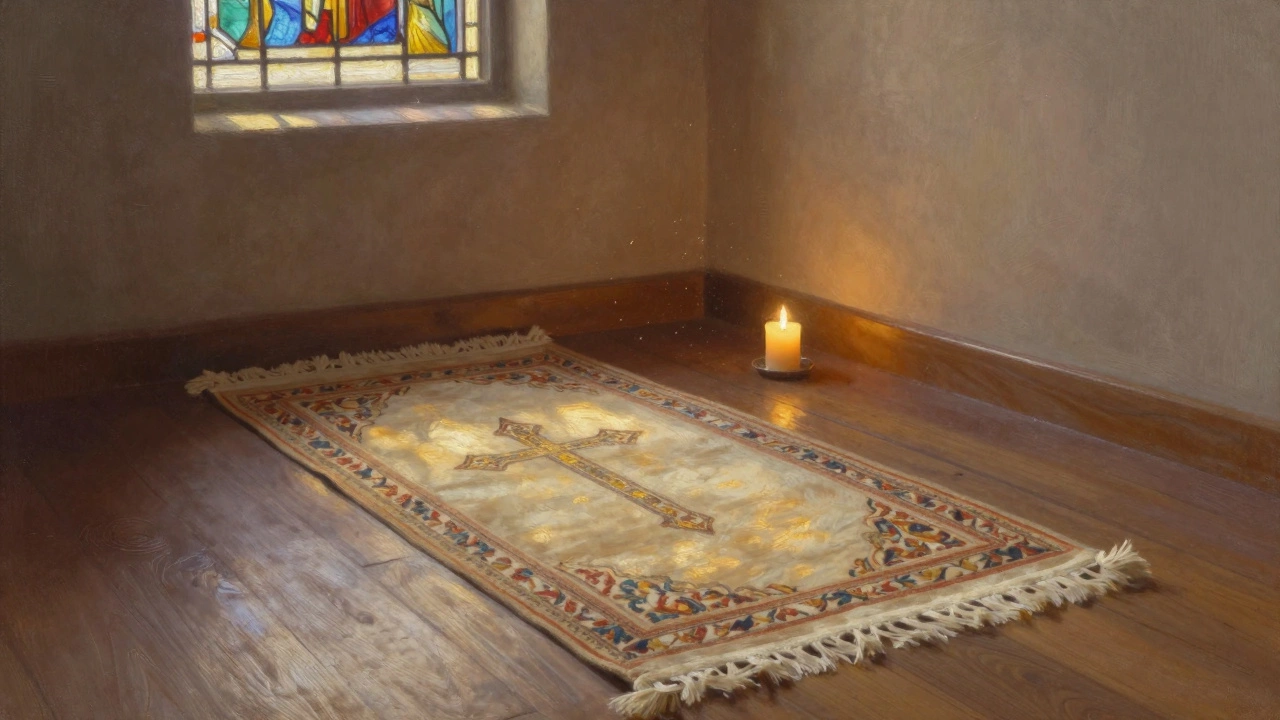
What Should a Christian Prayer Rug Look Like?
There’s no rulebook. But if you’re concerned about confusion or unintended symbolism, here are a few simple guidelines:
- Avoid Islamic symbols: Skip rugs with Arabic calligraphy, crescent moons, or mosque designs unless you’re using them for educational or artistic reasons.
- Choose neutral or Christian symbols: Look for rugs with crosses, doves, vines, or simple geometric patterns. Some manufacturers make Christian-themed prayer mats with Bible verses woven in.
- Go plain: A solid-color rug - beige, navy, forest green - works perfectly. No symbols needed.
- Make your own: Sew a small piece of fabric with a cross embroidered on one end. That’s your prayer space.
One church in Wellington started offering handmade prayer rugs to congregants. Each one had a different Bible verse stitched into the corner - “Be still and know that I am God,” “Come to me, all who are weary,” or “Pray without ceasing.” No one confused them with Islamic rugs. They became cherished tools of devotion.
What Do Christian Leaders Say?
Most mainstream Christian denominations - Catholic, Protestant, Orthodox - don’t have official rules about prayer rugs. But many pastors and theologians support their use.
Dr. Evelyn Tan, a theologian at the University of Auckland, says: “The Bible never forbids using physical objects to aid prayer. What matters is the heart. If a rug helps someone draw closer to God, that’s a gift, not a sin.”
The Vatican has no official stance on prayer rugs, but Pope Francis has spoken warmly about people using “simple, humble ways” to pray - including kneeling on the ground. In 2020, he knelt on a plain cloth during a private prayer in St. Peter’s Square, calling it “a gesture of surrender.”
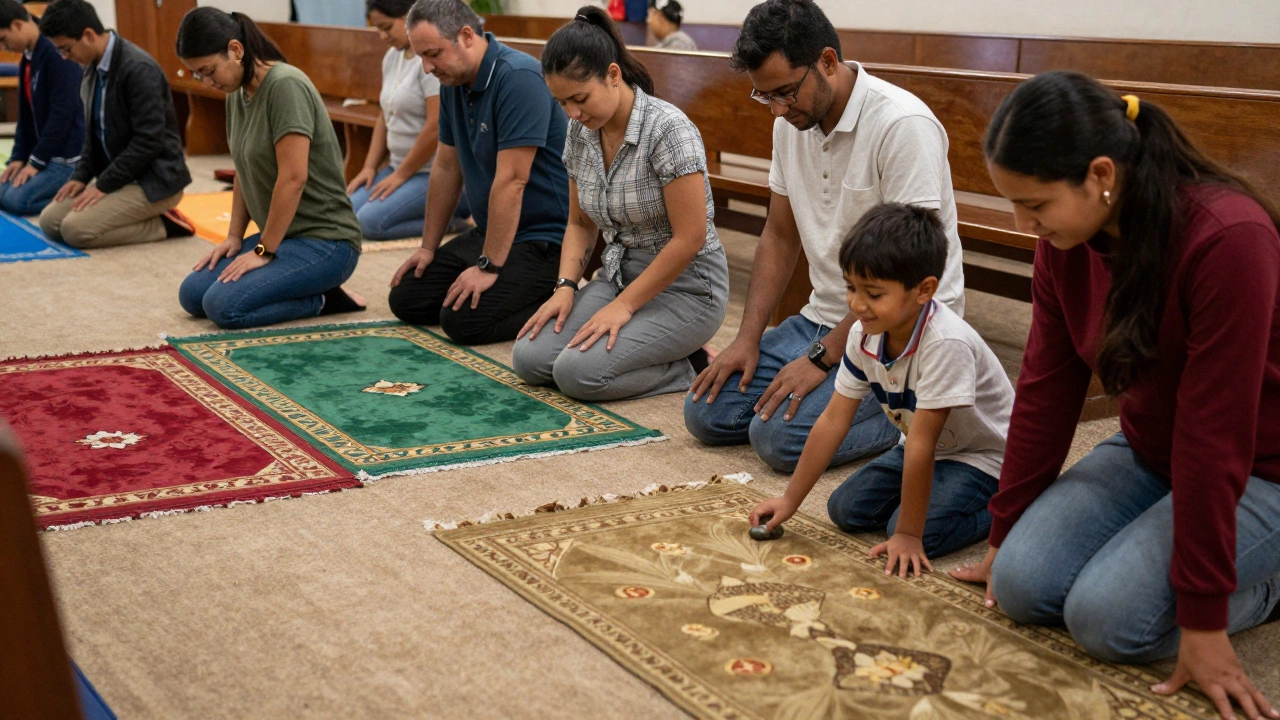
Practical Tips for Using a Prayer Rug as a Christian
If you’re thinking of trying one, here’s how to start:
- Choose a quiet spot: A corner of your bedroom, beside your favorite chair, or even outside under a tree.
- Use it consistently: Pray on it every morning, or before bed. Consistency builds habit.
- Keep it clean: Wash or vacuum it regularly. It’s a sacred space - treat it with care.
- Don’t overthink the design: A plain rug is better than a confusing one. Your prayer matters more than the pattern.
- Be ready to explain it: If someone asks why you’re using it, you can say, “It helps me focus on God. It’s just a mat.”
Common Misconceptions
Let’s clear up a few myths:
- Myth: “Prayer rugs are only for Muslims.”
Truth: Many cultures use floor coverings for prayer - from Japanese tatami mats in Shinto rituals to Tibetan rugs in Buddhist meditation. - Myth: “Using one means you’re turning away from Christianity.”
Truth: Your faith isn’t defined by what you kneel on. It’s defined by your relationship with Christ. - Myth: “It’s a slippery slope to syncretism.”
Truth: You’re not blending religions. You’re using a tool. Just like you might use a journal for prayer - that doesn’t make you a Buddhist.
Final Thoughts
There’s no verse in the Bible that says, “Thou shalt not kneel on a rug.” In fact, the Bible celebrates humble, physical expressions of worship - bowing, kneeling, tearing clothes, lying face down. A prayer rug is just the modern version of that.
It’s not about copying another religion. It’s about creating space for your own.
If kneeling on a soft mat helps you feel closer to God - go ahead. Use it. Clean it. Pray on it. Let it be a quiet reminder that worship isn’t about perfect posture or fancy rituals. It’s about showing up - humbly, honestly, and with an open heart.
Can Christians use prayer rugs without offending Muslims?
Most Muslims understand that prayer rugs are tools, not religious symbols exclusive to Islam. As long as the rug doesn’t include Islamic calligraphy or imagery, and the user isn’t pretending to be Muslim, it’s generally seen as respectful. Many Muslims appreciate when people of other faiths use similar practices to deepen their own spirituality.
Do I need to pray facing a certain direction on a prayer rug?
No. In Christianity, God is everywhere - you don’t need to face east, west, or any specific direction. You can pray facing your window, your Bible, or even your bed. The rug’s purpose is to mark your space, not to orient you.
Where can I buy a Christian prayer rug?
Some Christian bookstores and online retailers sell prayer rugs with crosses, doves, or Bible verses. Etsy has many handmade options. You can also buy plain wool or cotton rugs from home goods stores and add your own embroidery. A simple, solid-color rug works perfectly - no symbols needed.
Is it wrong to use a rug that looks like a Muslim prayer rug?
It’s not inherently wrong, but it can cause confusion. If the rug has Arabic script or a mosque design, people may assume you’re Muslim. To avoid misunderstanding, choose neutral designs or make your own with Christian symbols. Intent matters more than appearance - but clarity helps.
Can children use prayer rugs?
Absolutely. Children benefit from physical rituals just as much as adults. A small rug can help them understand that prayer is a special time. Let them pick a color or help decorate it. It becomes a meaningful part of their spiritual growth.