Why German Homes Don't Have Built-in Closets: Storage Secrets Revealed
German Wardrobe Space Planner
Will it Fit? Space Impact Estimator
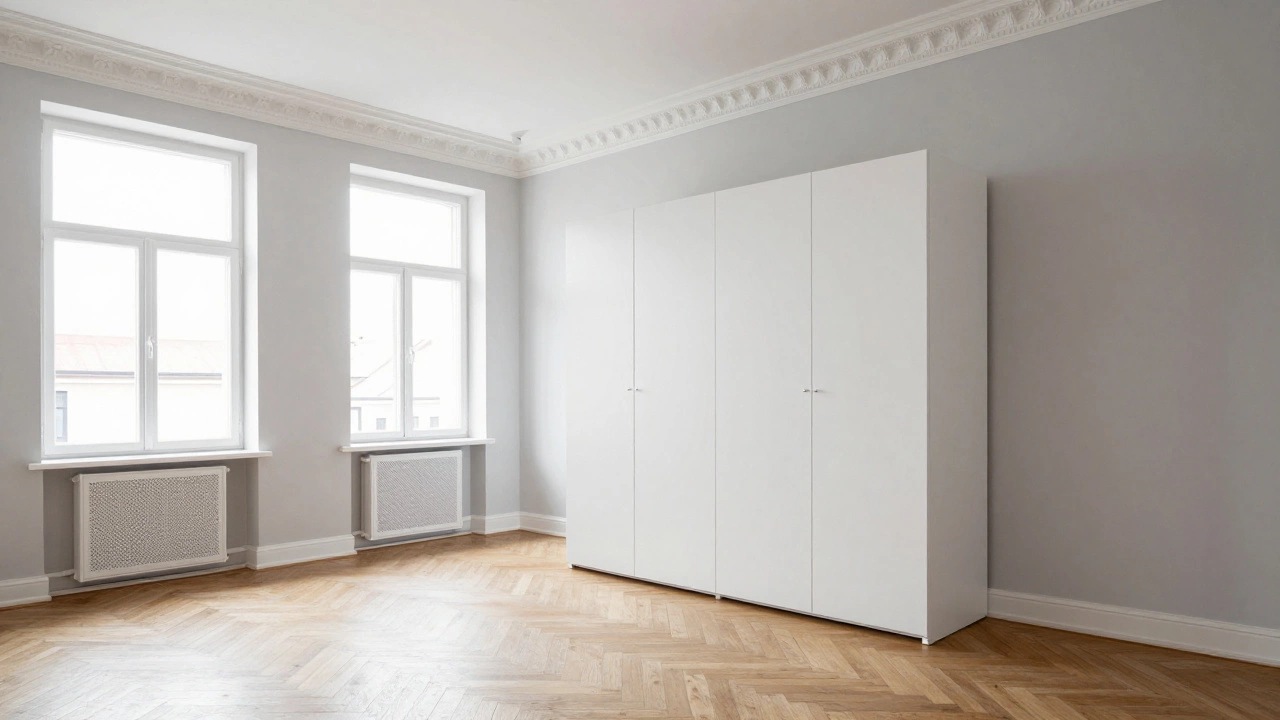
In Germany, closets aren't built-in. Use this tool to see how much of your "spacious" room will actually be taken up by a freestanding wardrobe.
Space Analysis
Enter values to see the impact.
Quick Takeaways: The German Storage Logic
- Freestanding Furniture: Most Germans use separate wardrobes (Schränke) instead of built-in closets.
- Rental Flexibility: Built-ins are permanent; freestanding furniture travels with the tenant.
- Architectural History: Older European buildings weren't designed with integrated wall storage.
- Modularity: A preference for customizable systems that can grow with the family.
The Cult of the Schrank
In Germany, the center of the bedroom isn't a walk-in closet, but the Schrank is a freestanding wardrobe used for storing clothes and linens, often featuring a combination of hanging rails and shelves. Unlike a built-in closet, which is part of the wall, a Schrank is a piece of furniture. You buy it, you assemble it, and when you move to a new city, you take it with you.
This shift in perspective changes everything. In a US home, the closet is a room feature. In a German home, the wardrobe is a possession. This means you'll often see massive, wall-to-wall units that look like built-ins but are actually modular pieces pushed against the wall. If you've ever spent a weekend wrestling with an IKEA Pax system, you've essentially experienced the modern German approach to storage.
Rental Laws and the 'Clean Slate' Philosophy
To understand this, you have to understand the German rental market. A huge portion of the population rents their homes. Under German law, tenants are often expected to return a flat in its original state. While built-in closets would be convenient, they are expensive for landlords to install and maintain across thousands of units.
By leaving the walls bare, landlords provide a neutral canvas. One tenant might want a massive wardrobe for a huge winter coat collection, while another might prefer a minimalist setup with a simple clothing rack. By not providing closets, the landlord avoids the risk of providing storage that is too small or poorly positioned for the tenant's specific needs. It's a system built on the idea that the user should decide how to optimize their square footage.
Architectural Evolution and Space Management
Historically, European city apartments were designed around a central heating point or specific room layouts that didn't leave much room for deep wall cavities. Built-in closets require a significant amount of wall depth-usually around 60 centimeters. In older Altbau (old building) apartments with high ceilings and thick stone walls, carving out a closet space would mean sacrificing a lot of precious living area.
Instead of sacrificing floor space for a wall of closets, Germans utilized the vertical space. You'll often find wardrobes that reach all the way to the ceiling, with top shelves used for storing seasonal items like heavy duvets or summer gear. This verticality is a survival tactic in dense cities where every square meter of living space is expensive.
| Feature | US/UK Style | German Style |
|---|---|---|
| Primary Storage | Built-in Closets / Walk-ins | Freestanding Wardrobes (Schrank) |
| Ownership | Part of the Real Estate | Personal Property |
| Mobility | Permanent | Portable / Modular |
| Customization | Contractor-led (Renovation) | User-led (Furniture Purchase) |
The Modular Revolution
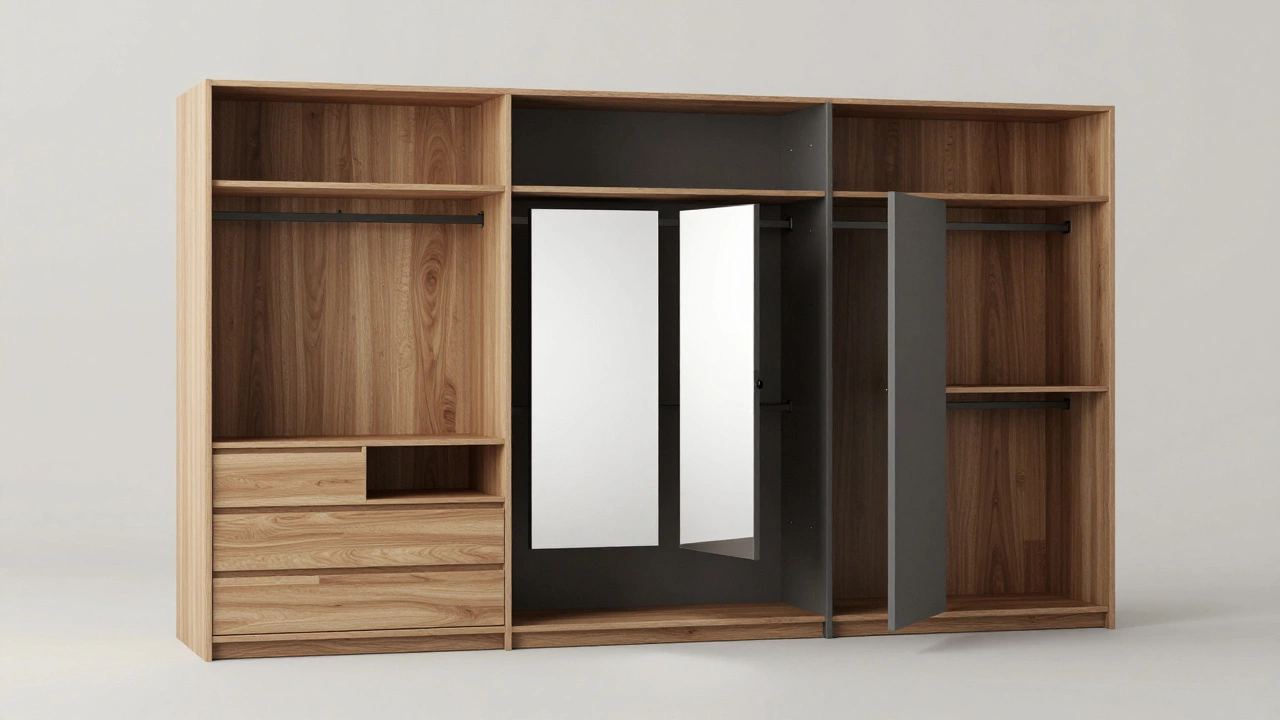
Because the wardrobe is a piece of furniture, the industry has evolved toward extreme modularity. Most Germans don't just buy a box; they build a system. This is where Modular Furniture comes in. This approach allows a person to add drawers, pull-out mirrors, and shoe racks as their needs change. If a couple gets married and moves into a larger flat, they don't need to remodel the room; they just buy three more wardrobe frames and slide them together.
This flexibility is also a response to the "nomadic" nature of modern professional life. In a country where people move between cities like Hamburg, Munich, and Frankfurt for work, having your storage solutions be portable is a massive financial and practical advantage. You aren't leaving a high-end closet system behind for the next tenant; you're taking your investment with you.
Alternative Storage Hacks in German Homes
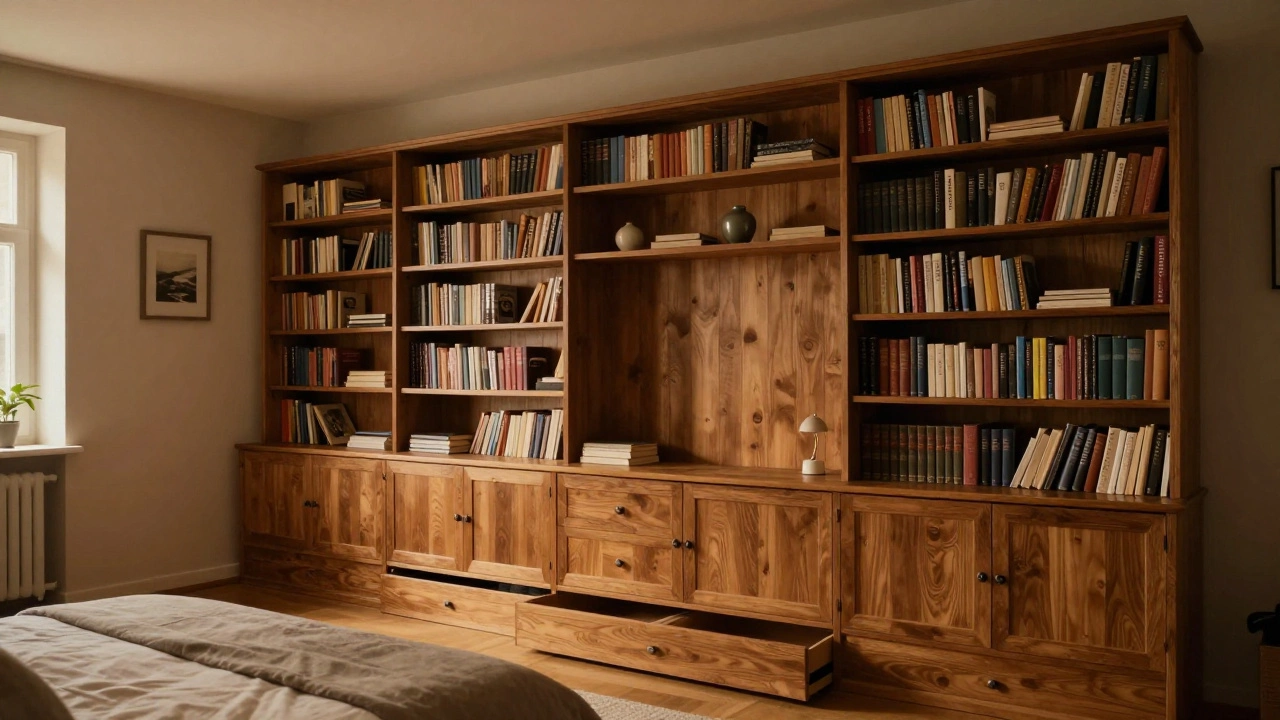
Since you can't rely on a hidden closet, Germans have become masters of "hidden" storage in other places. Have you ever noticed that many German beds have drawers underneath? Or that the living room often has a Schrankwand (a wall unit that combines bookshelves and cabinets)?
The Schrankwand is a classic piece of German interior design. It transforms an entire wall into a storage hub, blending the line between furniture and architecture. By consolidating all storage into one massive unit, the rest of the room remains open and airy. It's an efficient way to maximize utility without needing to tear open the walls to install shelving.
Common Pitfalls for Newcomers
If you're moving to Germany, the biggest mistake you can make is assuming your bedroom is "finished" when you sign the lease. You might walk in and think, "Wow, this room is so spacious!" only to realize that 30% of that space will disappear once you install a wardrobe that actually fits your clothes.
Another trap is the assembly process. While the modular system is great, the sheer volume of pieces can be overwhelming. Many newcomers underestimate the time it takes to build a three-door wardrobe. Pro tip: Always check if your apartment has a Keller (basement). In Germany, the basement is where the "deep storage" happens. While your daily clothes stay in the Schrank, your suitcases, old documents, and Christmas decorations go downstairs in a locked storage unit.
Is it possible to find German apartments with closets?
Yes, but it's rare in older buildings. Newer luxury constructions or very modern apartments may include built-in wardrobes, but this is still the exception rather than the rule. Most people still prefer freestanding options for the flexibility they offer.
Where do Germans buy their wardrobes?
Many use global retailers like IKEA, but there is also a strong market for high-quality, solid wood furniture from local German manufacturers. These pieces are often designed to last for decades, making the wardrobe a long-term investment.
What happens if I want to build my own closet in a rental?
If you want to install permanent shelving or built-ins, you generally need written permission from your landlord. Even then, you will likely be required to remove them and repair the walls (filling holes and repainting) when you move out.
How do Germans handle shoe storage without closets?
Shoe storage is usually handled by slim shoe cabinets in the hallway (Flur) or dedicated shelving units within the freestanding wardrobe. In many homes, a separate shoe rack is kept near the entrance for daily wear.
Are walk-in closets popular in Germany?
Walk-in closets are mostly found in high-end villas or very large modern homes. In standard city apartments, the space is simply too limited to dedicate an entire room or section of a room to a walk-in closet.
Next Steps for Organizing Your Space
If you're currently staring at a blank wall in a German bedroom, start by measuring your vertical space. Don't just look at the width; see how high you can go. Look for " wardrobe extenders" or shelving units that can sit atop your main wardrobe to utilize those last few centimeters of ceiling height.
If you're on a budget, consider second-hand markets. Because wardrobes are portable, you can often find high-quality, pre-assembled Schränke on platforms like eBay Kleinanzeigen. This saves you the nightmare of assembling 50+ screws and panels while giving you a sturdy storage solution that fits the German architectural style perfectly.