Which Shape Mirror Makes a Room Look Bigger?
Mirror Space Calculator
Understand the Science
Vertical rectangular mirrors increase perceived height by 15-20% according to New Zealand design studies. Place them opposite windows for maximum effect. Horizontal mirrors work best in wide rooms with low ceilings.
Space Perception Results
Place your mirror opposite the window for best results.
Ever walk into a small room and feel like it’s closing in on you? You’re not alone. Many people struggle with cramped spaces, especially in urban homes or apartments. But here’s the surprising truth: the right mirror can do more than reflect your face-it can completely change how big a room feels. And not all mirrors are created equal. The shape of your mirror matters more than you think.
Why Shape Matters More Than Size
Most people think a bigger mirror automatically means a bigger-looking room. That’s partly true-but it’s not the whole story. A huge round mirror might look stylish, but it doesn’t always open up space the way a tall, narrow rectangle does. Why? Because our brains interpret depth and width differently based on how lines and reflections are arranged.Think of it this way: a mirror doesn’t just show you what’s in front of it. It tricks your eyes into thinking there’s more space behind the glass. The shape of that glass determines how far and how wide that illusion stretches.
The Best Shape: Rectangular (Vertical)
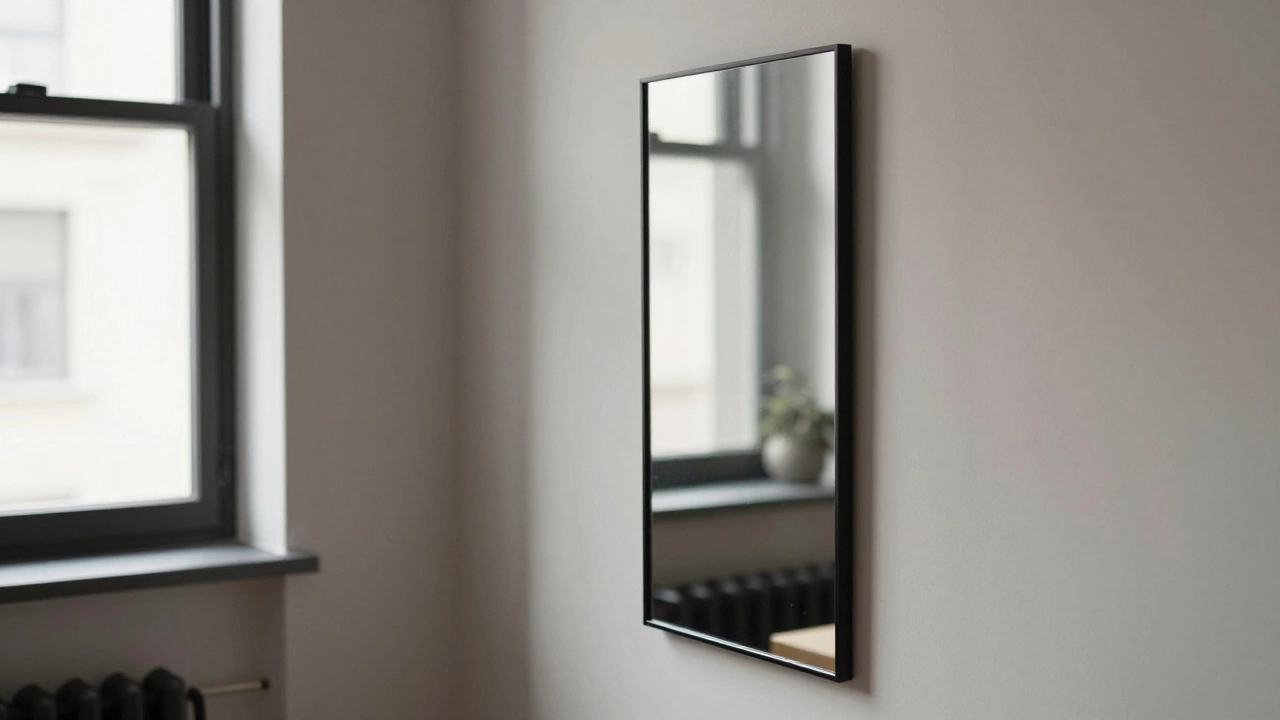
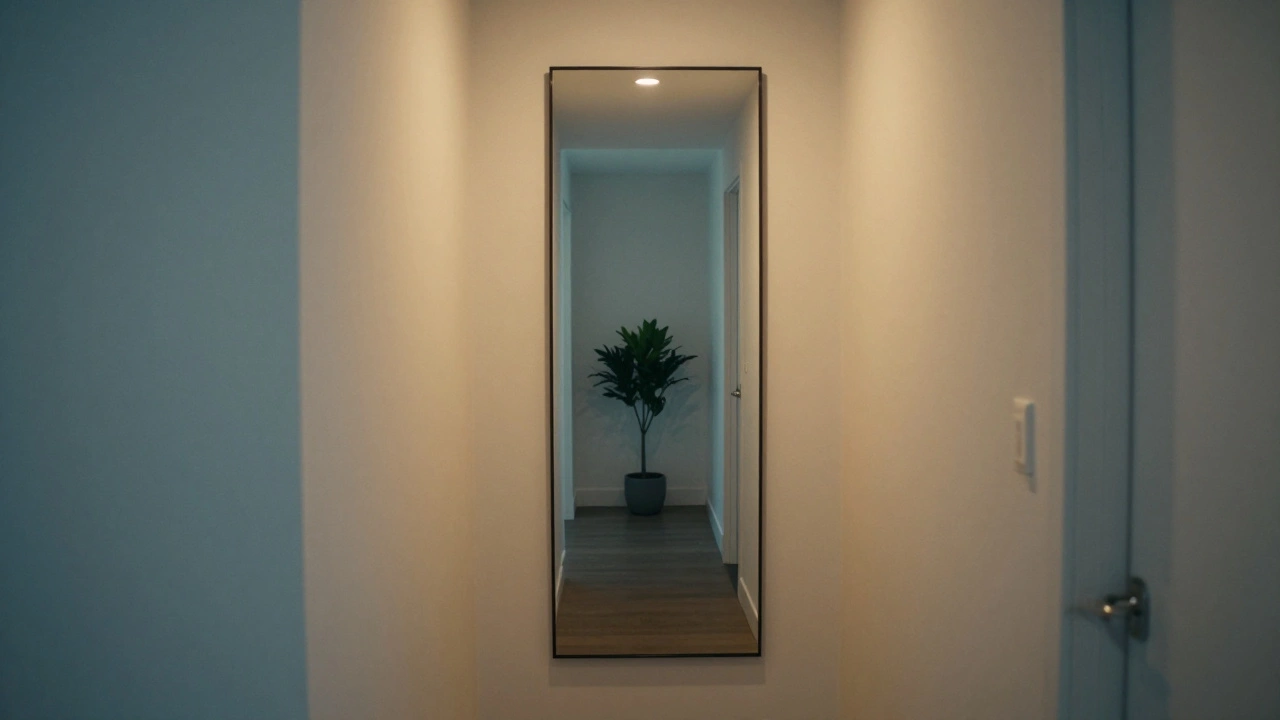
If you want your room to feel bigger, go for a vertical rectangular mirror. Tall and narrow. Think of it like a window that doesn’t let in light-but lets in the feeling of space.This shape works because it draws the eye upward. In small rooms, ceilings often feel low. A tall mirror creates a visual extension upward, making the ceiling seem higher. At the same time, the narrow width doesn’t overwhelm the wall, so it doesn’t make the room feel cluttered. It’s the perfect balance.
Real-world example: In Auckland apartments, where floor space is tight, designers consistently use vertical rectangular mirrors in living rooms and hallways. One study from the New Zealand Interior Design Association found that rooms with tall rectangular mirrors were perceived as 15% more spacious than those with square or round mirrors of the same surface area.
Why Other Shapes Fall Short
Not all shapes work the same. Here’s why:- Round mirrors-They’re pretty, sure. But they lack direction. Your eye doesn’t know where to go. They reflect the room evenly, which means they don’t stretch space in any one direction. In small rooms, they can feel like a distraction, not a solution.
- Square mirrors-These give you symmetry, but no vertical lift. They’re great for bathrooms or above a vanity, but they don’t trick the eye into seeing more height or depth.
- Horizontal rectangles-These stretch the room sideways. That sounds good, right? But in narrow rooms (like hallways or long bedrooms), they can make the space feel even longer and thinner, not bigger. They work best in wide rooms with low ceilings.
- Odd shapes (oval, hexagon, cloud)-These are decorative. They add personality, not volume. Save them for accent walls, not space-making.
Placement Is Just as Important
Even the best-shaped mirror won’t help if it’s stuck in the wrong spot. Here’s where to put it:- Opposite a window: This doubles natural light and creates the illusion of a second window. Instant space boost.
- On a narrow wall: In a hallway or small bedroom, a tall mirror on the end wall makes the space feel longer.
- Above a console or dresser: This keeps the mirror grounded and prevents it from looking like it’s floating too high.
- Avoid placing it directly across from a cluttered corner. You don’t want to reflect chaos-just clean space.
Size Matters Too-But Not Like You Think
You don’t need a mirror that covers an entire wall. A mirror that’s about two-thirds the height of your wall is ideal. Too small, and it’s just a decoration. Too big, and it can feel overwhelming. Aim for something that starts about 10-15 cm above your furniture and ends just below the ceiling.For example, if your ceiling is 2.4 meters high, a mirror that’s 1.6 to 1.8 meters tall will do the trick. That’s big enough to make a difference, but not so big it dominates the room.
Frame Style: Keep It Simple
The frame matters less than the shape-but it still counts. A thin, dark frame (like black or matte metal) blends into the wall and disappears. A thick, ornate frame? It adds visual weight. That’s fine in a grand living room. In a small bedroom? It makes the mirror feel like a heavy object, not an open window.Pro tip: Skip the beveled edges. They catch light and create visual noise. A flat, clean edge keeps the reflection smooth and the space calm.
Real-Life Test: Before and After
In a 3.5m x 4m living room in Ponsonby, Auckland, a homeowner replaced a small round mirror with a 1.7m tall vertical rectangular mirror opposite a window. The room didn’t get any bigger physically-but the perception changed. The person said, “I stopped feeling like I was in a box. It felt like the room had a second door.”That’s the power of shape.
What About Full-Length Mirrors?
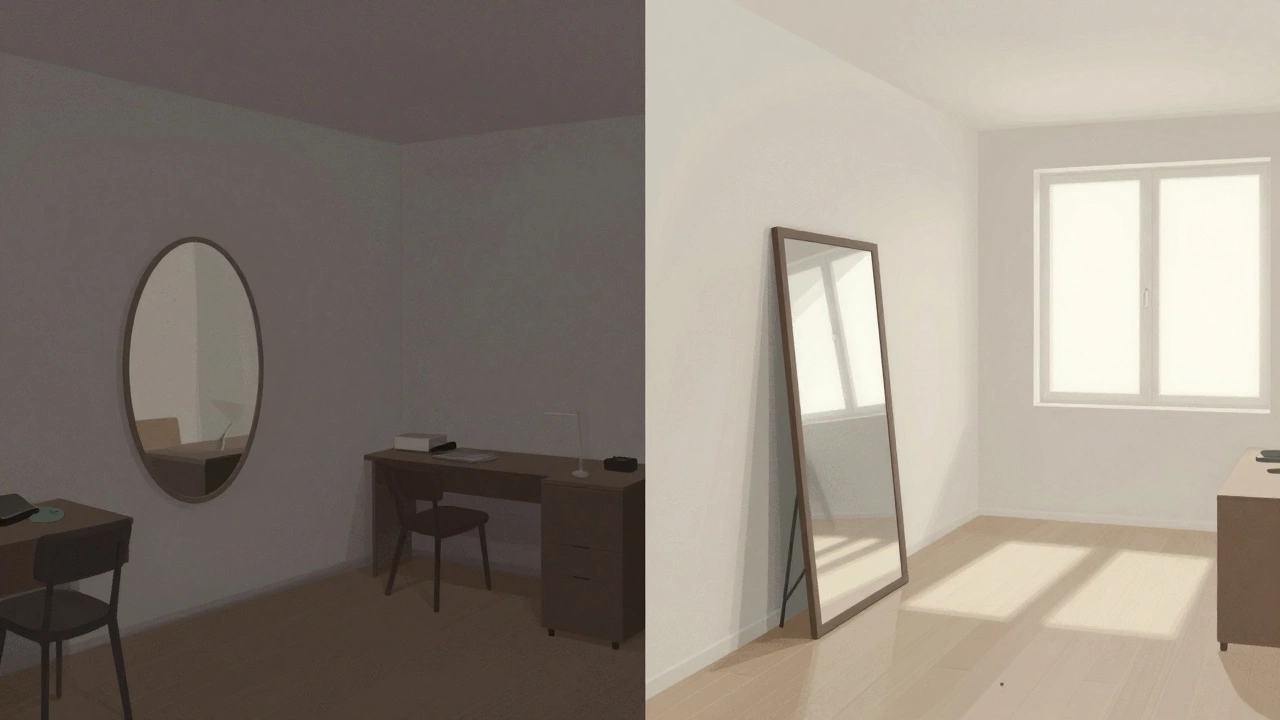
Full-length mirrors are great for checking outfits, but they’re not always the best for space illusion. If you’re using one, lean it against the wall instead of hanging it. A leaning mirror creates depth because it’s not flat against the wall-it sticks out slightly, adding dimension. Just make sure it’s tall and narrow, not wide.Final Rule: Think Like a Window
Ask yourself: if this mirror were a window, where would you want it? You’d want it to let in light and show you more of the outside. So, place it to show more of the room, not just your reflection. A vertical rectangle does that best.Stop guessing. Stop buying mirrors because they’re pretty. Start choosing them because they work. The right shape doesn’t just reflect your room-it expands it.
Do mirrors really make a room look bigger?
Yes, but only if they’re placed and shaped correctly. Mirrors reflect light and space, creating the illusion of depth. A vertical rectangular mirror placed opposite a window or on a narrow wall can make a room feel significantly larger. But a small or poorly placed mirror won’t have much effect.
Is a large round mirror good for making a room look bigger?
Not usually. Large round mirrors look stylish, but they don’t create the same sense of depth as vertical rectangles. Their curved edges and lack of directional lines don’t guide the eye upward or outward in a way that expands space. They’re better for adding visual interest than for solving small-room problems.
Should I use a mirror with a frame?
A thin, dark frame is fine-it helps the mirror blend into the wall. Avoid thick, ornate, or light-colored frames in small rooms. They add visual bulk and can make the mirror feel like a heavy object rather than a window into more space. Frameless or minimally framed mirrors work best for maximizing the illusion of depth.
Can I use a horizontal mirror to make a room wider?
Only if the room is narrow and you want to emphasize width. But in most small spaces, especially in apartments, vertical space is the bigger issue. A horizontal mirror can make a low ceiling feel even lower. Stick with vertical unless you’re working with a very wide, low room.
How high should I hang the mirror?
Hang it so the center of the mirror is at eye level-about 1.5 meters from the floor. If it’s above furniture like a sofa or console, leave 10-15 cm of space between the top of the furniture and the bottom of the mirror. This keeps it grounded and balanced.