What Length Curtains Make a Room Look Bigger: The Ultimate Guide
Curtain Sizing Calculator
Optimize Your Space
Enter your window dimensions to get the perfect measurements for a spacious look.
Your Custom Specifications
Have you ever walked into a room that felt surprisingly spacious, only to realize later it was actually quite small? Chances are, the secret wasn't in the square footage-it was in the windows. Curtain length is one of the most powerful, yet often overlooked, tools in interior design for manipulating spatial perception. Get it wrong, and your room feels cramped and cut off. Get it right, and you’ve just added visual height and width without moving a single wall.
If you’re trying to make a space feel larger, buying shorter or mid-length curtains is a common mistake. The truth is, the specific measurement matters less than where the fabric ends relative to the floor and the ceiling. Here is exactly how to choose the right curtain length to maximize your room’s apparent size.
The Golden Rule: Floor-to-Ceiling Installation
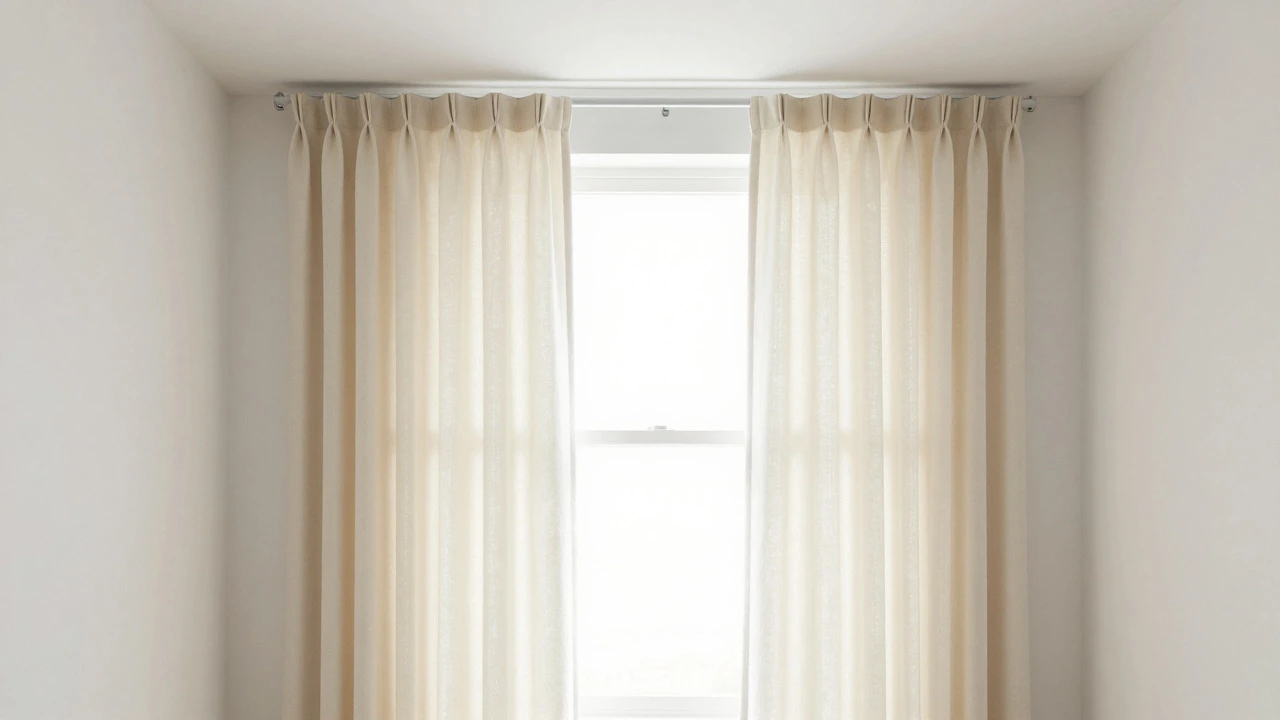
To make any room look bigger, you need to draw the eye upward. This creates an illusion of height, which our brains interpret as volume and space. The single most effective technique is installing your curtain rod as high as possible-ideally just below the crown molding or within two inches of the ceiling-and letting the curtains hang all the way down to the floor.
This method, often called "floor-to-ceiling" drapery, eliminates horizontal lines that break up the vertical flow of the wall. When you place a rod too low, say directly above the window frame, you create a hard stop that emphasizes the actual height of the window rather than the height of the room. By extending the fabric from near the ceiling to the floor, you trick the viewer into perceiving taller walls.
- Rod Placement: Install 4-6 inches above the window frame, or closer to the ceiling if there is no molding.
- Width Expansion: Extend the rod 3-6 inches beyond the window frame on each side. This makes the window appear wider and allows more natural light in when open, further enhancing the airy feel.
- Visual Continuity: Use solid colors or subtle textures rather than bold horizontal patterns, which can visually compress the space.
Choosing the Right Hemline: Just Above the Floor
Once the rod is high, the next critical decision is where the bottom of the curtain falls. For the purpose of making a room look bigger, "just above the floor" is generally the superior choice over pooling or dragging styles.
There are three main hemlines to consider:
- Floating (1 inch above floor): This is the cleanest, most modern look. It creates a crisp line that suggests precision and openness. Because there is no fabric touching the ground, the floor space remains visible, which helps maintain a sense of airiness.
- Kissing (Touching the floor): The fabric gently rests on the floor without bunching. This is elegant and traditional but can sometimes feel heavy if the fabric is thick.
- Pooling (Dragging on the floor): While luxurious, pooling curtains add bulk at the base. In a small room, this extra fabric can clutter the visual field and make the space feel smaller and messier.
For maximum spatial expansion, aim for the "floating" or "kissing" length. Avoid anything that pools significantly, as the excess fabric draws attention to the floor level rather than the vertical expanse of the wall.
Why Shorter Curtains Shrink Your Space
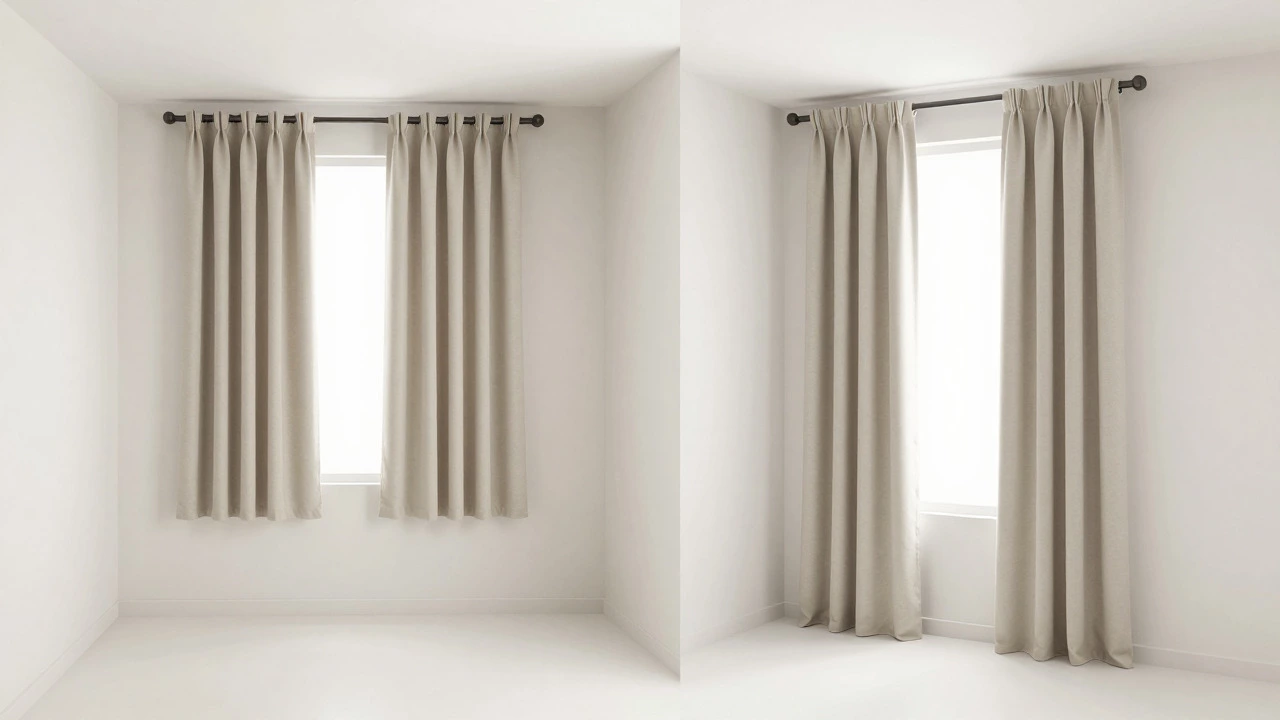
You might be tempted to buy café curtains or half-length drapes because they are cheaper or easier to clean. However, these lengths act as visual barriers. A curtain that stops halfway down the wall effectively cuts the room in two, emphasizing its lack of height.
Imagine wearing pants that are too short; they draw attention to the ankle rather than elongating the leg. Similarly, short curtains highlight the midpoint of the wall, reminding the viewer of the room’s actual, limited dimensions. They also block less light when closed, but even when open, they sit lower on the wall, reducing the amount of bare wall space visible, which is crucial for a sense of openness.
| Curtain Style | Visual Effect | Best For |
|---|---|---|
| Floor-to-Ceiling (Floating) | Elongates walls, adds height | Small rooms, low ceilings |
| Half-Length / Café | Cuts wall visually, reduces height | Kitchens, bathrooms (privacy only) |
| Puddling | Adds bulk, clutters floor space | Large, formal living rooms |
| Just Below Sill | Emphasizes window height, not room height | Traditional styles, large windows |
The Role of Fabric Weight and Opacity
Length isn’t the only factor. The material itself plays a huge role in how much space a room feels like it has. Heavy, dark, and opaque fabrics absorb light and add visual weight. If you pair long curtains with thick velvet, you might gain height but lose brightness.
To enhance the feeling of size, opt for lightweight, sheer, or semi-sheer fabrics. These materials allow natural light to filter through, keeping the connection between the inside and outside strong. Light reflects off lighter-colored fabrics, bouncing around the room and creating a brighter, more expansive atmosphere. White, cream, or pastel tones are ideal for this purpose.
Consider using a layered approach: a sheer under-curtain that stays closed during the day to provide privacy while letting light in, and heavier blackout curtains behind them for night. Keep the sheers floor-to-ceiling to maintain the vertical line even when the main curtains are open.
Hardware Matters: Rods and Finials
Your curtain hardware supports the entire illusion. A thin, delicate rod can get lost against a tall wall, failing to anchor the top of the drape. Conversely, an overly ornate, thick rod can look cumbersome in a small space.
Choose a rod diameter that is proportional to the height of the room. In standard 8-foot ceilings, a 1-inch diameter rod works well. For higher ceilings, go slightly thicker. Ensure the rod extends far enough so that when the curtains are drawn back, they don’t cover the glass. Exposed glass maximizes the view and light, both of which contribute to a feeling of spaciousness.
Avoid finials (the decorative ends) that are too large or busy. Simple, sleek finials keep the focus on the vertical lines of the fabric rather than distracting details at the sides.

Common Mistakes to Avoid
Even with the right length, certain errors can undermine your efforts. One frequent mistake is gathering the curtains too tightly. Overly full drapes create excessive bulk, which can make a narrow room feel even tighter. Aim for a standard fullness ratio of 2 to 2.5 times the width of the window. This provides enough texture without overwhelming the space.
Another error is mismatched colors. If your curtains contrast sharply with your wall color, they become a distinct object rather than part of the background. To make a room look bigger, try painting your curtains the same color as your walls. This blends the window treatment into the architecture, removing visual boundaries and making the walls appear to extend further.
Practical Tips for Measuring and Hanging
Getting the length right requires precise measuring. Start by deciding on your rod height. Measure from the center of the rod down to the point where you want the curtain to end (usually 0.5 to 1 inch above the floor). Add any additional length needed for the heading style (how the fabric attaches to the rod).
If you are buying ready-made curtains, check the drop length carefully. Most standard sizes are 84, 95, or 108 inches. If your measurement falls between sizes, it is usually better to go longer and have a tailor hem them, rather than too short and have awkward gaps. Tailored hems ensure a clean, professional finish that enhances the illusion of height.
When hanging, use tension rods if you don’t want to drill holes, but ensure they are sturdy enough to hold the weight of long drapes. Sagging rods ruin the vertical line instantly. For permanent installations, use brackets that are securely anchored into studs or masonry for stability.
Do longer curtains really make a room look bigger?
Yes, floor-to-ceiling curtains create a vertical line that draws the eye upward, making ceilings appear higher and the room more voluminous. This optical illusion is one of the most effective tricks in interior design for small spaces.
Should curtains touch the floor or hang above it?
For a modern, spacious look, curtains should float about 1 inch above the floor or just kiss it. This avoids the cluttered appearance of pooling fabric, which can make a room feel smaller and less tidy.
How high should I put the curtain rod?
Install the rod 4 to 6 inches above the window frame, or as close to the ceiling as possible without hitting crown molding. Higher placement elongates the window and the wall, contributing to a larger perceived room size.
What color curtains make a room look bigger?
Light, neutral colors like white, cream, or beige reflect more light and blend with walls, creating an open feel. Matching the curtain color to the wall color is particularly effective for minimizing visual boundaries.
Can I use short curtains in a small room?
It is generally not recommended. Short or half-length curtains cut the wall horizontally, emphasizing the room's limited height. If you must use them, keep them simple and light-colored to minimize visual disruption.
Does the width of the curtain rod matter?
Yes. Extending the rod 3-6 inches beyond the window frame on each side makes the window appear wider. This allows more light in when open and creates a broader visual element that enhances the sense of space.