Should You Put a Corner Sofa in a Small Room? Here’s What Actually Works
Ever bought a corner sofa because it looked cozy in the showroom, only to realize it eats up half your living room? You’re not alone. Many people assume that a corner sofa is too big for small spaces-but that’s not always true. The real question isn’t whether a corner sofa fits in a small room. It’s whether you’ve chosen the right one, and placed it the right way.
Why corner sofas get a bad reputation in small rooms
Corner sofas often get blamed for making rooms feel cramped. And yeah, a massive L-shaped sectional from a big-box store can turn a 10x12 ft space into a hallway with seating. But not all corner sofas are created equal. The problem isn’t the shape-it’s the size, proportions, and how you use it.
Most people pick a corner sofa based on looks, not measurements. They see a deep, high-back design with oversized cushions and think, "This will be my cozy escape." Then they bring it home and realize they can’t walk past it without turning sideways. That’s not the sofa’s fault. It’s a mismatch between expectation and reality.
What makes a corner sofa work in a small room
The key is scale. A corner sofa that works in a small room has three things:
- Low profile - Armrests and backrests that sit closer to the floor. High backs block light and make ceilings feel lower.
- Slender arms - Thin, tapered arms take up less visual space than bulky, square ones.
- Shallow depth - Look for seats that are 85 cm deep or less. Anything over 90 cm will swallow your floor space.
Brands like IKEA, Muuto, and even local New Zealand makers like Freemans a Wellington-based furniture company known for compact, modular designs offer corner sofas designed specifically for compact living. These aren’t just "small" sofas-they’re engineered to maximize sitting space without stealing floor area.
Placement matters more than you think
Putting a corner sofa against the longest wall is the default move. But in a small room, that’s often the worst choice. Here’s what actually works:
- Float it in the corner - Instead of tucking it flush against two walls, leave 15-20 cm of breathing room on each side. This creates a visual frame and makes the room feel more open.
- Use it to define zones - In open-plan spaces, a corner sofa can act as a natural divider between the living area and dining or workspace. It’s like a soft wall.
- Face it toward the light - If your room has a window, position the sofa so the backrest doesn’t block natural light. A low-back design helps here.
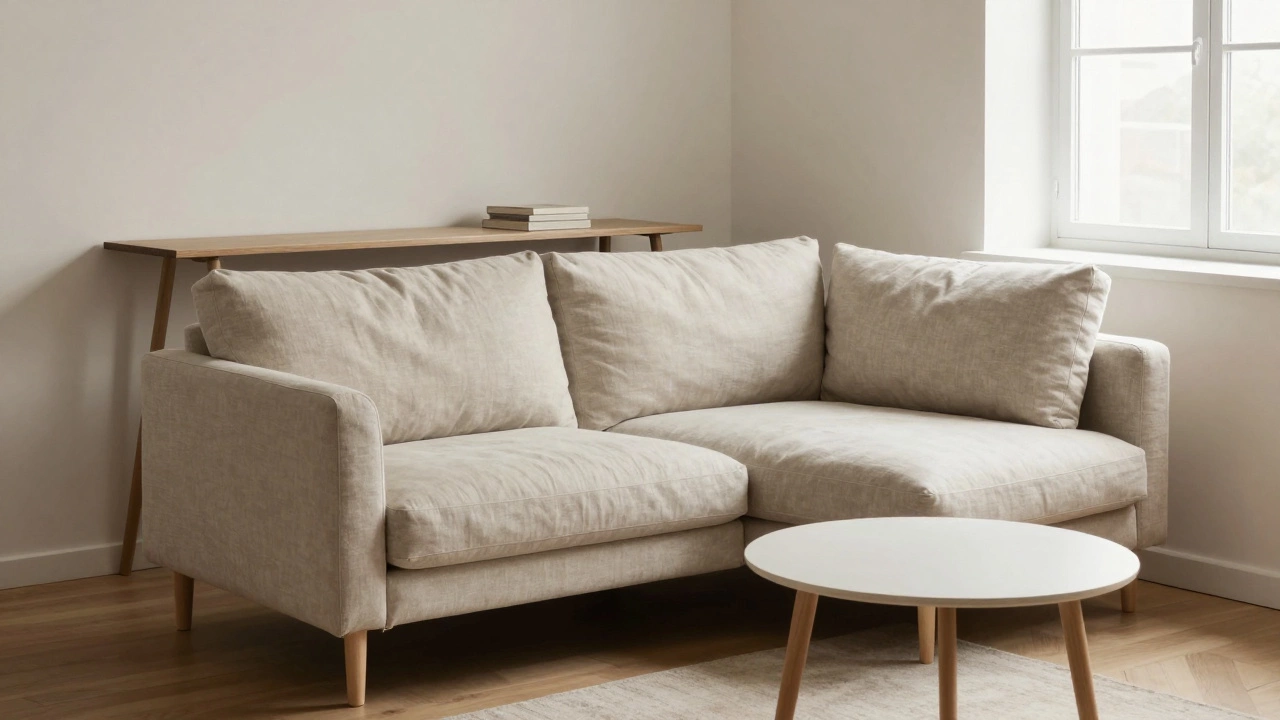
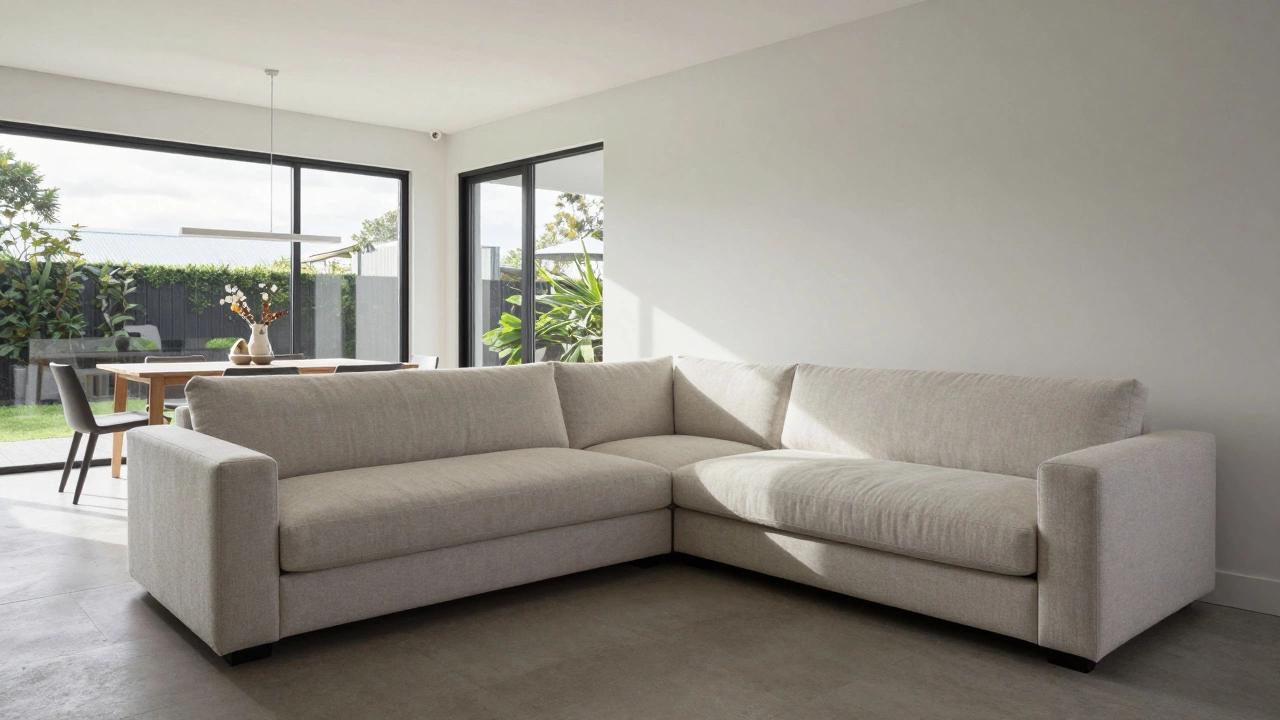
I’ve seen this work in a 9m² apartment in Ponsonby. The owner used a 200 cm wide corner sofa with 80 cm depth. It didn’t dominate the room-it became part of it. The trick? Pairing it with a slim console table behind it and a small round coffee table in front. No bulky side tables. No rug that clashed with the sofa’s footprint.
What to avoid
Some design "rules" are just myths. Here’s what not to do:
- Don’t choose a sofa with deep, plush cushions - They look inviting but make the seat feel farther away. You’ll end up leaning forward, which defeats the purpose of lounging.
- Avoid dark, heavy fabrics - In a small room, dark velvet or thick wool can make the sofa feel like a black hole. Light linen, oat-colored cotton, or even a pale grey microfiber reflects light and feels airier.
- Don’t go for extra features - Built-in storage, recliners, or ottomans might sound useful, but they add bulk. In a small room, simplicity wins.
How to measure your space (for real)
Stop guessing. Grab a tape measure and do this:
- Measure the length of both walls where the sofa will go.
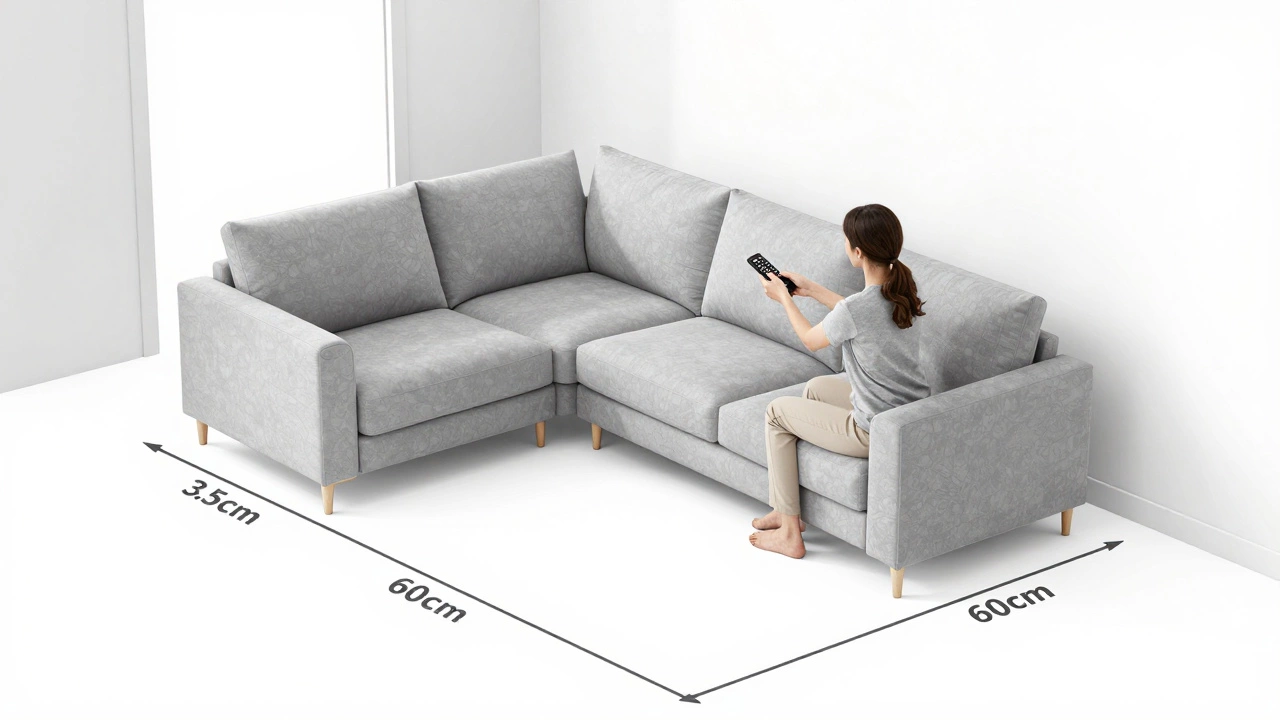
- Mark out the sofa’s footprint on the floor with masking tape. Use the exact dimensions from the product page.
- Walk around it. Can you open the door? Can you walk to the kitchen without bumping your hip? Can someone sit on the sofa and still reach the TV remote?
Rule of thumb: Leave at least 60 cm of clear walking space around the sofa. That’s not luxury-it’s function. If you can’t comfortably pass by it, it’s too big.
Alternatives if a corner sofa still feels too much
Not every small room needs a corner sofa. If you’re unsure, consider these smart swaps:
- Two small armchairs + a footstool - Creates a conversational setup without blocking sightlines.
- A compact two-seater with a detachable ottoman - You can move the ottoman when you need more floor space.
- A modular sofa with only one corner piece - Some brands sell just the L-shape section. You can add a single chair later if needed.
One Auckland homeowner replaced a full L-shaped sofa with a 160 cm two-seater and a matching ottoman. She uses the ottoman as a footrest, extra seat, or even a side table. It’s more flexible, and the room feels 30% bigger.
Final verdict: Yes, but only if you pick wisely
Can you put a corner sofa in a small room? Absolutely. But it has to be the right one. Look for low, slim, shallow designs. Place it thoughtfully. Avoid clutter. And don’t fall for the myth that bigger is cozier.
A well-chosen corner sofa doesn’t take up space-it makes space feel intentional. It turns a cramped corner into a quiet retreat. And in a city like Auckland, where homes are getting smaller but our need for comfort is growing, that’s not just practical. It’s necessary.
Can a corner sofa make a small room feel bigger?
Yes-if it’s low-profile, has slim arms, and is placed in the corner with breathing room around it. A corner sofa can define a seating area without blocking windows or walkways. The key is avoiding bulky, dark, deep designs. Light colors and clean lines help the sofa blend into the room rather than dominate it.
What’s the minimum room size for a corner sofa?
For a functional corner sofa, aim for at least 3.5m x 3.5m (11.5 ft x 11.5 ft). Anything smaller than 3m on one side will feel cramped, even with a compact design. If your room is under 3m wide, consider a two-seater with an ottoman instead. You’ll get more flexibility and still have room to move.
Do corner sofas work in open-plan spaces?
They’re ideal. In open-plan homes, a corner sofa acts as a soft divider between living, dining, or work areas. Place it so the corner points toward the kitchen or entryway. This creates a natural boundary without walls. Pair it with a low-profile rug and avoid tall lamps behind it to keep the flow open.
Should I get a corner sofa with storage?
Only if you’re truly short on storage elsewhere. Built-in storage adds bulk and often looks clunky in small rooms. If you need storage, use a slim console table behind the sofa or a basket beside it. It’s more flexible, easier to clean, and doesn’t make the sofa feel heavier.
Are fabric or leather corner sofas better for small rooms?
Light-colored fabric is usually better. It reflects light and feels less imposing. Dark leather can make a small room feel smaller and more closed-in. If you prefer leather, choose a light tan or grey, and go for a matte finish-not glossy. Matte surfaces absorb light instead of bouncing it around, which creates a calmer vibe.