How to Choose a Sofa That Will Last: Practical Tips for Long-Lasting Comfort
Most people buy a sofa once every 7 to 10 years. But if you’ve ever sat on a couch that sagged after six months or had the fabric tear right where you lean, you know that not all sofas are built the same. The difference between a sofa that lasts and one that falls apart isn’t price-it’s construction. You don’t need to spend thousands to get a sofa that lasts two decades. You just need to know what to look for.
Start with the frame
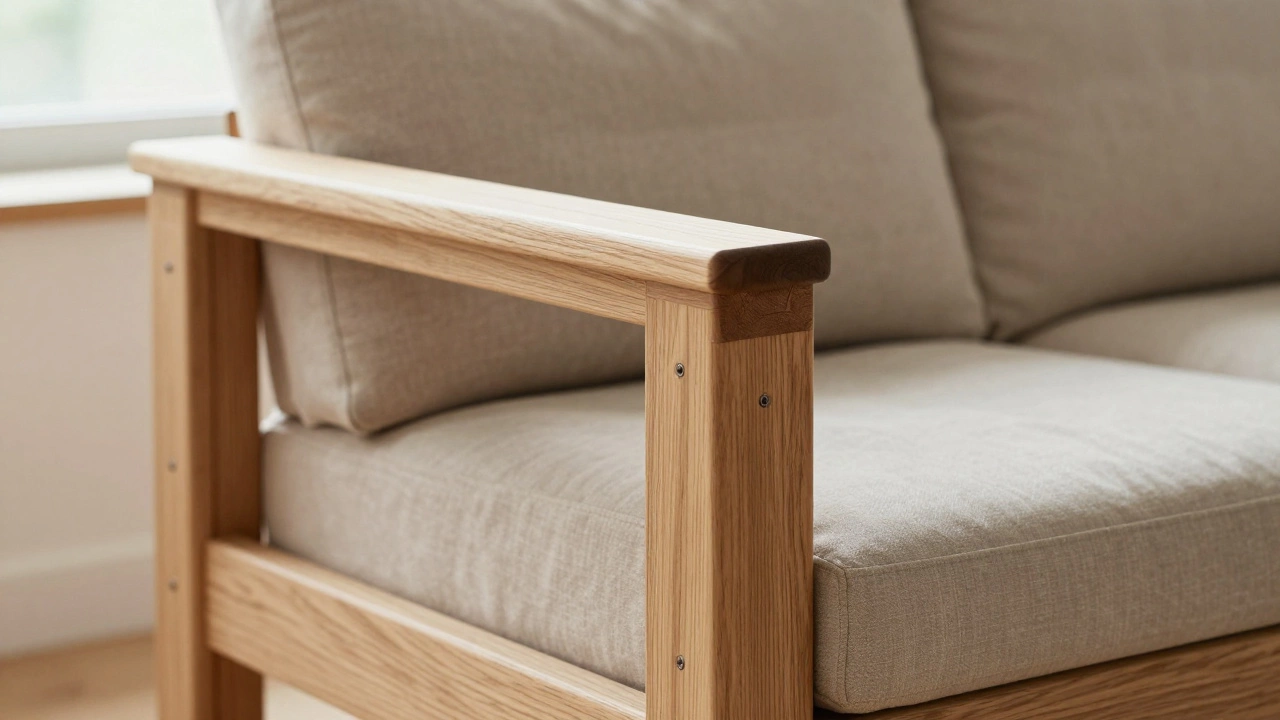
The frame is the skeleton of your sofa. If it’s weak, nothing else matters. Look for hardwood frames made from kiln-dried oak, beech, or maple. These woods don’t warp or crack easily, even in humid climates like Auckland’s. Avoid softwoods like pine-they bend under weight and loosen over time.Check the joints. A well-built frame uses double-dowel, corner-blocked, or mortise-and-tenon joints. These are glued and screwed together, not just stapled or nailed. If you can lift one corner of the sofa and the whole thing wobbles, walk away. A solid frame should feel rigid, like a piece of furniture made to be passed down.
Some brands advertise "engineered wood" or "plywood" frames. These can be okay if they’re thick (at least 1.5 inches) and reinforced. But if you see "particleboard" or "MDF" in the specs, it’s a red flag. These materials swell with moisture and crumble under pressure. You’ll feel it within a year.
Test the suspension system
The frame holds the shape, but the suspension holds the comfort. There are two main types: sinuous springs and webbing.Sinuous springs are S-shaped metal wires that run front to back across the seat. They’re durable, evenly distribute weight, and don’t sag easily. You’ll find them in mid-to-high-end sofas. Look for at least eight springs across the seat width. Fewer than that means less support.
Webbing is made of woven polyester or cotton straps. It’s cheaper and common in budget sofas. Good webbing is tightly stretched and secured with metal clips-not just tacked down. If you press your hand into the seat and feel the webbing stretch too much, it won’t last. Webbing can last 5-8 years, but sinuous springs often last 15+.
Some sofas mix both: springs in the seat and webbing in the back. That’s fine. But avoid sofas with only rubber bands or elastic strips. They lose tension fast. I’ve seen ones collapse after six months in rental apartments.
Choose the right cushion fill
Cushions are where comfort meets longevity. The fill determines how long the sofa stays plush and supportive.High-resilience (HR) foam is the gold standard. It’s dense (at least 1.8 pounds per cubic foot) and bounces back after sitting. Anything below 1.5 is too soft and will flatten in under a year. Ask for the density-don’t just trust the word "high quality." Some brands lie.
Down or feather blends look luxurious but need constant fluffing. They’re great for occasional use, not daily family life. If you have kids or pets, go for foam wrapped in a down blend. That gives you softness with structure. A 50/50 mix of HR foam and down is ideal for most homes.
Memory foam cushions feel nice at first, but they trap heat and don’t spring back. They’re better for recliners than sofas. Stick with HR foam unless you’re willing to replace cushions every 3-4 years.
Fabric matters more than you think
You can have the best frame and cushions, but if the fabric tears or stains easily, your sofa is doomed.Look for fabrics with a Martindale rating of 20,000 or higher. That’s the industry standard for durability. It means the fabric can handle 20,000 rubs before showing wear. For daily use, aim for 30,000+. A sofa in a living room with kids and pets should have 40,000+.
Performance fabrics like Crypton, Sunbrella, or Revolution are engineered to resist stains, moisture, and fading. They’re worth the extra cost. I’ve seen customers spend $800 on a linen sofa, then spend $400 more on professional cleaning after a spilled red wine. A $1,200 performance fabric sofa cost less in the long run.
Avoid silk, velvet, and light-colored cotton unless you’re prepared to vacuum weekly and never eat on the couch. Darker colors hide dirt, but they don’t hide wear. A charcoal or navy performance fabric lasts longer than a white one, even if the white is "stain-resistant."

Check the construction details
Look beyond the basics. A sofa that lasts has thoughtful details.- Removable, washable covers? Big plus. You can clean spills without calling a pro.
- Reinforced armrests? They take the most abuse. If the fabric is loose or the wood underneath is thin, it’ll crack.
- Feet that are screwed in, not glued? That means you can replace them if they wear down.
- Back cushions that are attached? Avoid them. You can’t flip or rotate them, so they wear unevenly.
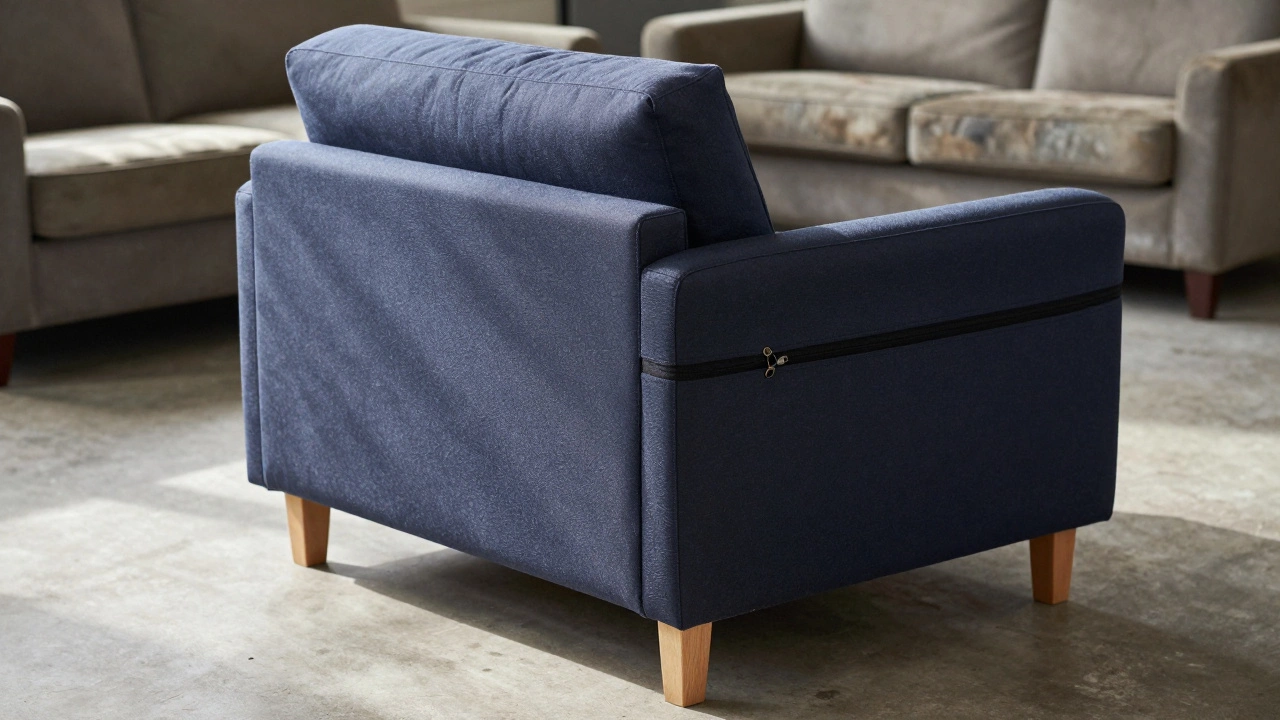
- Zippered access to the inside? That’s a sign the maker expects you to maintain it.
Also, check the back of the sofa. If you can see staples or nails sticking out, the craftsmanship is sloppy. A well-made sofa hides all fasteners. Look for clean, even stitching-no loose threads or gaps.
Don’t be fooled by marketing
"Luxury," "artisan-crafted," "hand-tufted"-these words sound impressive, but they don’t mean durable. A sofa can be hand-tufted and still have a particleboard frame. Always ask for specifics.Some brands use "European design" to justify high prices. That doesn’t guarantee quality. European sofas often have slimmer profiles and softer cushions, which wear faster under heavy use.
Don’t assume a higher price equals better quality. I’ve seen $2,000 sofas with weak frames and $1,000 ones that are built like tanks. Focus on materials, not labels.
Real-world testing: What to do in the store
Before you buy, test like a pro.- Sit on it. Lean back, shift your weight, cross your legs. Does it creak? Does the back tilt? Does the seat feel hollow?
- Press into the cushions. They should feel firm, not mushy. If your hand sinks more than 2 inches, the foam is too soft.
- Check the arms. Push down hard. Do they flex? Are they solid?
- Ask to see the frame. Most stores will let you flip up a corner or look under the seat.
- Ask for the Martindale rating and foam density. If they don’t know, walk out.
Buy from a store that offers a written warranty on the frame and suspension. Five years minimum. Ten is better. If they won’t guarantee the structure, they don’t believe in it.
What to avoid
Here’s what kills sofas fast:- Plastic or metal frames (common in flat-pack furniture)
- Low-density foam (under 1.5 lb/ft³)
- Unreinforced webbing
- Light fabrics with Martindale ratings under 15,000
- Glued-on feet or non-removable cushions
- No warranty or vague terms like "lifetime guarantee" (which usually means 2 years)
These aren’t just inconvenient-they’re expensive mistakes. A sofa that breaks in 3 years costs more than one that lasts 15, once you factor in replacement and disposal.
Where to buy smart
Local makers in Auckland often build better than big chains. Look for small workshops that use local timber and have a showroom you can visit. Ask if they make their own frames or outsource them. If they make them in-house, they care about quality.Online brands like Floyd, Article, and Burrow offer transparent specs. They list foam density, fabric ratings, and frame materials upfront. No guesswork. Many ship to New Zealand and have solid return policies.
Stay away from warehouse sales with "one-time deals". They’re often overstocked, returned, or low-grade inventory. You’re not saving money-you’re gambling.
Final thought: Your sofa should outlive your trends
A sofa isn’t a fashion item. It’s a daily companion. The one you choose today will hold your kids’ homework, your late-night movie snacks, your dog’s naps, and your quiet mornings with coffee.Choose for strength, not style. Choose for durability, not decoration. A well-made sofa doesn’t need to be trendy. It just needs to hold up. And if you get it right, it’ll still be comfortable 15 years from now-even if your tastes change.
What’s the best fabric for a sofa with pets?
Performance fabrics like Crypton, Sunbrella, or Revolution are the best. They resist pet hair, stains, and claws. Darker colors like charcoal or navy hide dirt better than light tones. Avoid velvet, silk, or light linen-they catch fur and show wear fast.
Can I fix a sagging sofa instead of replacing it?
Sometimes. If the frame is solid but the cushions are flat, replacing the foam can extend its life. If the suspension is worn, adding new sinuous springs or webbing helps. But if the frame is warped or the joints are loose, it’s not worth repairing. The cost often equals a new, better sofa.
Is a sectional better than a regular sofa for durability?
Not necessarily. Sectionals have more joints and connections, which means more points of failure. A single-piece sofa with a solid frame usually lasts longer. If you want a sectional, make sure each piece has its own strong frame and matching suspension.
How long should a good sofa last?
A well-built sofa with a hardwood frame, sinuous springs, high-density foam, and durable fabric should last 15 to 20 years. With proper care, some last 30. The average cheap sofa lasts 3 to 5 years.
Should I buy a sofa online or in-store?
If you can test it in person, do it. Feel the frame, test the cushions, check the stitching. But if you’re buying from a brand with transparent specs-like Article or Floyd-online is fine. Look for free returns and a solid warranty. Avoid unknown brands with no return policy.