How Far Should Curtains Be From Baseboard Heaters? Safety and Efficiency Guide
Baseboard Heater Curtain Clearance Calculator
Enter your measurements to determine if your curtains are safely positioned relative to your baseboard heater. Proper clearance prevents fire hazards, improves energy efficiency, and extends heater lifespan.
Clearance Status
Putting up curtains is one of the easiest ways to make a room feel cozier. But if you have baseboard heaters, you might be asking: how far do curtains need to be from baseboard heaters? The answer isn’t just about looks-it’s about safety, energy efficiency, and even your insurance policy.
Why clearance matters more than you think
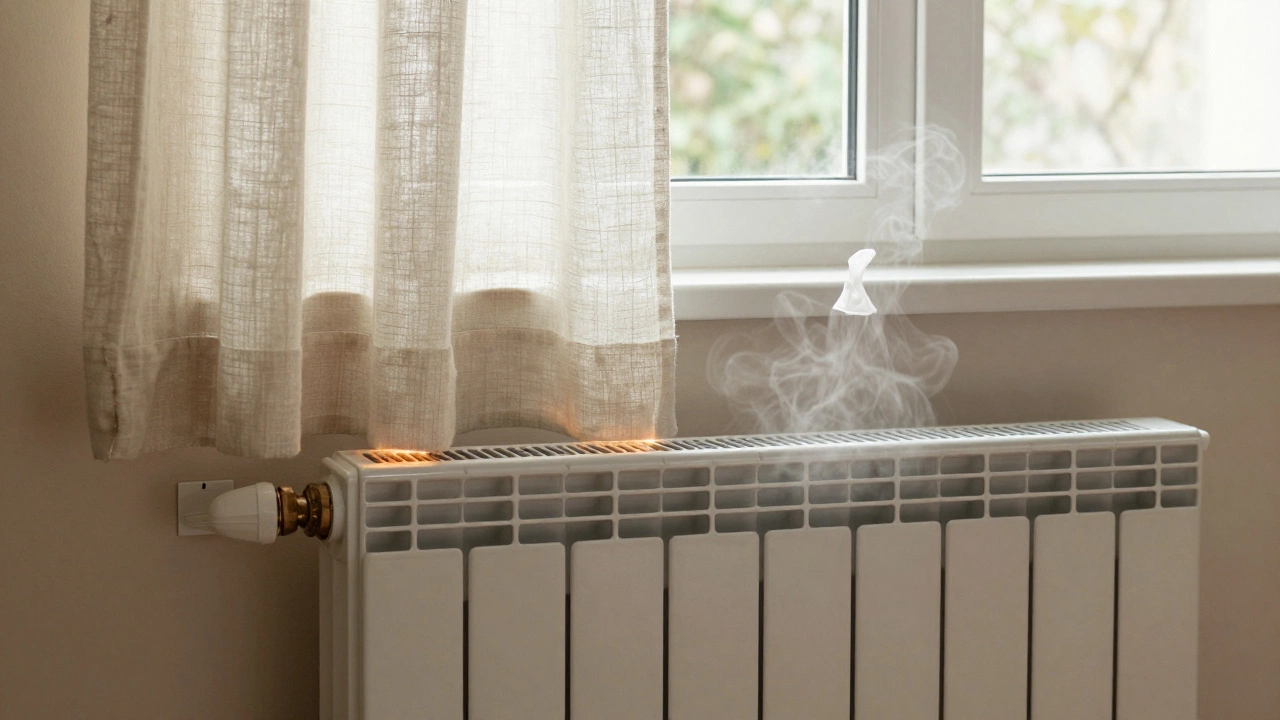
Baseboard heaters work by pulling in cool air from the bottom, heating it, and pushing warm air out the top. That’s how they keep rooms warm without fans or ducts. But if your curtains hang too low, they block that airflow. That’s not just inefficient-it’s dangerous.When fabric gets too close to a heating element, it can overheat. In extreme cases, it can smolder or even catch fire. The National Fire Protection Association (NFPA) reports that electrical space heaters, including baseboard models, are involved in about 1,000 home fires each year in the U.S. alone. Many of those fires start because curtains, furniture, or bedding are too close.
It’s not just a fire risk. Blocked airflow forces your heater to work harder. That means higher electricity bills and a shorter lifespan for the unit. Your heater might run longer and louder, trying to push heat through a curtain instead of into the room.
The official clearance rule
Most manufacturers and building codes require a minimum of 12 inches (30 cm) of clearance between the top of the baseboard heater and any curtain or furniture. This isn’t a suggestion-it’s a safety standard backed by UL (Underwriters Laboratories) and the International Residential Code (IRC).That 12-inch gap ensures:
- Cool air can flow freely into the bottom of the heater
- Hot air can rise unobstructed to warm the room
- Curtain fabric stays well below the heating element’s surface temperature
Some high-output heaters-especially those over 1,500 watts-may require even more space. Always check the label on your heater. If it says "Maintain 18 inches clearance," follow that. Don’t assume all baseboard heaters are the same.
How to measure the right distance
Here’s how to get it right:- Turn off the heater and let it cool completely.
- Measure from the top edge of the heater’s metal casing up to the bottom hem of your curtain.
- Use a tape measure-not your eye. Curtains sag, and your brain tricks you.
- If your curtain hangs lower than 12 inches, you need to adjust it.
Don’t rely on the curtain rod height alone. A heavy fabric or a long rod can make the curtain pool lower than you think. Always measure from the heater, not the rod.
What if your windows are too low?
In older homes, especially in New Zealand and other countries with vintage architecture, windows often sit right above baseboard heaters. That’s a common setup. But it doesn’t mean you’re stuck with bare windows.Try these workarounds:
- Use café curtains: Hang them only halfway down the window, so they stop well above the heater.
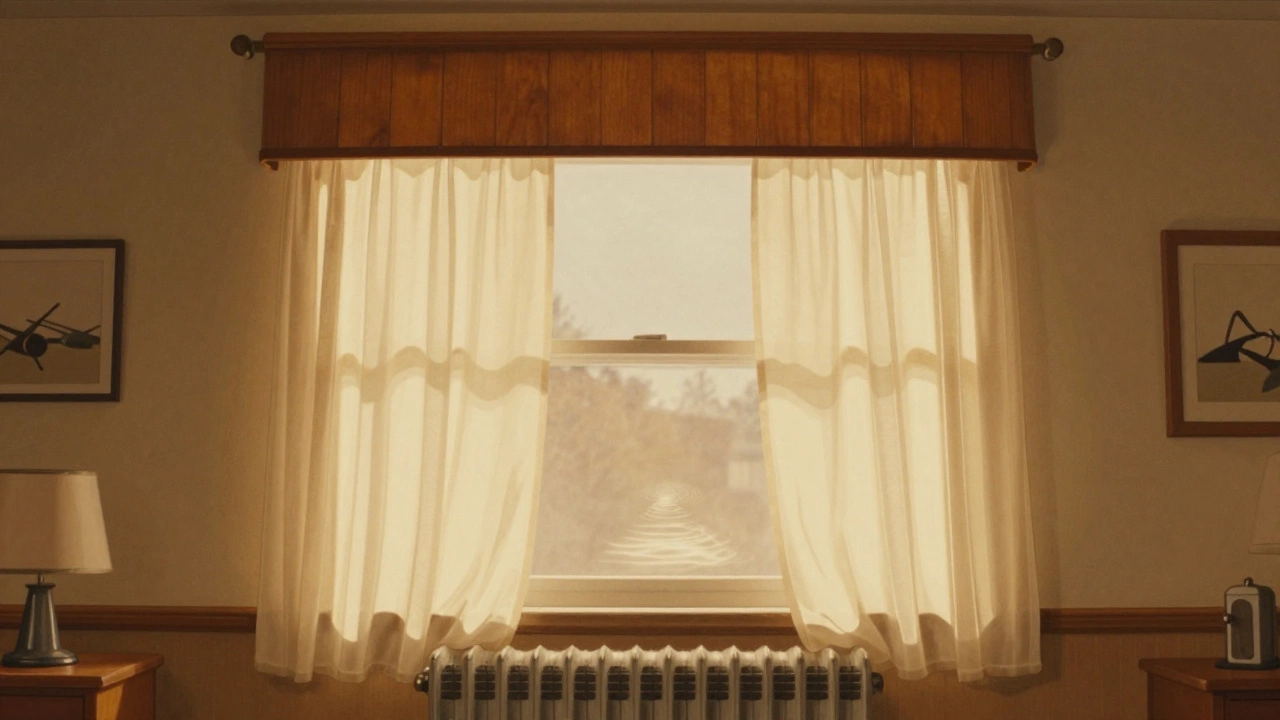
- Install a valance: A decorative wooden or fabric valance above the window can hide the top of the heater while leaving the lower part open.
- Choose sheer or lightweight panels: If you still want full-length curtains, pick a thin material like linen or voile. Even if they dip slightly lower, they’re less likely to trap heat.
- Mount the rod higher: Install the curtain rod at least 4-6 inches above the window frame. That gives you extra room for the curtain to fall without touching the heater.
One homeowner in Auckland did this: She had a 1950s bungalow with a heater right under the window. She installed a 6-inch wooden valance, then hung lightweight cotton curtains from a rod mounted 8 inches above the window. The curtains stopped 14 inches above the heater. No fire risk. No draft. And the room still looked finished.
What about thermal curtains?
Thermal curtains are great for insulation. But they’re also thick, heavy, and often lined with reflective backing. That’s a problem near heaters.Thermal curtains are designed to block heat transfer-so they trap heat instead of letting it circulate. If you hang one over a baseboard heater, you’re essentially turning it into a radiator blanket. The heat builds up behind the curtain, raising the fabric’s temperature. That’s a fire hazard.
If you want insulation, use thermal curtains on exterior walls or windows that don’t have heaters underneath. For windows with baseboard heaters, stick to lightweight, breathable fabrics.
What about other obstacles?
It’s not just curtains. Anything within 12 inches of the heater is a risk:- Furniture (sofas, chairs, bookshelves)
- Decorative items (vases, lamps, framed art)
- Electronics (TVs, speakers, charging stations)
- Blankets or rugs placed on the floor near the heater
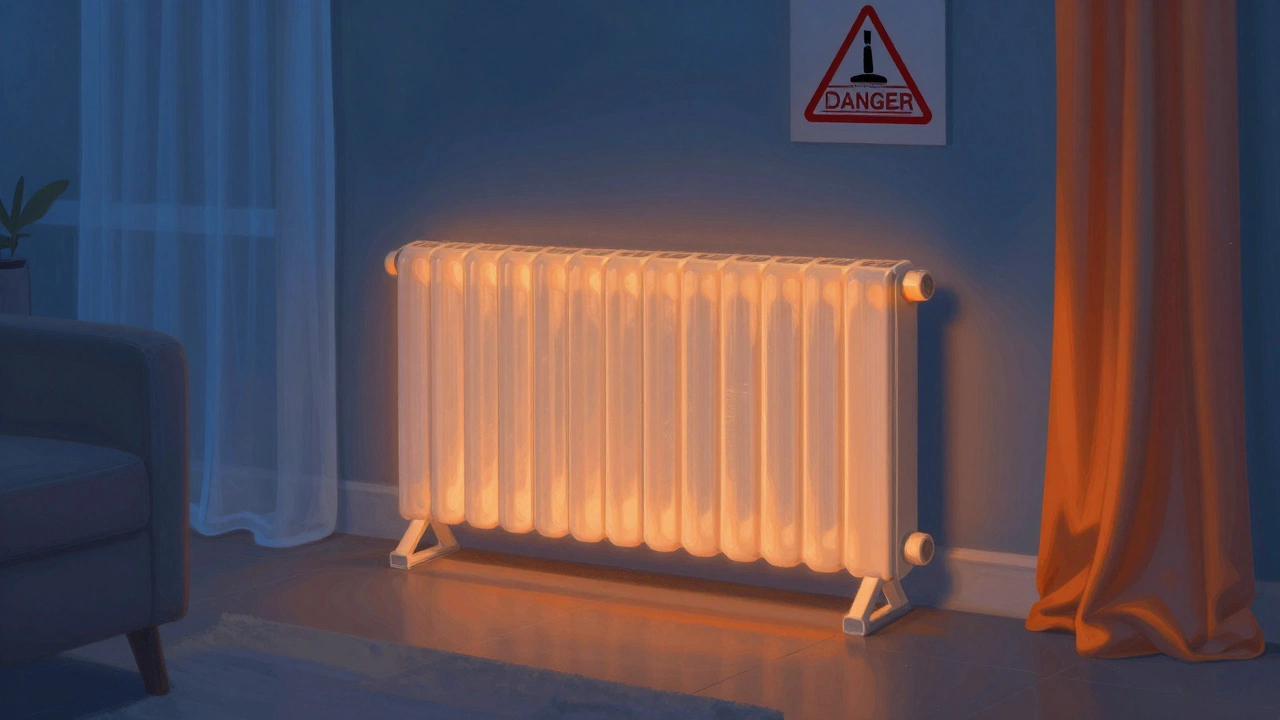
Keep a 12-inch zone clear all around the heater. That’s the safety bubble. If you’re unsure, step back and look at the heater from a distance. Can you see air moving? Can you feel the heat rising? If not, something’s blocking it.
What if your curtains are already too close?
If you’ve already installed curtains too low, don’t panic. But don’t ignore it either.Here’s what to do:
- Turn off the heater and let it cool.
- Check the fabric for signs of scorching: yellowing, stiffening, or a burnt smell.
- If you see damage, replace the curtains immediately.
- Adjust the rod or switch to a shorter curtain style.
- Test the airflow: Turn the heater on low, and hold a piece of tissue paper near the top. If it doesn’t lift gently, airflow is restricted.
Some people try to fix this by tying back curtains with ropes or clips. That’s not a solution. Even a tied-back curtain can sag over time, especially with humidity or wind from open windows.
Insurance and liability
Most home insurance policies require you to follow manufacturer guidelines for heating equipment. If a fire starts because your curtain was too close to the heater, your insurer might deny your claim.In New Zealand, the Accident Compensation Corporation (ACC) covers personal injury from household accidents-but not property damage caused by negligence. If your heater causes a fire because you ignored clearance rules, you could be on the hook for repairs, replacements, or even legal liability if the fire spreads.
Following the 12-inch rule isn’t just smart-it’s responsible.
Final checklist
Before you call it done, run through this quick list:- Is the bottom of your curtain at least 12 inches above the top of the heater?
- Is the fabric lightweight and breathable? (Avoid heavy velvet, polyester, or thermal linings)
- Is the curtain rod mounted high enough to give you that clearance?
- Are there any other objects (furniture, rugs, decor) within 12 inches?
- Have you checked the heater’s label for specific clearance requirements?
If you answered yes to all five, you’re safe. If not, fix it now. A few inches of space can mean the difference between a warm, cozy room and a dangerous one.
Can I use curtain clips to pull back curtains from baseboard heaters?
No. Curtain clips or tiebacks don’t solve the problem. Fabric can still sag over time, especially with heat, humidity, or wind. Even if it looks safe now, it might droop in a few weeks. The only reliable solution is to ensure the curtain’s hem is permanently at least 12 inches above the heater.
Do all baseboard heaters have the same clearance requirements?
No. While 12 inches (30 cm) is the standard, some high-wattage models (over 1,500 watts) or older units may require 18 inches. Always check the manufacturer’s label on the heater. If it says "Maintain 18 inches," follow that. Never assume all heaters are the same.
Can I use sheer curtains if they’re less than 12 inches away?
Even sheer curtains can be a risk if they’re too close. While they’re less likely to catch fire than thick fabrics, they can still trap heat and reduce airflow. The 12-inch rule applies to all curtain types. If the curtain is too low, it’s too low-no exceptions.
What if my window is right above the heater and I can’t move the rod?
Use a valance. A wooden or fabric valance mounted above the window can hide the heater’s top while leaving the lower 12 inches open. You can also use café curtains that only cover the top half of the window. Both options keep the heater clear and still give you privacy and style.
How often should I check the clearance?
Check it every time you change your curtains or rearrange the room. Also check after heavy storms or high winds-curtains can stretch or sag. A quick 10-second measurement once a season is all it takes to stay safe.